




RELATED: Clemson University honored for parking innovations, sustainable practices
Clemson U. Parking and Transportation wins 'Spare the Air' award
Under the Commuter Choice initiative, Clemson has promoted the Tiger Transit system and introduced a CarShare program and preferred parking for low-emission and electric vehicles, as well as the new BikeShare program.
June 30, 2017
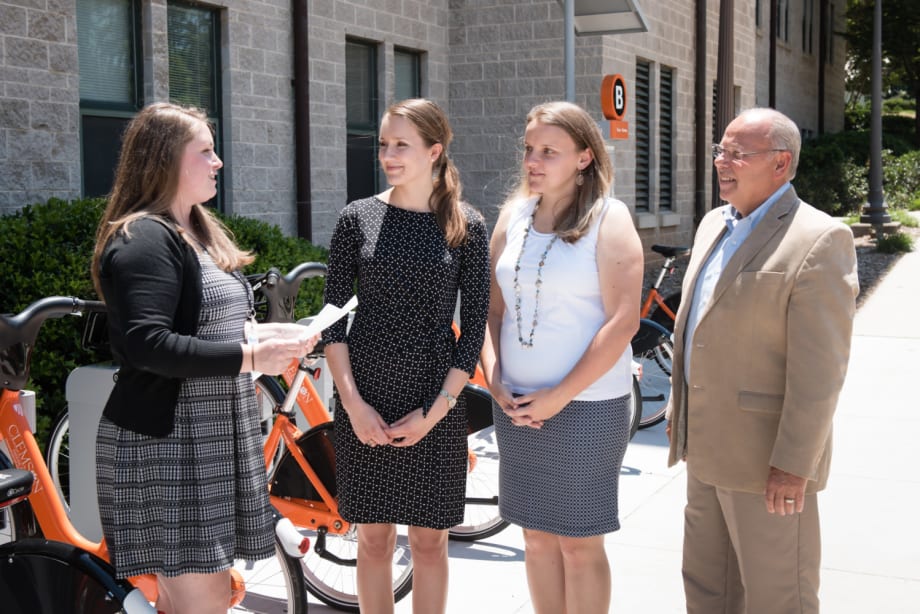
DHEC representative Megan Johnson (left) presents the 2017 Spare the Air award to Clemson Parking and Transportation Services representatives Lydia Krause, Kat Moreland and Dan Hofmann.
2 min to read
DHEC representative Megan Johnson (left) presents the 2017 Spare the Air award to Clemson Parking and Transportation Services representatives Lydia Krause, Kat Moreland and Dan Hofmann.
Clemson University’s Parking and Transportation Services was named as a 2017 recipient of the Spare the Air award South Carolina Department of Health and Environmental Control (DHEC).
Under the category of “Outstanding College or University,” Clemson was recognized as part of DHEC’s ongoing efforts to promote a healthier environment through air quality initiatives that are sustainable and replicable.
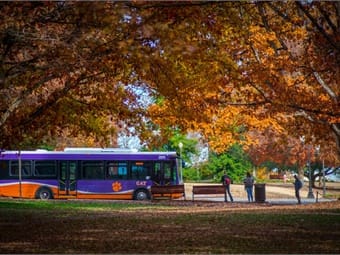
The Clemson University Commuter Choice Program was the driving force behind the 2017 Spare the Air award. The program was designed and marketed to demonstrate that driving a single-occupant vehicle is not the only way a person can commute to campus. Under the initiative, Clemson has promoted the Tiger Transit system and introduced a CarShare program and preferred parking for low-emission and electric vehicles, as well as the new BikeShare program.
“We are humbled by this award,” said Parking and Transportation Services Director Dan Hofmann, who estimated more than 5,000 faculty, staff, and students have been impacted by the Commuter Choice Program. “It’s a testimony to the hard work our staff has done to put transportation demand management programs in place and to be recognized for those efforts. We’re building such an array of programs, which is creating options and transforming how people get to campus and travel around. At the same time, our initiatives have helped promote reduced emissions and clean air by encouraging less traffic on campus, as evidenced by the recently launched BikeShare program.”
More New Mobility

From Hardware to Digital Partner: Luminator Charts Its Next Chapter
CEO Magnus Friberg discusses Luminator’s shift toward becoming a digital partner, the growing importance of software and interoperability, and how AI can help agencies improve operations and passenger experience.
Read More →
Biz Briefs: Alstom Lands Canadian Contract, LYT to Supply California TSP, and More
In METRO's latest installment, we take a look at recent news from Complete Coach Works, Beep, FlixBus, and more partnerships making headlines across the transportation sector.
Read More →
CharterUP’s Armir Harris on Technology, AI, and the Future of Group Mobility
In a recent episode of METROspectives, CharterUP Founder/CEO Armir Harris discussed the company’s evolution from an online charter bus marketplace into a technology platform supporting public- and private-sector mobility and much more.
Read More →
Jacksonville’s NAVI Project Charts a New Course for Autonomous Public Transportation
Through its NAVI program, JTA is showing how autonomous vehicles, intelligent infrastructure, and coordinated operations can work together to deliver everyday public transportation.
Read More →
Biz Briefs: Luminator Marks Milestone and More
From manufacturers and suppliers to transit agencies and motorcoach operators, these updates offer a snapshot of the projects, partnerships and business moves driving the industry forward.
Read More →
New Tricks for Old Bureaucracies: Joshua Schank on Making Transit Innovation Stick
Former LA Metro Chief Innovation Officer Joshua Schank discusses why good ideas aren't enough, how transit agencies can overcome resistance to change, and why today's challenges demand more innovation.
Read More →
How DART's GoPass Is Redefining Regional Mobility
Serving 14 transit agencies, GoPass simplifies multimodal travel by allowing riders to plan, pay for, and manage an entire trip through one app.
Read More →
Biz Briefs: OCTA Taps Clean Energy for Hydrogen Station, Stadler to Supply Via Rail Vehicles, and More
From manufacturers and suppliers to transit agencies and motorcoach operators, these updates offer a snapshot of the projects, partnerships and business moves driving the industry forward.
Read More →CharterUP Expands Into New Mobility and Autonomous Transportation
Vice President of New Mobility Stephen Joos discusses how CharterUP is leveraging its nationwide transportation network, technology platform, and autonomous vehicle partnerships to expand into workforce mobility, campus shuttles, and transit solutions.
Read More →
METRO Magazine Announces 2026 Innovative Solutions Awards Winners
Projects Recognized for Advancing Mobility Through Technology, Accessibility, Workforce Innovation, and Operational Excellence
Read More →