




RELATED: [Video] bio-bean: Powered by coffee
Converted cooking oil fuels WKU's shuttle bus
Engineering students convert cooking oil previously used to prepare French fries, chicken and other favorites in campus restaurants to biodiesel.
April 13, 2018
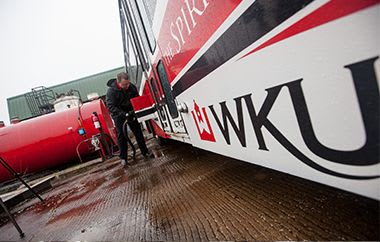
Western Kentucky University's Topper Transit shuttle will begin running on 100% biofuel for the campus' Earth Day Celebration on April 19. Photo: WKU
3 min to read
Western Kentucky University's Topper Transit shuttle will begin running on 100% biofuel for the campus' Earth Day Celebration on April 19. Photo: WKU
Western Kentucky University's (WKU) Topper Transit Bus #13 is undergoing a big change this Earth Month. The shuttle will begin running on 100% biofuel for the campus' Earth Day Celebration on April 19 through a collaboration between WKU’s School of Engineering & Applied Sciences, Agriculture & Research Education Center, Restaurant Group and Parking & Transportation Services.
Engineering students (WKU Biofuels) convert cooking oil previously used to prepare french fries, chicken, and other favorites in campus restaurants to biodiesel at a facility at the WKU Farm.
WKU Biofuels has been converting campus dining used cooking oil into fuel at the WKU Farm since 2013. The biodiesel has been used to run tractors and reduce farm fuel costs and carbon emissions. The collaboration between Agriculture and Engineering programs engages students in real-life problem solving — the facility was designed, built and is operated by students in the Mechanical Engineering program.
“The biodiesel project continues to be a very real and hands-on way to connect engineering students to functioning mechanical systems and prepare them for future collaborative projects,” said, Troy Robertson, an engineering technician for WKU School of Engineering & Applied Sciences, who advises the biodiesel project.
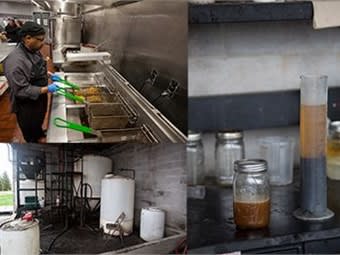
The conversion of used cooking oil to biofuel eliminates the oil as waste and converts it to a clean burning fuel. Photo: WKU
The students retrieve the used cooking oil from dining locations on campus and transport it to the WKU Farm, where it undergoes a process of heating, drying, and mixing with methanol and lye (known as methoxide) in a process called transeserification. The methanol and vegetable oil are turned into biodiesel and glycerin. The byproduct glycerin is removed and the lye is washed from the biodiesel, which is then dried and after final testing is ready to be used as fuel.
The benefit of this entire process is that vegetable oil, which has already been used for its main purpose of feeding people, and one gallon of a traditional hydrocarbon (the methanol) can be converted into nearly five gallons of biodiesel — making it unnecessary to burn those gallons of traditional diesel fuel. The conversion of used cooking oil to biofuel eliminates the oil as waste and converts it to a clean burning fuel, significantly reducing carbon emissions and other environmental impacts.
Having produced more than 5,000 gallons of biodiesel, WKU Biofuels students and staff are experienced in the process and ready to take the project beyond the farm and onto the WKU campus.
WKU Parking and Transportation Services will use the converted cooking oil to fuel shuttle #13, which runs the White Line. While riders will not notice any difference in the shuttle’s performance (except maybe the faint smell of french fries), educational information on the bus will promote awareness among passengers of the significance of the bus as a sustainability best practice.
“Topper Transit is a proud partner in the WKU biodiesel project. This is an exciting first step that will promote better environmental sustainability and reduce our carbon footprint in the community,” said WKU Assistant Director of Transportation Tim McWhorter, who has been working with the biofuels faculty and students on the collaboration. “The used cooking oil from campus dining services is donated so students can gain experience converting the used cooking oil to biodiesel. The biodiesel will fuel one of our buses to transport students around campus.”
This story was originally published byWestern Kentucky University.
More Technology

From Hardware to Digital Partner: Luminator Charts Its Next Chapter
CEO Magnus Friberg discusses Luminator’s shift toward becoming a digital partner, the growing importance of software and interoperability, and how AI can help agencies improve operations and passenger experience.
Read More →
Beyond the Checklist: A Structured Approach to Transit Maintenance
Reliability-Centered Maintenance helps transit agencies move beyond routine checklists to focus limited resources on the assets and failures that have the greatest impact on safety, reliability, and service.
Read More →
NJ TRANSIT Advances Bus Technology Upgrades Across Statewide Fleet
More than 1,500 buses now feature upgraded technology designed to improve arrival predictions and provide free Wi-Fi, with deployment expected to reach nearly 2,000 buses by the end of 2026.
Read More →

Building a Flexible Path to Transit Electrification
John Hroncich discusses BAE Systems’ modular and scalable approach, lessons learned from decades of real-world operations, and how agencies can identify electrification strategies that fit their fleets.
Read More →
Biz Briefs: Alstom Lands Canadian Contract, LYT to Supply California TSP, and More
In METRO's latest installment, we take a look at recent news from Complete Coach Works, Beep, FlixBus, and more partnerships making headlines across the transportation sector.
Read More →
Sponsored•September 8, 2026
From Legacy Silos to Conversational Intelligence
What if transit leaders could ask any operational question and get a trusted answer in seconds? Conversational AI is transforming how agencies use their data.
Read More →
USDOT Announces Rail Vehicle Replacement Grants, Chattanooga AV Shuttle Funding
More than $191 million in federal funding will help three transit agencies replace aging rail vehicles and support a new autonomous shuttle service in Chattanooga.
Read More →
Bus Tech Talk: Keeping Transit Technicians Ahead of the Technology Curve
LA Metro’s Obed Mejia discusses technician training, evolving maintenance technology, fleet replacement, and strategies for getting the most out of today’s transit fleets.
Read More →
Biz Briefs: RIPTA Unveils New Frontrunners, Clevland RTA Adds New Siemens, and More
In METRO's latest installment, we take a look at recent news from Siemens, Prevost, Dodge, and more partnerships making headlines across the transportation sector.
Read More →
Why Simulating Pedestrian Movement Has Become Essential for Modern Rail Stations
Pedestrian microsimulation is helping rail planners identify bottlenecks, test station designs, and prepare complex transit hubs for growing passenger volumes.
Read More →