



COTA ridership highest in 31 years
The agency continues to see increases in ridership as the national trend shows declines in public transportation.

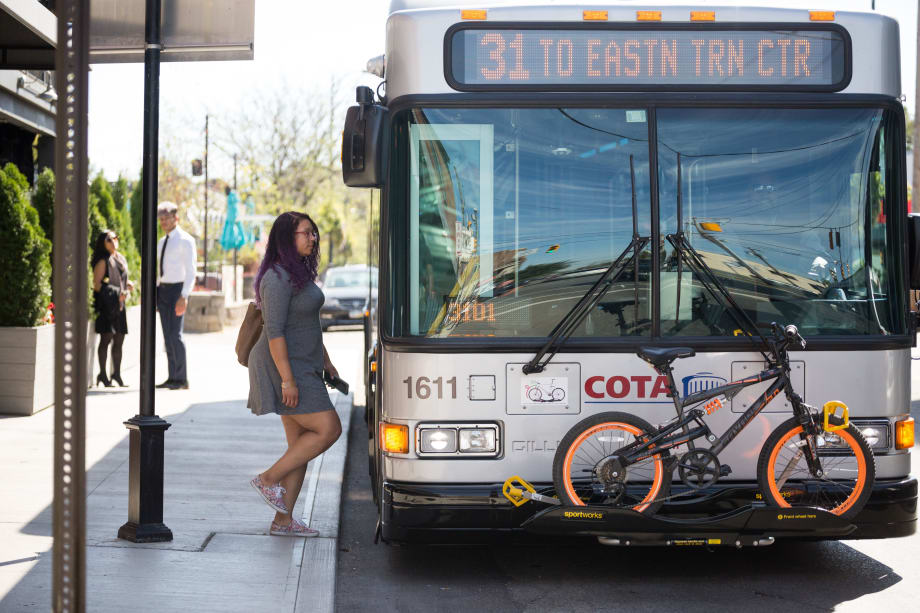
COTA's total ridership in 2019 was 19,141,454 compared to 18,914,789 in 2018 — a 1.2% increase and a 4% increase since the agency’s Transit System Redesign in 2017.
COTA
COTA's total ridership in 2019 was 19,141,454 compared to 18,914,789 in 2018 — a 1.2% increase and a 4% increase since the agency’s Transit System Redesign in 2017.
COTA
The Central Ohio Transit Authority’s (COTA) total ridership in 2019 was 19,141,454 compared to 18,914,789 in 2018 — a 1.2% increase and a 4% increase since the agency’s Transit System Redesign in 2017. The increase in ridership also included growth across several COTA services, including a full year of C-pass, the employer-paid transit program in downtown Columbus.
COTA continues to see increases in ridership as the national trend shows declines in public transportation. For example in 2018, of the top 30 U.S. markets, COTA was only one of six transit systems that saw ridership growth.
In addition to overall ridership, COTA also saw increases in the following services:
CMAX, COTA’s Bus Rapid Transit line from Westerville to downtown Columbus, experienced a 3.3% increase in ridership from 2018 to 2019.
C-pass delivered more than 1,242,000 trips in 2019. Through a partnership with the Mid-Ohio Regional Planning Commission and the Capital Crossroads Special Improvement District, eligible downtown Columbus employees can get unlimited transit access at no cost to them. The cost is covered by property owners, their employer and MORPC. To date, 58% of downtown businesses participate in the C-pass program. Additionally, C-pass contributed to a 14% increase in ridership on rush hour lines.
AirConnect recorded a 5.5% increase in ridership in 2019. AirConnect provides seven-day service between John Glenn Columbus International Airport and downtown Columbus hotels and the Greater Columbus Convention Center.
COTA Mainstream also saw a 5% increase in service, delivering more than 305,000 trips to ADA customers. The launch of the pilot program Mainstream On-Demand helped provide more flexibility for customers by allowing them to book same-day service.
COTA Plus launched in July 2019, providing microtransit service to a portion of Grove City. The first public microtransit service to be offered in Central Ohio’s history, in the first five months, COTA Plus delivered 2,800 passenger trips, connecting customers to high-capacity fixed-route transit, major job centers, the Mid-Ohio Food Collective, and the new Mount Carmel Grove City Hospital. This year, COTA Plus plans to expand citywide in Grove City, and add service in three other Central Ohio communities.
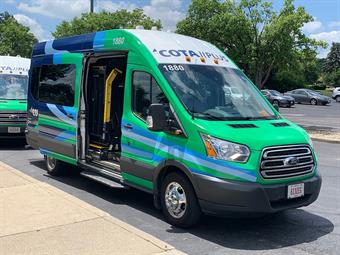
COTA Plus launched in July 2019, providing microtransit service to a portion of Grove City.
COTA
In response to ridership growth, COTA is committed to enhancing services for all customers. In December 2019, COTA’s board approved investment to improve frequency on CMAX and four other lines where increased usage is causing occasional overcrowding. COTA is also investing in transit stop amenities and building 150 additional transit shelters in the next three years. Once completed, 70% of customer trips will originate from enhanced transit stop locations.
More Bus

New York MTA Plans Largest Bus Fleet Upgrade in More Than a Decade
The agency is seeking manufacturers for 650 new CNG buses to replace aging vehicles, improve reliability, and advance its broader fleet modernization strategy.
Read More →
Building a Flexible Path to Transit Electrification
John Hroncich discusses BAE Systems’ modular and scalable approach, lessons learned from decades of real-world operations, and how agencies can identify electrification strategies that fit their fleets.
Read More →
Bus Tech Talk: Keeping Transit Technicians Ahead of the Technology Curve
LA Metro’s Obed Mejia discusses technician training, evolving maintenance technology, fleet replacement, and strategies for getting the most out of today’s transit fleets.
Read More →
Biz Briefs: RIPTA Unveils New Frontrunners, Clevland RTA Adds New Siemens, and More
In METRO's latest installment, we take a look at recent news from Siemens, Prevost, Dodge, and more partnerships making headlines across the transportation sector.
Read More →
People Movement: Holly Arnold Joins Transdev and More
In this edition, we also cover recent appointments and announcements at Pace, CamTran, MCI, and more, showcasing the individuals helping to shape the future of transportation.
Read More →
The High Cost of Transit Buses: Industry Leaders Look to Procurement Reform
Transit leaders and policymakers examine how standardized bus designs, streamlined procurement, and predictable funding could help agencies stretch budgets and deliver better service.
Read More →
The Business Voice Behind Public Transportation
As chair of APTA’s Business Members Board of Governors, Ray Melleady explains how more than 850 business members are partnering with transit agencies to advance funding, innovation, and industry-wide collaboration.
Read More →
From Surviving to Thriving: Building Stronger Transportation Organizations
Bus Business Consultants founder Brian Dickson shares lessons on leadership, organizational health, and creating options for long-term success in a changing transportation industry.
Read More →
Finding the ‘Happy Medium’: Optimizing Maintenance Without Sacrificing Reliability
The key to maintenance optimization isn’t doing less work—it’s doing the right work at the right time on the right assets.
Read More →
LA Metro, City of West Hollywood, and Partners Advance Smarter Bus Lane Enforcement
The award-winning partnership combines AI-powered detection with human oversight to improve bus reliability, accessibility, and enforcement efficiency.
Read More →