



D.C. Metro debuts express service, hybrid buses
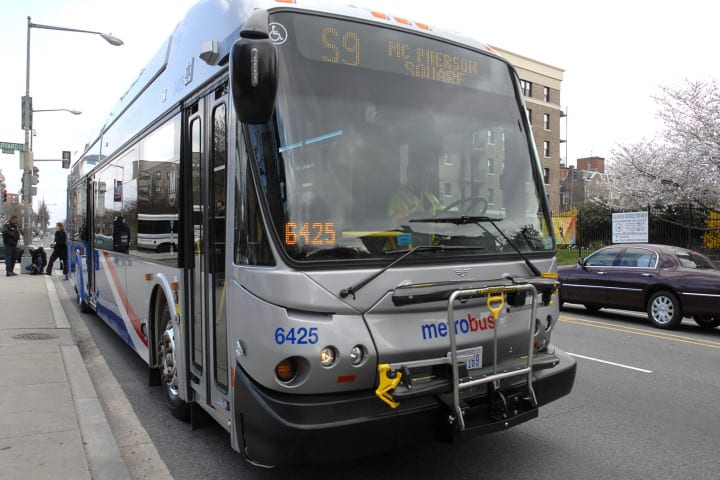
For the first time, more than 16,000 riders who board buses daily on the 16th Street Line in Northwest Washington have the option to ride a new limited-stop service.

[IMAGE]WMATA-express-full.jpg[/IMAGE]
Rush hour express buses, new buses and even more service began running Monday on Washington Metropolitan Area Transit Authority’s (Metro) third-busiest bus line.
For the first time, more than 16,000 riders who board buses daily on the 16th Street Line in Northwest Washington have the option to ride a new limited-stop service.
"We support the improvements made by WMATA to 16th Street Line service," said District of Columbia Mayor Adrian Fenty. "The addition of the S9 Metrobus Express route is a breath of fresh air for public transportation in the District of Columbia."
Fenty, Metro Board Chairman Jim Graham and D.C. Councilmember Muriel Bowser; Metro General Manager John Catoe; and D.C. Department of Transportation Director Gabe Klein were at the Columbia Road and 16th Street stop for the service’s debut.
The first of Metro’s new 42-foot blue and silver hybrid-electric buses, manufactured by New Flyer, also began serving the new S9 route today, which has fewer stops and is shorter than the S1, S2 and S4 routes that currently make up the line. A total of 203 new hybrid-electric buses are scheduled to be in service this fall. Thirty-eight will have the new express color scheme, and 10 will be dedicated to the S9 route.
Instead of 54 stops one-way from the Silver Spring Metrorail station to McPherson Square, there will be 16 stops from Silver Spring to McPherson Square. Buses are scheduled to arrive every 10 minutes weekdays from 6:30 a.m. to 10 a.m. and from 3 p.m. to 7 p.m. Riders can save 6 minutes to 8 minutes from their travel times by using the new service.
“All of the S9 stops along the route will have a new and different bus stop flag. Most of the stops will have new District Department of Transportation bus shelters. Riders will find easy-to-read schedules posted at each S9 stop, and later this year, the stops will have NextBus information,” said Catoe.
Besides the new buses and limited stop service, Metro also added four extra bus trips to the S1 route and new, longer articulated buses will be added at night to the S2 and S4 routes later this year to provide more room for riders.
Metro currently operates 171 bus lines with an average weekday ridership of about 450,000. The transit agency has five express bus routes, which run along Georgia Avenue (70s Line), and Wisconsin and Pennsylvania Avenues (30s Line) in the District of Columbia.; REX, which runs along Richmond Highway in Fairfax County; Pike Ride on Columbia Pike, Crystal City-Potomac Yard (9A,9E,9S) in Arlington and the NH1 route to National Harbor in Prince George's County. Planners also are studying adding express service on Veirs Mill Road (Q2) in Montgomery County and Leesburg Pike (28AB, 28FG, 28T) in Alexandria, Falls Church and Fairfax County. Metro officials plan to have a total of 24 express routes launched by 2015.
A more than two-year trial of the S9 service is estimated to cost about $3.6 million and will be paid for by the District of Columbia. Metro will evaluate the service in six months.
Metro planners hope that buses eventually will get green light signals ahead of other vehicles, lanes that would put them in front of other traffic and dedicated bus lanes, which would make express service even faster.
More Bus

Bus Tech Talk: Keeping Transit Technicians Ahead of the Technology Curve
LA Metro’s Obed Mejia discusses technician training, evolving maintenance technology, fleet replacement, and strategies for getting the most out of today’s transit fleets.
Read More →
Biz Briefs: RIPTA Unveils New Frontrunners, Clevland RTA Adds New Siemens, and More
In METRO's latest installment, we take a look at recent news from Siemens, Prevost, Dodge, and more partnerships making headlines across the transportation sector.
Read More →
People Movement: Holly Arnold Joins Transdev and More
In this edition, we also cover recent appointments and announcements at Pace, CamTran, MCI, and more, showcasing the individuals helping to shape the future of transportation.
Read More →
The High Cost of Transit Buses: Industry Leaders Look to Procurement Reform
Transit leaders and policymakers examine how standardized bus designs, streamlined procurement, and predictable funding could help agencies stretch budgets and deliver better service.
Read More →
The Business Voice Behind Public Transportation
As chair of APTA’s Business Members Board of Governors, Ray Melleady explains how more than 850 business members are partnering with transit agencies to advance funding, innovation, and industry-wide collaboration.
Read More →
From Surviving to Thriving: Building Stronger Transportation Organizations
Bus Business Consultants founder Brian Dickson shares lessons on leadership, organizational health, and creating options for long-term success in a changing transportation industry.
Read More →
Finding the ‘Happy Medium’: Optimizing Maintenance Without Sacrificing Reliability
The key to maintenance optimization isn’t doing less work—it’s doing the right work at the right time on the right assets.
Read More →
LA Metro, City of West Hollywood, and Partners Advance Smarter Bus Lane Enforcement
The award-winning partnership combines AI-powered detection with human oversight to improve bus reliability, accessibility, and enforcement efficiency.
Read More →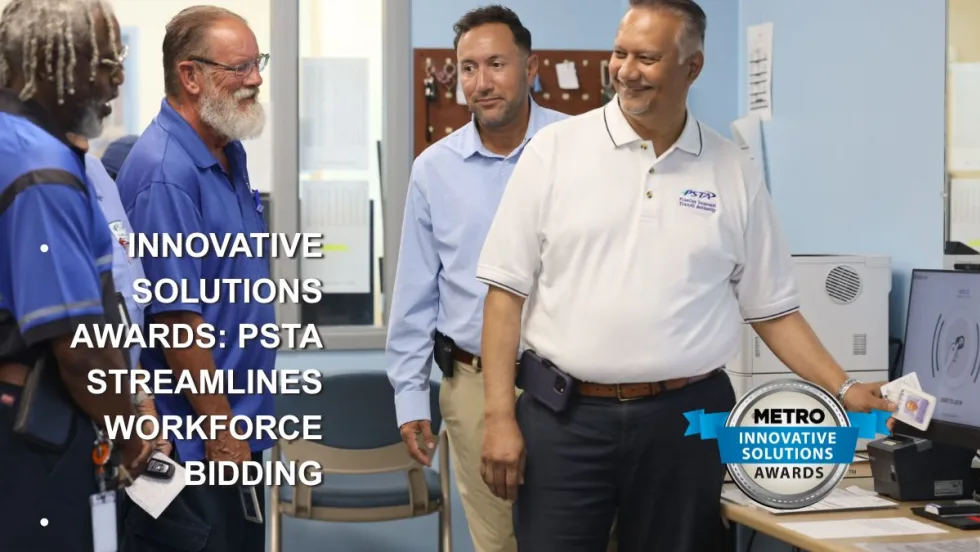
PSTA Modernizes Workforce Management with Digital Bidding System
The award-winning Workforce Transit Modernization project replaced paper bidding with a transparent digital platform, cutting administrative effort while improving access for operators.
Read More →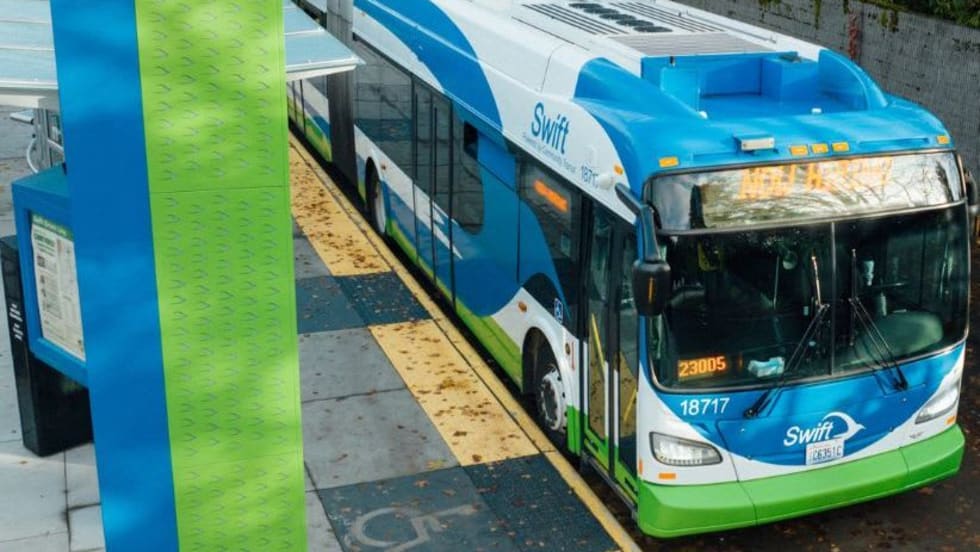
Washington's Community Transit Sets Six-Year Roadmap for Growth, Expansion
Approved TDP targets more bus service, new mobility options, Swift BRT expansion, and a potential Everett Transit annexation.
Read More →