



D.C. Metro shifts paratransit contract model to improve service quality
The contracts provide a new approach for determining when a paratransit vehicle is “late," as the contractor managing the scheduling and dispatching functions will share performance incentives and disincentives with the contractors delivering the service to customers.

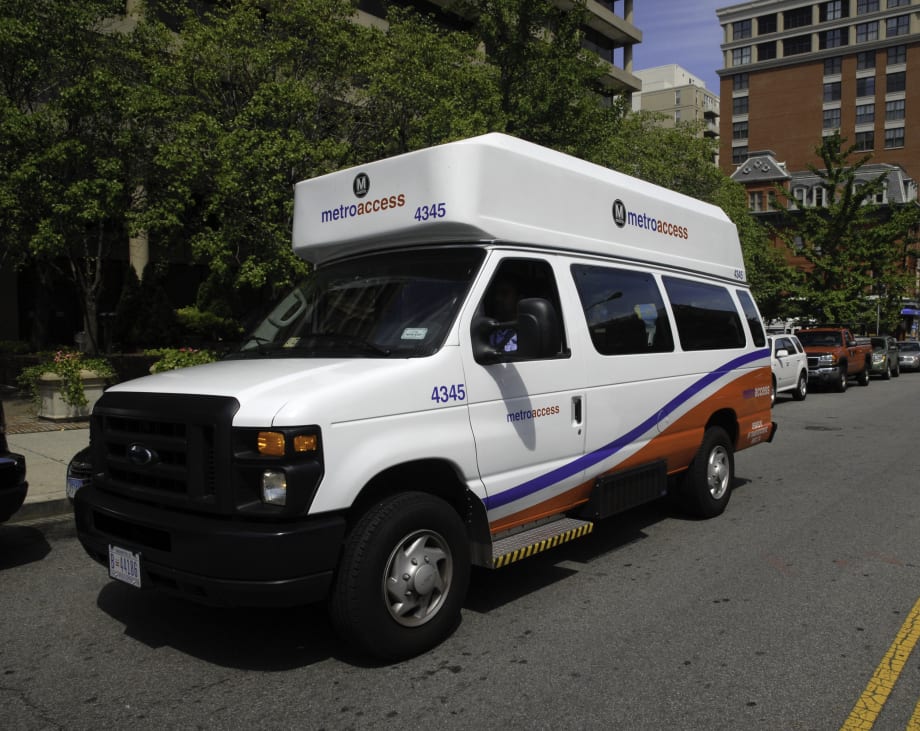
WMATA photo by Larry Levine
The Washington Metropolitan Area Transit Authority (Metro) awarded contracts totalling $86 million to five vendors to provide paratransit service. The contracts signal the use of a new business model by Metro to improve service quality.
Using a new business model that created three categories for proposals, the contracts are within Metro’s current budget and will be awarded to Veolia Transportation ($36.46 million), First Transit ($22.07 million) and Diamond Transportation ($9.79 million) for service delivery; to MV Transportation ($14.61 million) for managing the MetroAccess Call Center; and to MTM ($2.55 million) for management of an independent quality assurance function. All contract awards will be for five years, with a renewal option for an additional five years.
The contracts provide a new approach for determining when a paratransit vehicle is “late," as the contractor managing the scheduling and dispatching functions will share performance incentives and disincentives with the contractors delivering the service to customers.
Additionally, disincentives for “excessive” lateness are strengthened in the new contracts. Trips that are delivered 20 minutes past the scheduled arrival time trigger the disincentive versus the previous standard of 30 minutes.
The contracts also provide stronger disincentives for service that drops below 90% on-time, as well as incentives for service providers that exceed reliability standards. To ensure better compliance with customer service standards, Metro will employ a separate contractor to monitor quality assurance from the companies delivering service.
The contract awards mark the conclusion of a competitive process, which began with the issuance of a request for proposals in June 2012. The proposals were judged on a “best value” basis, meaning that both technical merit and price were considered, but with the greater emphasis on quality. All successful proposers will have local management for their portion of the contracted service.
In addition to the service contracts, Metro will continue to fund vehicles, fuel, and insurance to provide paratransit service at a total cost of approximately $50 per passenger. Metro Transit Police will conduct fingerprint criminal background checks on all customer facing employees of the five contractors. Metro’s Access Services staff will manage the contracts, conducting fleet inspections, monitoring service on the street, and managing technology and scheduling efficiencies.
RELATED ARTICLE: Read our 2012 Paratransit Survey, here.
More Paratransit

People Movement: Dan Dipert Coaches Adds Third-Generation Leader, Keolis Names New Valley Metro VP/GM, and More
In this edition, we also cover recent appointments and announcements at the Wabtec, SilverRide, HNTB, and more, showcasing the individuals helping to shape the future of transportation.
Read More →
Biz Briefs: RIPTA Unveils New Frontrunners, Clevland RTA Adds New Siemens, and More
In METRO's latest installment, we take a look at recent news from Siemens, Prevost, Dodge, and more partnerships making headlines across the transportation sector.
Read More →
King County Metro Makes ADA Paratransit Easier to Navigate
METRO's Innovative Solutions Award winner replaces complex service-area descriptions with an accessible, interactive map that puts paratransit information directly in customers’ hands.
Read More →
Jacksonville’s NAVI Project Charts a New Course for Autonomous Public Transportation
Through its NAVI program, JTA is showing how autonomous vehicles, intelligent infrastructure, and coordinated operations can work together to deliver everyday public transportation.
Read More →
Driving Smarter Paratransit
John Hanlon shares how AlphaRoute is leveraging AI-powered technology to help paratransit providers optimize operations, support frontline staff, and enhance the rider experience.
Read More →
METRO Magazine Announces 2026 Innovative Solutions Awards Winners
Projects Recognized for Advancing Mobility Through Technology, Accessibility, Workforce Innovation, and Operational Excellence
Read More →
Biz Briefs: STV teams with Amtrak, Motorcoach Operators Boost Fleet and Land Contracts, and More
From manufacturers and suppliers to transit agencies and motorcoach operators, these updates offer a snapshot of the projects, partnerships and business moves driving the industry forward.
Read More →
Biz Briefs: Masabi Teams with St. Louis Metro and More
In METRO's latest installment, we take a look at recent news from Transdev, Hitachi, and more partnerships making headlines across the transportation sector.
Read More →
New York MTA Leverages Zoning Program to Advance Station Accessibility
Accessibility enhancements at Nevins St Station will be financed through a development agreement tied to the MTA's Zoning for Accessibility initiative.
Read More →
Reinventing Fleet Maintenance with Real-time Visibility and AI
Transit leaders need to know what needs fixing, where to look, who is responsible, when work is completed, and what it costs without having to chase information across disconnected systems.
Read More →