



Dallas' Green Line light rail enters service on time, under budget
The 28-mile, 20-station, $1.8 billion project was completed on schedule and under budget on December 6, when it opened 24 miles and 15 stations creating new light rail connections for customers from southeast Dallas to the cities of Farmers Branch and Carrollton in the northwest.

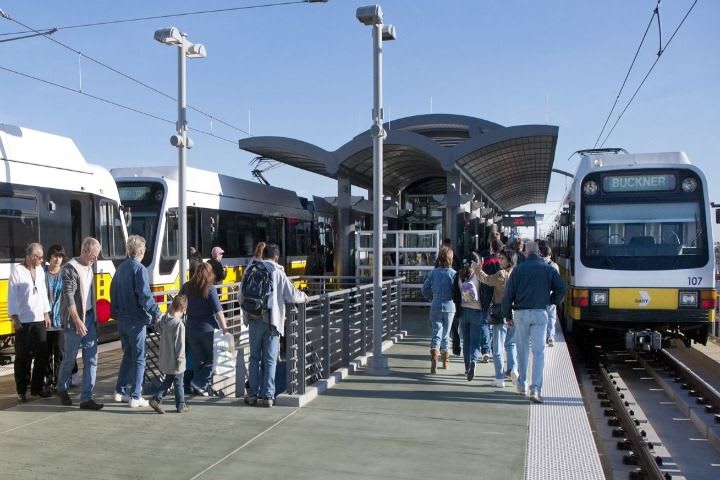
In addition to local funding provided by the one-percent sales tax collected in DART’s 13 cities, major funding for the Green Line came from a $700-million Full Funding Grant Agreement from the FTA. Photo courtesy DART.
[IMAGE]DARTgreenlineCarrolltonStation-2.jpg[/IMAGE]Dallas Area Rapid Transit's (DART) 28-mile, 20-station, $1.8 billion Green Line was completed on schedule and under budget on December 6, when it opened 24 miles and 15 stations, creating new light rail connections for customers from southeast Dallas to the cities of Farmers Branch and Carrollton in the northwest.
This is the longest single-day opening of electric light rail in the United States since 1990.
The first section of the Green Line opened September 2009 and connects Pearl Station on the east side of Downtown Dallas to MLK Jr. Station on the west side of Fair Park.
“The Green Line changes everything for our customers,” DART President/Executive Director Gary Thomas said. “Customers living in Pleasant Grove now have seamless access to jobs at Baylor, Downtown Dallas, the Market District, UT Southwestern/Parkland, Love Field and Farmers Branch and Carrollton. Business owners all along the corridor can connect with new customers and new pools of prospective employees.”
Federal officials, including Federal Transportation Administrator Peter Rogoff, were on hand at a special grand opening celebration. “DART continues to demonstrate visionary leadership for transit,” Rogoff said. “The opening of the Green Line will be a true game-changer in Dallas, connecting people and places like never before.”
In addition to local funding provided by the one-percent sales tax collected in DART’s 13 cities, major funding for the Green Line came from a $700-million Full Funding Grant Agreement (FFGA) from the FTA. The FFGA was awarded in July 2006 at the start of construction. Construction was bolstered by the receipt of $78.4 million in funds from the American Recovery and Reinvestment Act (ARRA) in mid-2009. They are part of DART’s FFGA.
Lake Highlands Station, DART’s first infill station, also opened December 6. The station is located on the Blue Line in northeast Dallas between White Rock and LBJ/Skillman stations. This station was originally approved by the DART Board as part of the rail extension to Garland, but was deferred until warranted by new development and corresponding higher ridership.
Lake Highlands Station is being incorporated into the overall site design of the adjacent Lake Highlands Town Center development. The station will include areas for bus transfers and passenger drop-off. Sidewalks, trails and streets in the Town Center are being planned to provide linkages to and from the station.
The DART Rail Orange Line will branch from the Green Line at Bachman Station to serve Irving and Las Colinas in 2012 and ultimately DFW Airport. Service also will be extended from Garland to Rowlett in 2012. DART’s current expansion programs will grow the DART Rail System to 90 miles. Planning also continues for a Blue Line extension from Ledbetter Station to the UNT Dallas campus as well as a second light rail alignment through Downtown Dallas.
Customers of the Denton County Transportation Authority (DCTA) who have been riding an express bus to Downtown Dallas will be able to transfer to the Green Line at Trinity Mills Station. The DCTA’s A-Train is scheduled to open in summer 2011.
[IMAGE]DARTCarrollton-Frankford-full-2.jpg[/IMAGE]
The new stations represent 15 additions to DART’s growing public art collection. Each station is designed to reflect the surrounding community. While every station has a platform, canopy, overhead power lines and tracks, each station has a unique look. It’s the result of months of intense work involving community volunteers, DART staff and a station artist.
The art may be found in column claddings, platform pavers, windscreens, landscaping and fences like at Lawnview Station or a signature piece like the way-finder monument at North Carrollton/Frankford Station. Information about the entire DART pubic art collection along with photos of many of the pieces is available online at www.DART.org/PublicArt.
More Rail

New York MTA Advances Final Contract for Second Avenue Subway Expansion
Contract Four is the largest in the Second Avenue Subway Phase 2 project and includes construction of station infrastructure, tracks, and signals for the subway expansion, MTA officials said. Work on Contract Four will begin in 2027.
Read More →
San Diego MTS Breaks Monthly Trolley Ridership Record
Agency officials said July’s ridership indicates MTS’s continued recovery from the pandemic.
Read More →
Report Examines NJ TRANSIT Reliability, Funding Challenges
The Garden State Initiative analysis examines the roles of Amtrak infrastructure, fleet management, and agency operations while recommending a more performance-based approach to improving reliability.
Read More →
Stadler, CapMetro Sign Long-Term Rail Fleet Support Agreement
Beginning in 2027, Stadler will provide on-site technical expertise, spare parts support, training, and obsolescence management to help extend the reliability and longevity of CapMetro’s GTW fleet.
Read More →
Biz Briefs: Alstom Lands Canadian Contract, LYT to Supply California TSP, and More
In METRO's latest installment, we take a look at recent news from Complete Coach Works, Beep, FlixBus, and more partnerships making headlines across the transportation sector.
Read More →
CATS Gold Line Marks 5 Years of Service, 2.8M Passenger Trips
With a six-mile expansion planned, the Charlotte streetcar is positioned to connect more neighborhoods and major transit hubs across the region.
Read More →
Why Simulating Pedestrian Movement Has Become Essential for Modern Rail Stations
Pedestrian microsimulation is helping rail planners identify bottlenecks, test station designs, and prepare complex transit hubs for growing passenger volumes.
Read More →
Amtrak Begins Major Construction at New York’s Sunnyside Yard
The new maintenance facility will support Amtrak’s Airo trainsets while improving maintenance efficiency and turnaround times in New York.
Read More →
Chicago Leaders Unveil Plans for O’Hare Airport Express Train
The privately developed project would offer a 15-minute trip between downtown and O’Hare’s Terminal 2, with trains operating every 15 minutes on a dedicated track. The service would use battery-electric trains and three existing freight rail rights-of-way.
Read More →
OCTA Maps Out 30-Year Strategy to Protect Coastal Rail Corridor
The draft feasibility report identifies strategies to protect the coastal rail line for decades as the agency continues near-term stabilization and sand placement efforts.
Read More →