



Dallas light rail service to airport takes off
The five-mile segment links newly renovated Terminal A and Belt Line Station, with continuing service to major regional destinations including Irving-Las Colinas, Dallas Market Center and downtown Dallas.

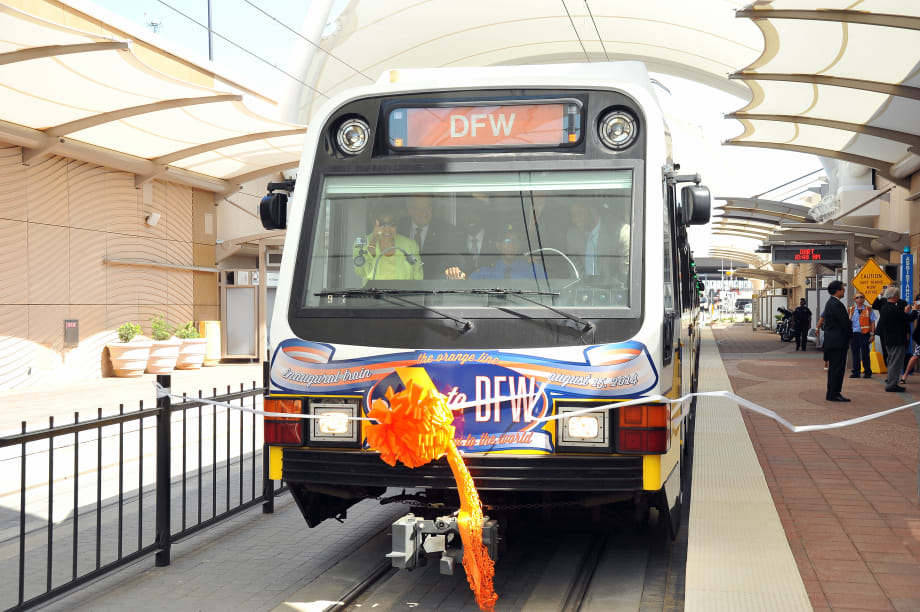
Photo courtesy DART
Photo courtesy DART
DFW Airport built the station as part of its Terminal Renewal and Improvement Program while DART's contractors focused on the rail line extension. According to DART President/Executive Director Gary Thomas, sharing construction duties allowed DART to open the station in mid-August, four months sooner than scheduled.
"We could not have achieved this rail opening early and under budget without the incredible partnership with DFW Airport," Thomas said. "Construction of the station and the Orange Line extension has been a true collaboration."
RELATED:Dallas makes final prep for opening rail line to airport
The five-mile segment links newly renovated Terminal A and Belt Line Station, with continuing service to major regional destinations including Irving-Las Colinas, Dallas Market Center and downtown Dallas. With this opening, DFW Airport becomes the third-largest American airport with a direct rail connection to the city center.
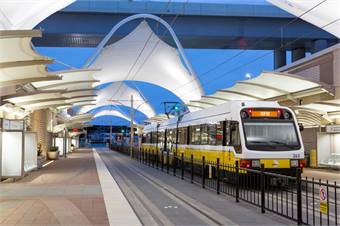
Photo courtesy DART
North Texas residents and visitors gain improved transit access to the airport and its growing roster of international and domestic destinations. Globetrotting travelers have come to expect convenient public transportation to their destinations.
Regional leaders believe that light rail service from the airport to the rest of the DART Service Area will help attract everything from corporations to conferences. Access to the airport will be a great benefit for out-of-state and international students attending educational institutions like the University of Dallas, The University of Texas Southwestern Medical Center, Southern Methodist University and the University of Texas at Dallas — all located along DART Rail.
More Management

COTA Launches First Customer Experience Action Plan to Improve Transit Service
The new plan outlines improvements to service reliability, accessibility, communication, and the overall rider experience across Central Ohio's transit system.
Read More →
LA Metro September Ridership Climbs 3.9%, Led by Rail Growth
The agency recorded more than 27.2 million boardings, with rail ridership increasing 12.4% year over year and the D Line posting the largest gains.
Read More →
Utilimarc Launches SmartReplace to Optimize Fleet Replacement Decisions
AI-powered SmartReplace helps fleets prioritize vehicle replacements, model budget scenarios, and build more defensible long-term strategies.
Read More →
APTA Honors 2026 Award Winners, Hall of Fame Inductees at TRANSform & EXPO
Innovations in autonomous and zero-emission transportation, standout transit systems, and industry leadership took center stage among this year's honorees.
Read More →
7 Ways to Build a Better Transit Internship Program
Lessons from DRPA/PATCO’s approach to creating a meaningful internship experience—and developing the next generation of transportation professionals.
Read More →
Scenes from APTA TRANSform & EXPO 2026
Transit leaders, manufacturers, and industry professionals gathered in Chicago to explore new technologies, share ideas, and discuss the future of public transportation.
Read More →
Building Stronger Leaders, More Resilient Transit Teams
Dr. Carol Parker Walsh discusses leadership development, employee retention, workplace culture, and preparing transit’s workforce for AI and automation.
Read More →
APTA 2026 TRANSform & EXPO Kicks Off in Chicago
After 45 years, APTA returns to Chicago with a focus on next-generation fleets, AI, connected transit networks, and the funding strategies shaping public transportation’s future.
Read More →
New York MTA Warns Federal Tariffs Could Add $1 Billion to Rolling Stock Costs
The agency said tariffs on specialized imported components could reduce the purchasing power of its $23 billion investment in new subway cars, railcars, and buses.
Read More →
From the Show Floor: What Happened at APTA TRANSform & EXPO 2026
See the latest product launches, partnerships, technology updates, and transit industry announcements from APTA TRANSform & EXPO in Chicago.
Read More →