




RELATED: Q&A with DART chief Gary Thomas
Dallas' rail-connected development driving regional growth, study says
Completed or under-construction TOD near DART stations has already generated $69 million in state and local tax revenue.
October 25, 2016
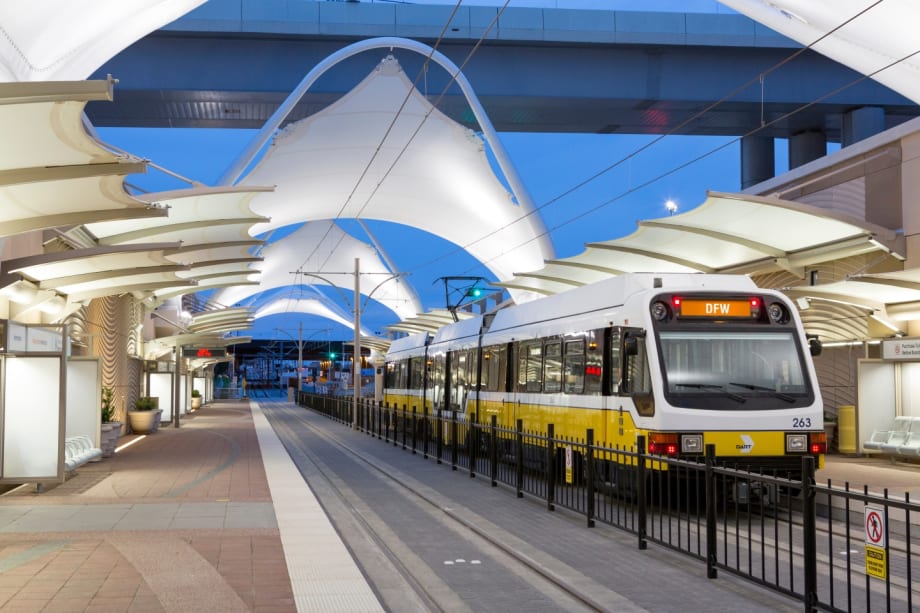
Dallas Area Rapid Transit
3 min to read
Dallas Area Rapid Transit
Transit Oriented Development (TOD) near Dallas Area Rapid Transit (DART) Rail, like CityLine and the continued growth in the Cedars south of downtown Dallas, is driving the North Texas economic boom with more than $7 billion in economic impact from new or planned construction within a quarter mile of rail stations, according to a new study.
Researchers from the Economics Research Group at the University of North Texas, led by Michael Carroll, Ph.D., also determined this activity in 2014 and 2015 generated more than 43,000 jobs resulting in nearly $3 billion in wages, salaries, and benefits. A 2014 study from UNT identified $5.3 billion in TOD near DART Rail stations between 1996 and 2013.
“DART, and the projects around it, will sustain our continued growth,” Carroll says. “This very rapid increase in investment and development activity around DART stations reflects the improvement in our regional economy.”
The regional economic benefit takes many forms. Completed or under-construction TOD near DART stations has already generated $69 million in state and local tax revenue. The study also projects potential spending for planned or proposed developments could produce another $160 million in state and local tax revenue.
“Increased property values and the revenues generated from that is another way Dallas and the other DART cities are benefitting from our investment,” Dallas Mayor Mike Rawlings says. “DART has created new connections to attract developers to fertile areas for investment. We see that transformation in all parts of our city...”
Investment paying dividends
The 93-mile light rail system, the nation’s longest, was built at a cost of $5.5 billion. The most recent extension, three miles, connecting a renewed Ledbetter Station to the campus of the University of North Texas Dallas, opened Oct. 24.
“This study reminds us transportation is more than a ride from one point to another,” DART President/Executive Director Gary Thomas says. “Developers see the benefit. That’s why they’re putting their money into new live/work/play communities close to our stations. The value of those projects significantly exceeds the regional investment in rail and they are changing the face of our region.”
Development magnet in good times and bad
Authors of the 2014 study found DART could make substantial contributions to regional economic health even when the area experienced an economic downturn not seen since the Great Depression of the 1930s. “Even through difficult economic times, DART has demonstrated its ability to boost the North Texas economy through its daily operations, capital spending and attracting private investment,” said Terry L. Clower, Ph.D., principal author of the 2014 study and now director of the Center for Regional Analysis at George Mason University.
But the authors of the 2016 study believe the regional environment has fully recovered noting, “The region is one of the fastest growing nationwide in terms of population and continues to be the destination for corporate relocations.” To prove the point, they identified 11 projects in various stages of development, in all parts of the DART Service Area, with a total economic impact of $5.1 billion for the region. The list of projects includes development of the Dallas High School site near Pearl Station, an expanded Southwest Airlines Training Facility, and Northshore and the Irving Entertainment District in Las Colinas.
DART’s economic impact reports and more information are available at DART.org/EconomicImpact.
More Rail

New York MTA Advances Final Contract for Second Avenue Subway Expansion
Contract Four is the largest in the Second Avenue Subway Phase 2 project and includes construction of station infrastructure, tracks, and signals for the subway expansion, MTA officials said. Work on Contract Four will begin in 2027.
Read More →
San Diego MTS Breaks Monthly Trolley Ridership Record
Agency officials said July’s ridership indicates MTS’s continued recovery from the pandemic.
Read More →
Report Examines NJ TRANSIT Reliability, Funding Challenges
The Garden State Initiative analysis examines the roles of Amtrak infrastructure, fleet management, and agency operations while recommending a more performance-based approach to improving reliability.
Read More →
Stadler, CapMetro Sign Long-Term Rail Fleet Support Agreement
Beginning in 2027, Stadler will provide on-site technical expertise, spare parts support, training, and obsolescence management to help extend the reliability and longevity of CapMetro’s GTW fleet.
Read More →
Biz Briefs: Alstom Lands Canadian Contract, LYT to Supply California TSP, and More
In METRO's latest installment, we take a look at recent news from Complete Coach Works, Beep, FlixBus, and more partnerships making headlines across the transportation sector.
Read More →
CATS Gold Line Marks 5 Years of Service, 2.8M Passenger Trips
With a six-mile expansion planned, the Charlotte streetcar is positioned to connect more neighborhoods and major transit hubs across the region.
Read More →
Why Simulating Pedestrian Movement Has Become Essential for Modern Rail Stations
Pedestrian microsimulation is helping rail planners identify bottlenecks, test station designs, and prepare complex transit hubs for growing passenger volumes.
Read More →
Amtrak Begins Major Construction at New York’s Sunnyside Yard
The new maintenance facility will support Amtrak’s Airo trainsets while improving maintenance efficiency and turnaround times in New York.
Read More →
Chicago Leaders Unveil Plans for O’Hare Airport Express Train
The privately developed project would offer a 15-minute trip between downtown and O’Hare’s Terminal 2, with trains operating every 15 minutes on a dedicated track. The service would use battery-electric trains and three existing freight rail rights-of-way.
Read More →
OCTA Maps Out 30-Year Strategy to Protect Coastal Rail Corridor
The draft feasibility report identifies strategies to protect the coastal rail line for decades as the agency continues near-term stabilization and sand placement efforts.
Read More →