




Read More: Denver RTD Launches Program to Assist Customers with Immediate Needs
Denver RTD Makes Changes to MallRide Shuttle Seats
One of the 36 Free MallRide vehicles has been fitted with the new seats and is currently running on the MallRide route.
January 30, 2024
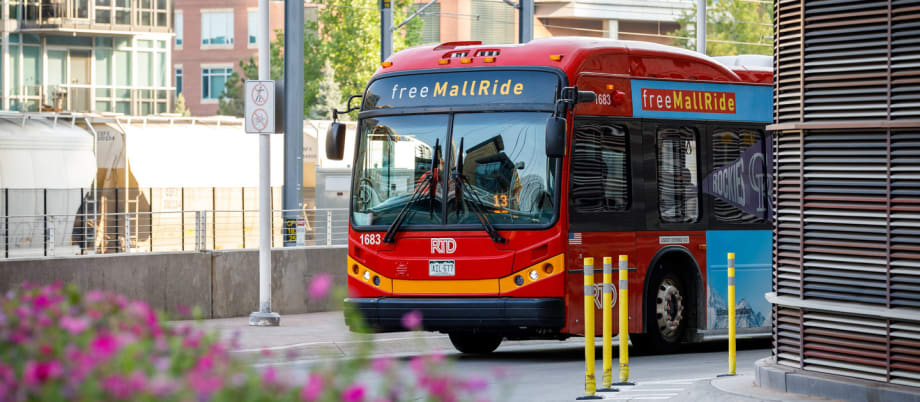
The Free MallRide first began running along the 16th Street Mall in 1984.
Photo: RTD
2 min to read
The Regional Transportation District (RTD) announced it is transitioning the seats on its MallRide vehicles from fabric to vinyl.
One of the 36 Free MallRide vehicles has been fitted with the new seats and is currently running on the MallRide route.
The entire fleet will be converted and the remainder of RTD’s bus fleet will be converted to vinyl through the normal attrition cycles.
Details of RTD's New Seat Design
The design of the seat material is the same used to update the light rail seats. The dots symbolize the communities RTD connects across the system and RTD’s brand colors are represented in the pattern. The design was chosen last year by employees and created by an in-house graphic designer.
“The MallRide vehicles were identified for initial retrofit among RTD’s bus fleet because of its heavy usage. The interior of these buses is heavily exposed to the effects of Colorado winter weather, including rain and snow,” said GM/CEO Debra A. Johnson. “While most RTD buses have one or two doors that open only when customers enter and exit, each of the vehicles in the MallRide fleet has three extra-wide doors that open at every block along the MallRide route. The upgrade of these buses will receive benefits everyone, from the customers using the vehicles to the RTD team members who clean and maintain them.”
In 2017, 36 Free MallRide zero emission, fully electric battery-operated vehicles were introduced with three doors, 18 seats, two wheelchair spaces, and capacity for 88 customers. The vehicles have heat and air conditioning.
More Bus

People Movement: Dan Dipert Coaches Adds Third-Generation Leader, Keolis Names New Valley Metro VP/GM, and More
In this edition, we also cover recent appointments and announcements at the Wabtec, SilverRide, HNTB, and more, showcasing the individuals helping to shape the future of transportation.
Read More →
New York MTA Plans Largest Bus Fleet Upgrade in More Than a Decade
The agency is seeking manufacturers for 650 new CNG buses to replace aging vehicles, improve reliability, and advance its broader fleet modernization strategy.
Read More →
Building a Flexible Path to Transit Electrification
John Hroncich discusses BAE Systems’ modular and scalable approach, lessons learned from decades of real-world operations, and how agencies can identify electrification strategies that fit their fleets.
Read More →
Bus Tech Talk: Keeping Transit Technicians Ahead of the Technology Curve
LA Metro’s Obed Mejia discusses technician training, evolving maintenance technology, fleet replacement, and strategies for getting the most out of today’s transit fleets.
Read More →
Biz Briefs: RIPTA Unveils New Frontrunners, Clevland RTA Adds New Siemens, and More
In METRO's latest installment, we take a look at recent news from Siemens, Prevost, Dodge, and more partnerships making headlines across the transportation sector.
Read More →
People Movement: Holly Arnold Joins Transdev and More
In this edition, we also cover recent appointments and announcements at Pace, CamTran, MCI, and more, showcasing the individuals helping to shape the future of transportation.
Read More →
The High Cost of Transit Buses: Industry Leaders Look to Procurement Reform
Transit leaders and policymakers examine how standardized bus designs, streamlined procurement, and predictable funding could help agencies stretch budgets and deliver better service.
Read More →
The Business Voice Behind Public Transportation
As chair of APTA’s Business Members Board of Governors, Ray Melleady explains how more than 850 business members are partnering with transit agencies to advance funding, innovation, and industry-wide collaboration.
Read More →
From Surviving to Thriving: Building Stronger Transportation Organizations
Bus Business Consultants founder Brian Dickson shares lessons on leadership, organizational health, and creating options for long-term success in a changing transportation industry.
Read More →
Finding the ‘Happy Medium’: Optimizing Maintenance Without Sacrificing Reliability
The key to maintenance optimization isn’t doing less work—it’s doing the right work at the right time on the right assets.
Read More →