



Denver RTD’s 3-Year ‘Reclaiming Union Station’ Delivers Tangible Results
In the first quarter of 2022, RTD logged approximately 5,000 security-related calls for service at Union Station, compared with 2,127 in the first quarter of 2025.

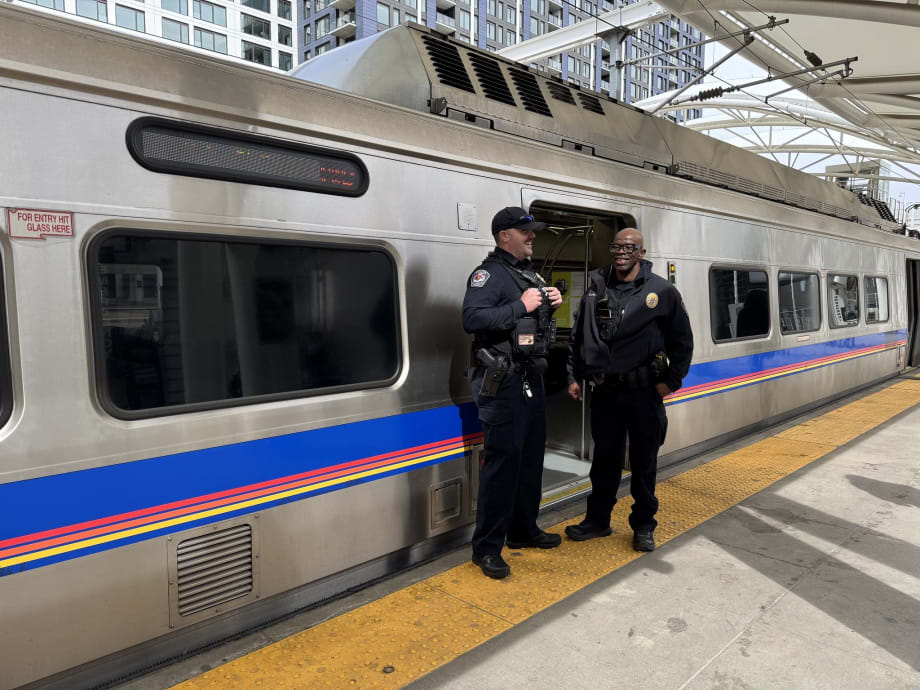
Month-over-month comparisons reflect similar reductions going back to early 2022 when RTD first doubled down on efforts to improve personal safety and security at the intermodal transit facility.
Photo: Denver RTD
Denver’s Regional Transportation District (RTD) is reporting a nearly 60% reduction in security-related calls and a three-year decrease in reports of criminal activities between 2022 and 2025 at Denver Union Station.
In the first quarter of 2022, RTD logged approximately 5,000 security-related calls for service at Union Station, compared with 2,127 in the first quarter of 2025.
Month-over-month comparisons reflect similar reductions going back to early 2022 when RTD first doubled down on efforts to improve personal safety and security at the intermodal transit facility. Calls for service is a metric that includes customer reports of graffiti, drug activity, noise complaints, unattended bags, and other personal safety concerns.
“Reclaiming” Union Station
In March 2022, RTD publicly announced a robust plan and timeline to “Reclaim Union Station,” a collaborative and multi-faceted strategy aimed at enhancing safety and security at the location.
RTD’s efforts to create a welcoming transit environment for agency employees and bus and rail customers included support from the City and County of Denver, Denver Police Department, Downtown Denver Partnership, Sage Hospitality, and Lower Downtown Neighborhood Association, as well as several local businesses and downtown Denver residents.
“Union Station is RTD’s primary intermodal transit hub. For many people, it’s their first impression of the agency and the services provided,” said Debra A. Johnson, RTD’s GM/CEO. “In 2022, RTD brought together staff and stakeholders to proactively address challenges that were impacting both employees and customers from having a seamless, comfortable, and convenient experience, be it working or using transit. Improved security at Denver Union Station reflects thousands of hours of work by a devoted team, and it exemplifies what can happen when you have a laser-like focus on solving a problem.”
Years in the Making
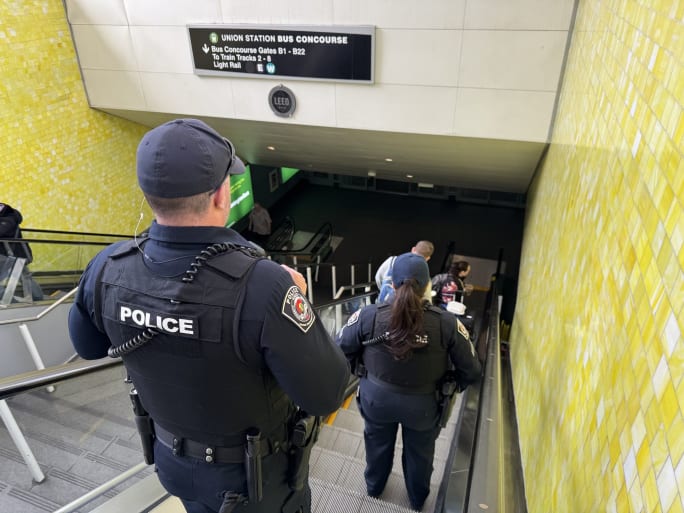
Over the last three years, RTD’s multifaceted strategy has focused on hiring more sworn police officers and establishing 24/7 patrols.
In addition to deploying contracted security personnel on the rail platforms and in the underground bus concourse, RTD has a dedicated team of POST (Peace Officers Standards and Training)-certified officers to patrol Denver Union Station around the clock.
In 2022, the agency had fewer than 20 full-time officers on its force, and that number has since grown to approximately 100 POST-certified officers. RTD is actively recruiting to achieve a goal of 150 officers on its force by year-end.
The regular presence of officers, especially at Denver Union Station, means RTD-PD is able to proactively intervene instead of relying on customers to make reports before dispatching personnel.
The City and County of Denver permits RTD-PD officers to enforce specific municipal ordinances at Denver Union Station. The enforcement authority allows transit police officers to write criminal citations into municipal court, giving the agency the ability to more proactively address issues in real time.
The list of more than 20 criminal violations authorized by Denver includes criminal violations related to destruction of public property, fighting, assault, obstruction, threats, weapons, and theft.
In March 2022, RTD publicly announced a robust plan and timeline to “Reclaim Union Station,” a collaborative and multi-faceted strategy aimed at enhancing safety and security at the location.
Crime Prevention through Environmental Design
As part of the “Reclaim Union Station” strategy, RTD also utilized a primary tactic — Crime Prevention Through Environmental Design (CPTED) — to reduce crime, enhance public safety, and create an overall welcoming environment for customers.
Since the effort was first launched in 2022, RTD has made noticeable facility improvements to its underground bus concourse, rail platforms, and open spaces, including:
All lighting in the underground bus concourse was upgraded and backlit panels were installed to better illuminate areas with low light and increase employee and customer visibility.
TV monitors were added to display security camera feeds at the main entrances to the bus concourse.
Commuter rail platform stairs were converted to an emergency exit only to limit unnecessary access.
Smoke detectors were installed in the restrooms to deter smoking and drug use.
Floor decals and signage were added to encourage movement and discourage loitering near doors.
Classical music was added to the underground bus concourse to deter aggressive behavior and promote a sense of order.
“ENTER” and “EXIT” labels were affixed to the ground-level doors leading to the concourse to better facilitate customer flow and enhance directional signage.
RTD’s Customer Code of Conduct, known as “Respect the Ride,” was updated in 2023, and new signage was added at Denver Union Station to communicate prohibited behaviors.
New digital screens were installed inside the concourse and on the light rail platforms to provide real-time information and communicate safety messages.
Landscaping was redesigned near the light rail platform to deter loitering and improve visibility.
“These improvements to personal safety and security at Union Station have been noticed and appreciated by RTD’s employees, customers, and the public,” said RTD Acting Chief of Police and Emergency Management Steve Martingano. “Our officers are not only a regular and visible presence at the high-trafficked location in Denver, but they are consistently enforcing the Customer Code of Conduct, proactively addressing unwelcome behaviors, and partnering with Denver to tackle challenges that are happening around Union Station.”
More Security and Safety

Transit Agencies Highlight Safety Gains at National Summit
Leaders from 15 major transit systems shared crime-reduction results and safety initiatives while discussing the role of continued federal support.
Read More →
DART Launches Major Security, Fare Enforcement Initiative
The 90-day demonstration will deploy coordinated security teams at five light rail stations while testing controlled access and gathering data to guide future investments.
Read More →
RTD Launches NextRide App to Consolidate Trip Planning, Fares, Security Reporting
The app expands on RTD’s existing NextRide web application and allows customers to view real-time vehicle locations and service alerts, purchase and store digital fares, and access customer support.
Read More →
TAPTCO Updates OSHA Compliance Training for Transit Maintenance Operations
The revamped program addresses 26 OSHA standards for maintenance facilities, with TAPTCO pointing to training, documentation, and everyday shop hazards as continuing challenges for transit operations.
Read More →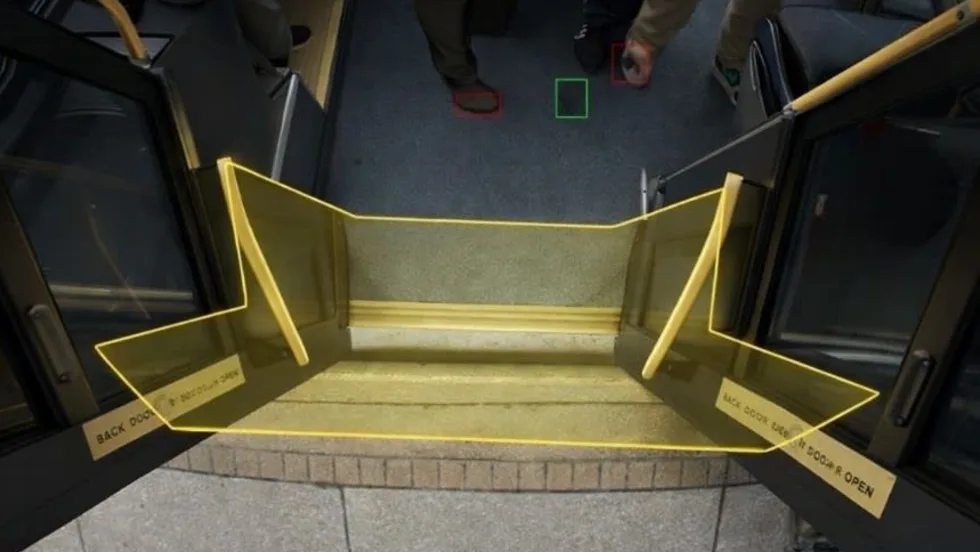
How VaporVision Adds Value to Transit Door Systems
Wabtec engineers explain how the system improves doorway detection, strengthens diagnostics and gives transit agencies and OEMs greater operating flexibility.
Read More →
FRA Announces $5.3B in Rail Investments, Including $2B for Amtrak
Funding will support grade-crossing improvements, infrastructure upgrades, and new Amtrak equipment in 23 states.
Read More →
Chicago, Maryland Expand Non-Law-Enforcement Safety, Rider Support
The CTA and MTA are launching new programs aimed at de-escalation, crisis response, rider assistance, and greater transparency.
Read More →
LA Metro, City of West Hollywood, and Partners Advance Smarter Bus Lane Enforcement
The award-winning partnership combines AI-powered detection with human oversight to improve bus reliability, accessibility, and enforcement efficiency.
Read More →
LA Metro Reports 57% Decline in Homelessness on Transit System Since 2024
The agency's latest homelessness count offers new data on how care-based services and cross-sector partnerships can complement traditional transit security strategies.
Read More →
FTA Launches 'Transit Moves America' Dashboard to Highlight Agency Safety and Performance
The online dashboard transforms National Transit Database information into a public-facing resource that allows users to compare transit agencies on key operational and safety metrics.
Read More →