




RELATED: Bombardier wireless electric bus charging to power Berlin fleet
Designer envisions 'magic' electric bus for TTC
The Xoupir (pronounced "super") is a fully-electric bus powered by wireless electricity, with four rear wheels to provide extra traction.
June 4, 2015
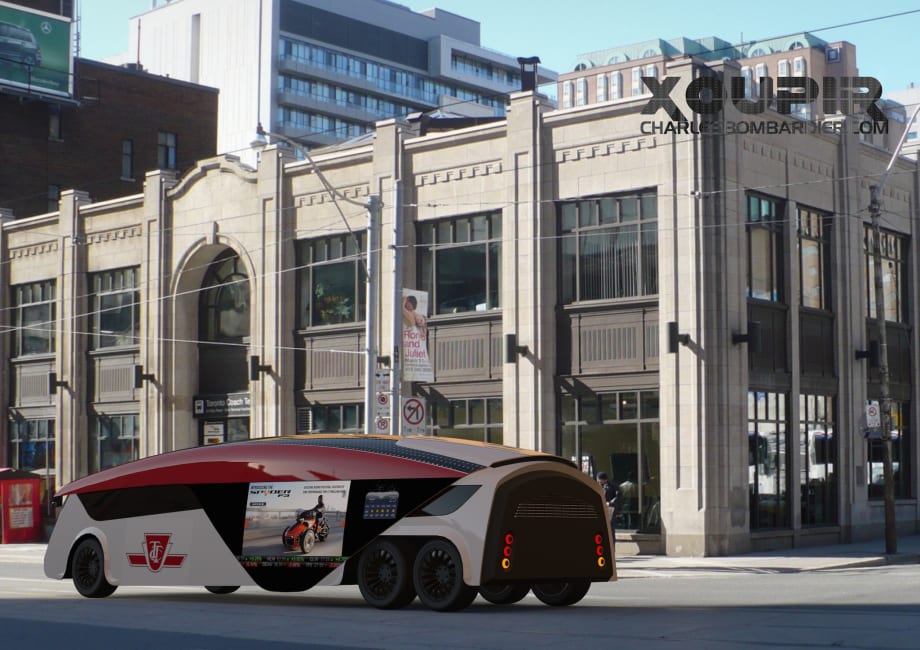
Photo courtesy: Charles Bombardier
2 min to read
Photo courtesy: Charles Bombardier
TORONTO, Ontario — Charles Bombardier, who has designed a robotic hockey referee, a tugboat that creates waves for surfing competitions, and magnet-propelled rollercoaster in which riders hurtle above the track in a metal sphere, has reinvented the bus for the Toronto Transit Commission, according to a BBC report.
Toronto’s Globe & Mail publishes many of his ideas in its “Prototypes” section, and it was that publication that asked him to develop a new design for the TTC's buses, the report said.
For the full story, click here.
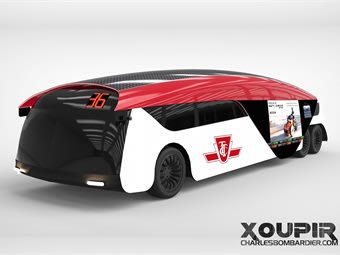
Photo courtesy: Charles Bombardier
The Xoupir (pronounced "super") is a fully-electric bus powered by wireless electricity, with four rear wheels to provide extra traction.
The roof of the Xoupir is covered with flexible solar panels to power the communication systems, while the top shell also acts as a cooling unit by using the natural airflow and embedded linear radiators to cool the passengers, according to Bombardier's website.
Other design innovations include smartglass tinted windows; free WiMAX ultra-high speed Internet access; OLED screens located inside and outside of the vehicle featuring ads that change based on the preferences of users who are looking at them; and the ability to pay fares wirelessly via smartphone, credit card or by thumbprint.
The Xoupir is a series of ideas that could be implemented in today’s bus or even in every city’s mass transit network. I really like the idea of silent and non-polluting electric buses that can be powered and recharged wirelessly. I also like the idea of being able to hop on any bus in the world without having to carry a wallet (Paying with biometrics). - Bombardier says.
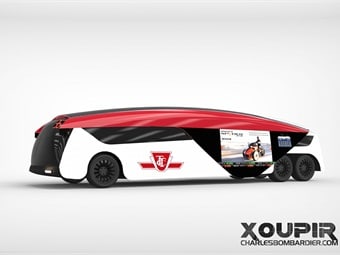
Photo courtesy: Charles Bombardier
More Bus

New York MTA Plans Largest Bus Fleet Upgrade in More Than a Decade
The agency is seeking manufacturers for 650 new CNG buses to replace aging vehicles, improve reliability, and advance its broader fleet modernization strategy.
Read More →
Building a Flexible Path to Transit Electrification
John Hroncich discusses BAE Systems’ modular and scalable approach, lessons learned from decades of real-world operations, and how agencies can identify electrification strategies that fit their fleets.
Read More →
Bus Tech Talk: Keeping Transit Technicians Ahead of the Technology Curve
LA Metro’s Obed Mejia discusses technician training, evolving maintenance technology, fleet replacement, and strategies for getting the most out of today’s transit fleets.
Read More →
Biz Briefs: RIPTA Unveils New Frontrunners, Clevland RTA Adds New Siemens, and More
In METRO's latest installment, we take a look at recent news from Siemens, Prevost, Dodge, and more partnerships making headlines across the transportation sector.
Read More →
People Movement: Holly Arnold Joins Transdev and More
In this edition, we also cover recent appointments and announcements at Pace, CamTran, MCI, and more, showcasing the individuals helping to shape the future of transportation.
Read More →
The High Cost of Transit Buses: Industry Leaders Look to Procurement Reform
Transit leaders and policymakers examine how standardized bus designs, streamlined procurement, and predictable funding could help agencies stretch budgets and deliver better service.
Read More →
The Business Voice Behind Public Transportation
As chair of APTA’s Business Members Board of Governors, Ray Melleady explains how more than 850 business members are partnering with transit agencies to advance funding, innovation, and industry-wide collaboration.
Read More →
From Surviving to Thriving: Building Stronger Transportation Organizations
Bus Business Consultants founder Brian Dickson shares lessons on leadership, organizational health, and creating options for long-term success in a changing transportation industry.
Read More →
Finding the ‘Happy Medium’: Optimizing Maintenance Without Sacrificing Reliability
The key to maintenance optimization isn’t doing less work—it’s doing the right work at the right time on the right assets.
Read More →
LA Metro, City of West Hollywood, and Partners Advance Smarter Bus Lane Enforcement
The award-winning partnership combines AI-powered detection with human oversight to improve bus reliability, accessibility, and enforcement efficiency.
Read More →