EVs Are on Rise; Can the Charging Network Keep Up?
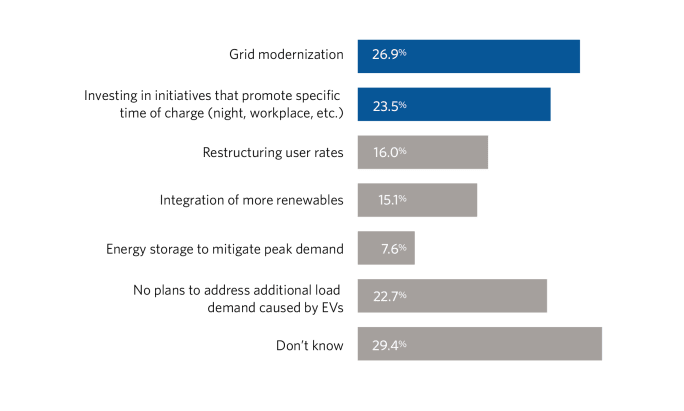
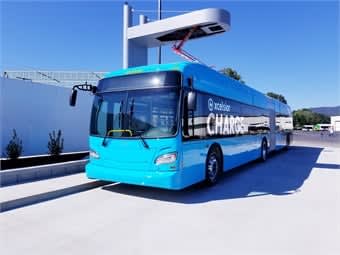
Many utilities — large and small — struggle to manage their region’s daily load requirements. Now imagine adding a network of new, high-powered charging stations, which can deliver up to 350 kilowatts (kW) of power — seven times today’s standard 50kW capacity. Bringing online an entire network of these chargers could easily overload a power grid, not to mention alter a utility’s overall load profile and stretch its ability to plan for grid upgrades and operations.
Although the benefits of EVs are profound — from cleaner air to lower vehicle costs — adding large numbers of them to the grid is raising questions about grid stability and energy management. To make large-scale electrification a reality, utilities need to start thinking about how they can scale up power infrastructure to meet increased charging demands.
Understanding EV Behavior
According to Black & Veatch’s 2018 Smart Cities & Utilities Report survey, 60% of utilities see studying EV charging ownership, behavior and rate impacts to be the most critical step when preparing for increased adoption. Fifty-one percent said “predicting areas of likely adoption” is second-most-important, showing a strong need for utilities to better understand the EV market, including when, where and how users charge their vehicles.
Utilities noted that other important activities include: incorporating EVs into each aspect of the business (43%), working with stakeholders to identify locations for large and/or high-speed charging infrastructure deployments (43%), and evaluating the distribution grid to determine energy supply (37%).
Deploying Managed Charging
To help control energy distribution at the charging hubs, 77% of utilities plan to adopt a managed charging approach. Managed charging — also called V1G, or intelligent, or smart charging — relies on communication signals sent by the utility through the charging hub that allows the utility to remotely control charging levels, turning charging up, down, or even preventing it altogether if a high-load event is occurring on the grid.
Utilities can use this control to turn charging hubs into a flexible load source to gain capacity, to reduce load in the event of an emergency, or even absorb excess energy from renewable energy resources like solar and wind. Managed charging might even allow utilities to generate revenue — for example, by enabling them to increase the load they serve, better balance grid demand and supply, and even integrate renewable energy from wind and solar. It can also help utilities provide grid services in wholesale electricity markets and spur new grid and charging infrastructure.
Planning for the Future
No matter which approach utilities decide to take in the EV game, it will be up to the many entities and stakeholders — from automakers to charging providers, and utilities to policymakers — to work together to develop solutions that support EV adoption and charging. As EV adoption rates continue to grow and high-power capacity is needed, there’s no time like now to address the issue.