



Environmental group honored for Mexico Metrobus project
Award recognizes outstanding public-private partnerships that enhance environmental quality through the use of novel and creative approaches. EMBARQ helped create the public-private partnership with the Mexico City government to the make the transit project a reality.

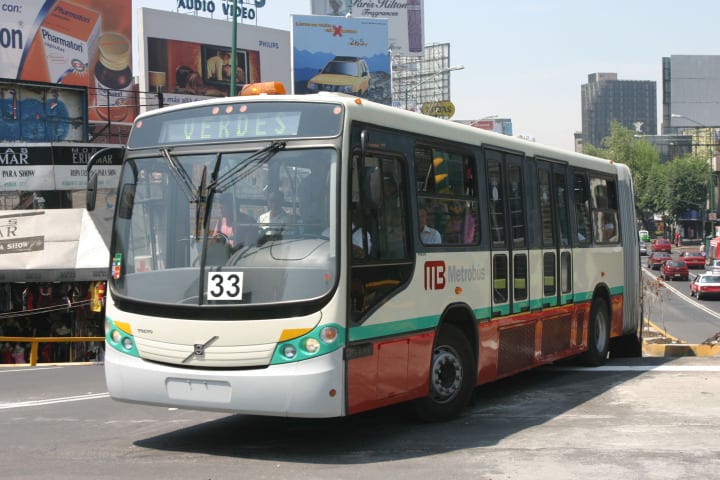
Photo courtesy of the Center for Sustainable Transport in Mexico (CTS-Mexico).
[IMAGE]Mexico-metrobus2-full.jpg[/IMAGE]EMBARQ,the World Resources Institute Center for Sustainable Transport, was honored by Harvard University for its work in establishing Mexico City’s Metrobus, a sustainable transit project in one of the world’s most populated and congested cities.
The bi-annual 2009 Roy Family Award for Environmental Partnership, presented by Harvard’s John F. Kennedy School of Government, celebrates outstanding public-private partnerships that enhance environmental quality through the use of novel and creative approaches. EMBARQ helped create the public-private partnership with the Mexico City government to the make the transit project a reality.
“We’re honored to receive this award,” said Nancy Kete, director of EMBARQ. “We always knew that creating a public-private partnership model was necessary to overcome the political challenges that often impede sustainable transportation.” Mexico City’s Metrobus is a bus rapid transit (BRT) system designed to reduce air pollution, greenhouse gas emissions and traffic, while improving the quality of life for commuters.
“Our goal was to pull the disparate groups together and help them find compromises. We wanted to show that cooperation was a better strategy than competition,” Kete added.
In 2005, after several years of planning and development, Metrobus opened along approximately 12 miles of the central transport artery in Mexico City, Avenida Insurgentes. The route was extended an approximate 5.5 miles in 2008, and later extended by about another 13.7 miles with the launch of the Eje 4 Sur corridor. It’s estimated the new buses transport more than 450,000 passengers per day.
By introducing cleaner, more efficient buses, and convincing many commuters to leave their cars at home, Metrobus has reduced carbon dioxide emissions from Mexico City traffic by an estimated 60,000 tons to 80,000 tons a year. Also, due to the expansion of the system, a total of 839 polluting mini-buses that once traveled along the Metrobus route have been permanently removed from the roads, thanks to successful negotiations with former mini-bus owners and operators.
Mexico City Mayor Marcelo Ebrard wants to extend the system to 10 lines from two. “If we make [the city] greener, the city will be able to survive.”
EMBARQ worked on the project with three Mexico City government agencies - the Secretary of the Environment, Secretary of Transportation and Secretary of Urban Development -- and the Interdisciplinary Center for Biodiversity and Environment (CeIBA).
Together, these groups established the Center for Sustainable Transport in Mexico (CTS-México), a not-for-profit organization that has provided ongoing technical assistance to the Metrobus system from its inception through its expansion. The World Bank; Global Environment Facility; and the Shell, Caterpillar and Hewlett Foundations provided significant financial support for the project.
EMBARQ and CTS-México are now advising other cities in Mexico on developing their own BRT systems. One project launched recently is Guadalajara’s Macrobus, which opened last spring.
“This model is transferable to cities throughout the developing world wrestling with the dual problem of moving people around in a highly congested area, while combating very high pollution levels,” said Henry Lee, director of the Environment and Natural Resources program at Harvard University’s Kennedy School’s Belfer Center for Science and International Affairs.
Metrobus was selected from a group of 30 highly qualified projects from around the world that tackled tough environmental problems ranging from clean fuel adoption to nuclear waste cleanup. More than 20 experts from and outside of Harvard reviewed the nominations.
More Bus
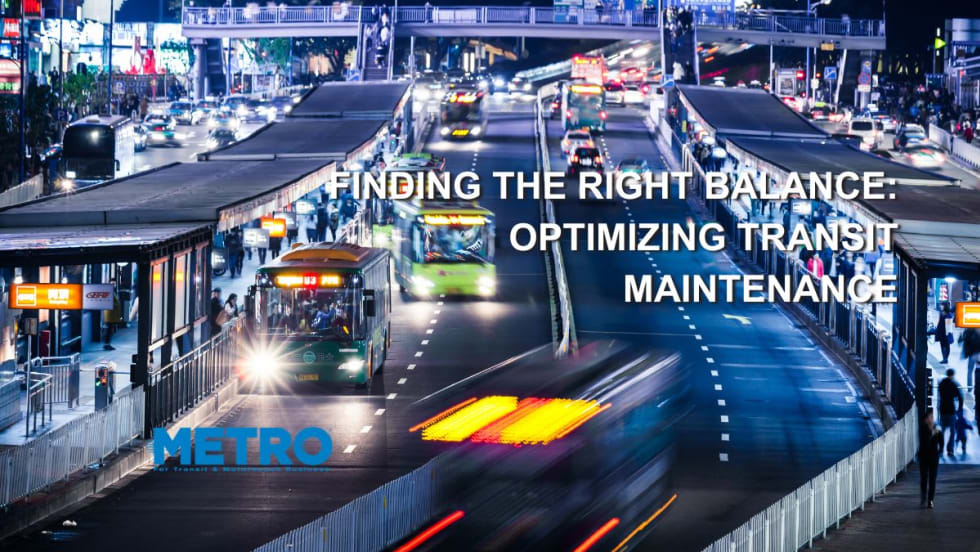
Finding the ‘Happy Medium’: Optimizing Maintenance Without Sacrificing Reliability
The key to maintenance optimization isn’t doing less work—it’s doing the right work at the right time on the right assets.
Read More →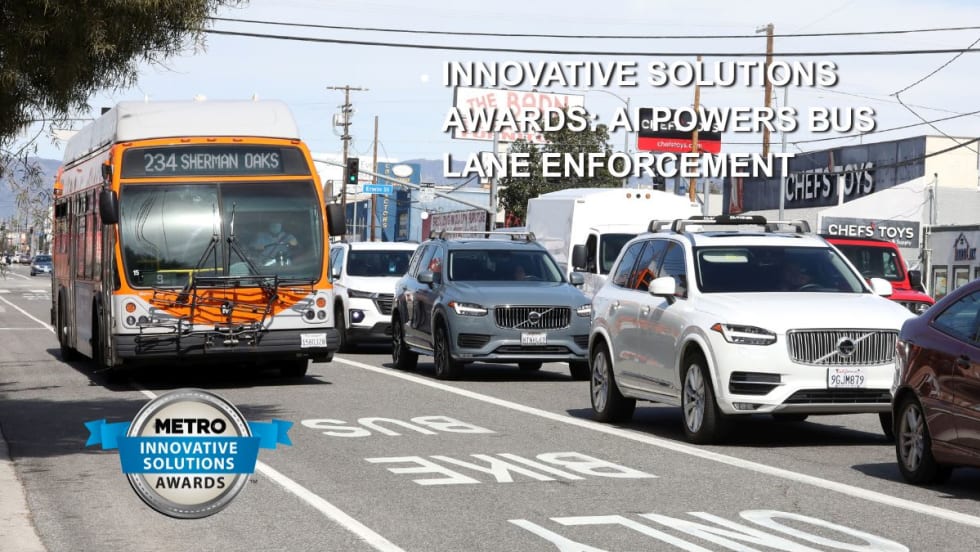
LA Metro, City of West Hollywood, and Partners Advance Smarter Bus Lane Enforcement
The award-winning partnership combines AI-powered detection with human oversight to improve bus reliability, accessibility, and enforcement efficiency.
Read More →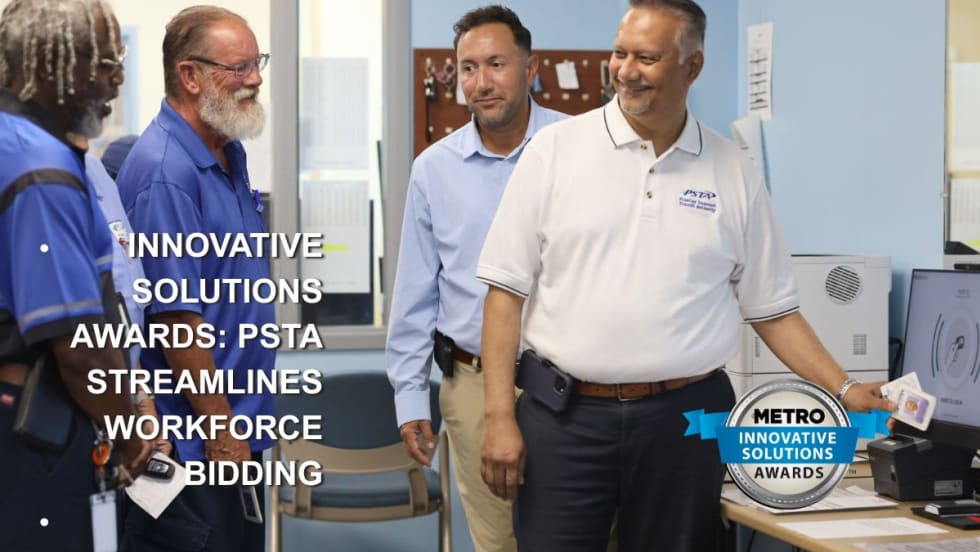
PSTA Modernizes Workforce Management with Digital Bidding System
The award-winning Workforce Transit Modernization project replaced paper bidding with a transparent digital platform, cutting administrative effort while improving access for operators.
Read More →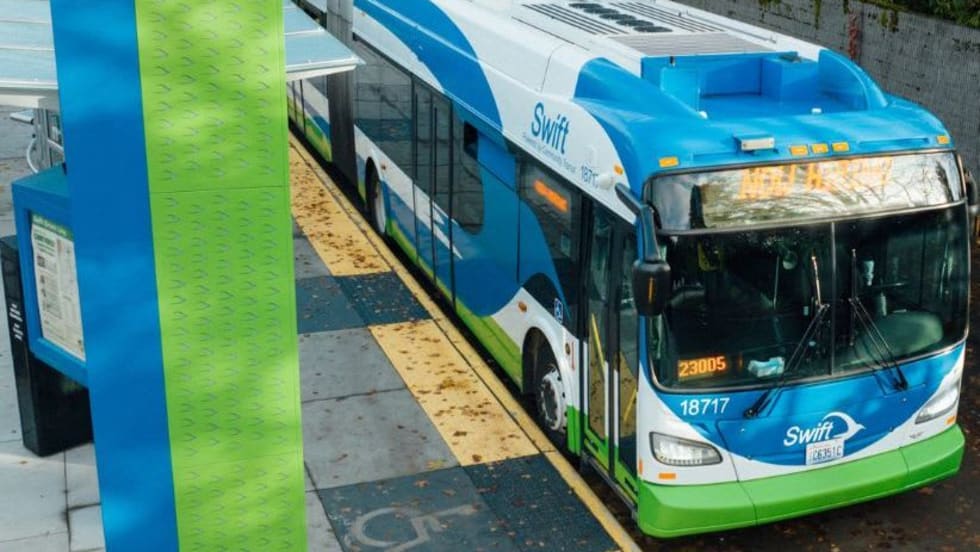
Washington's Community Transit Sets Six-Year Roadmap for Growth, Expansion
Approved TDP targets more bus service, new mobility options, Swift BRT expansion, and a potential Everett Transit annexation.
Read More →
DART Customer Satisfaction Reaches Six-Year High
Overall satisfaction rose to 74.9%, while the agency’s Net Promoter Score reached a record 33.7.
Read More →
How DART's GoPass Is Redefining Regional Mobility
Serving 14 transit agencies, GoPass simplifies multimodal travel by allowing riders to plan, pay for, and manage an entire trip through one app.
Read More →
Biz Briefs: OCTA Taps Clean Energy for Hydrogen Station, Stadler to Supply Via Rail Vehicles, and More
From manufacturers and suppliers to transit agencies and motorcoach operators, these updates offer a snapshot of the projects, partnerships and business moves driving the industry forward.
Read More →
METRO Magazine Announces 2026 Innovative Solutions Awards Winners
Projects Recognized for Advancing Mobility Through Technology, Accessibility, Workforce Innovation, and Operational Excellence
Read More →
Biz Briefs: STV teams with Amtrak, Motorcoach Operators Boost Fleet and Land Contracts, and More
From manufacturers and suppliers to transit agencies and motorcoach operators, these updates offer a snapshot of the projects, partnerships and business moves driving the industry forward.
Read More →
LA Metro Marks Banner Year, Sets Ambitious Goals for New Fiscal Year
Incoming LA Metro Board Chair and Los Angeles Mayor Karen Bass joined outgoing Board Chair Fernando Dutra and LA Metro CEO Stephanie Wiggins to review accomplishments from fiscal year 2026, which included the opening of new rail extensions, advancement of major transit projects, expanded safety programs, and new rider amenities.
Read More →