



Federal rail safety group focuses on oversight, planning
Secretary LaHood created the Transit Rail Advisory Committee for Safety in 2009 after a series of accidents in Chicago; Washington, D.C.; San Francisco and Boston raised widespread concern regarding the safety of rail transit passengers and employees.

This week, the second meeting of the Transit Rail Advisory Committee for Safety (TRACS) focused on the best models for state safety oversight partnerships and effective safety planning by local transit agencies.
Secretary LaHood created the group in 2009 after a series of accidents in Chicago; Washington, D.C.; San Francisco and Boston raised widespread concern regarding the safety of rail transit passengers and employees.
"Safety is our highest priority and we are committed to keeping transit one of the safest modes of transportation in the nation," said Secretary LaHood. "The work of TRACS will be invaluable to FTA's ability to establish and enforce safety standards when Congress approves the Public Transportation Safety Program Act."
In the second meeting, the group focused on two reports drafted by its members. The first report identifies the best model for state safety oversight partnership and the second makes recommendations for local transit agencies on developing effective safety planning.
"This effort is solely about the safety of the transit employees and riders who comprise the ten billion passenger rides provided each year by public transportation across the country," said FTA Administrator Peter Rogoff, who opened the two-day meeting. "For the well-being of those riders and workers, Congress needs to rescind an antiquated 1960s era law that forbids the federal government from issuing even the most basic safety regulations. TRACS is a critically important tool that will ensure that the FTA does this job smartly and efficiently once Congress acts."
TRACS was chartered by Secretary LaHood to guide the Federal Transit Administration (FTA) safety rulemakings when the Obama Administration's Public Transportation Safety Program Act becomes law.
That legislation would authorize the U.S. Department of Transportation to establish federal safety standards for rail transit systems. FTA currently lacks the statutory authority to oversee transit agency safety programs and promulgate safety regulations and standards as a general matter. During the 111th Congress, the Senate Banking Committee reported a bipartisan version of the Administration's proposal by a unanimous vote in July 2010.
TRACS members were selected based on their expertise in the field of safety, transit operations or maintenance, representation of stakeholder interests that would be affected by transit safety requirements, policy experience, leadership, organizational skills and region.
More Rail
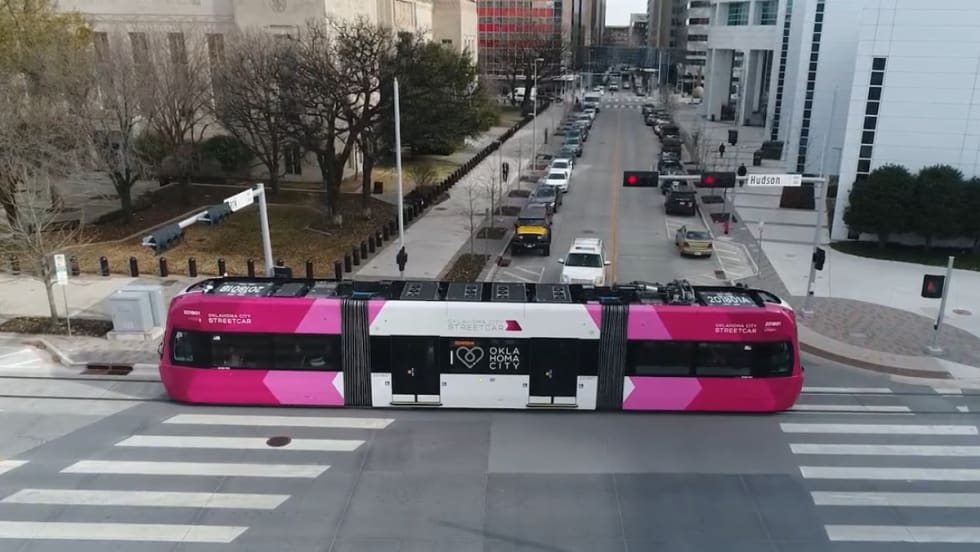
OKC Streetcar Makes Zero-Fare Service Permanent
Ridership increased an average of 71% compared with the same period a year earlier during the fare-free pilot.
Read More →
DART Customer Satisfaction Reaches Six-Year High
Overall satisfaction rose to 74.9%, while the agency’s Net Promoter Score reached a record 33.7.
Read More →
How DART's GoPass Is Redefining Regional Mobility
Serving 14 transit agencies, GoPass simplifies multimodal travel by allowing riders to plan, pay for, and manage an entire trip through one app.
Read More →
Amtrak Board Advances Plan to Restructure Organization, Seeks Public Input
The proposal, developed by Amtrak management and approved by the board for further consideration, is intended to modernize the organization's structure while improving accountability, operational efficiency, and customer service.
Read More →
Biz Briefs: STV teams with Amtrak, Motorcoach Operators Boost Fleet and Land Contracts, and More
From manufacturers and suppliers to transit agencies and motorcoach operators, these updates offer a snapshot of the projects, partnerships and business moves driving the industry forward.
Read More →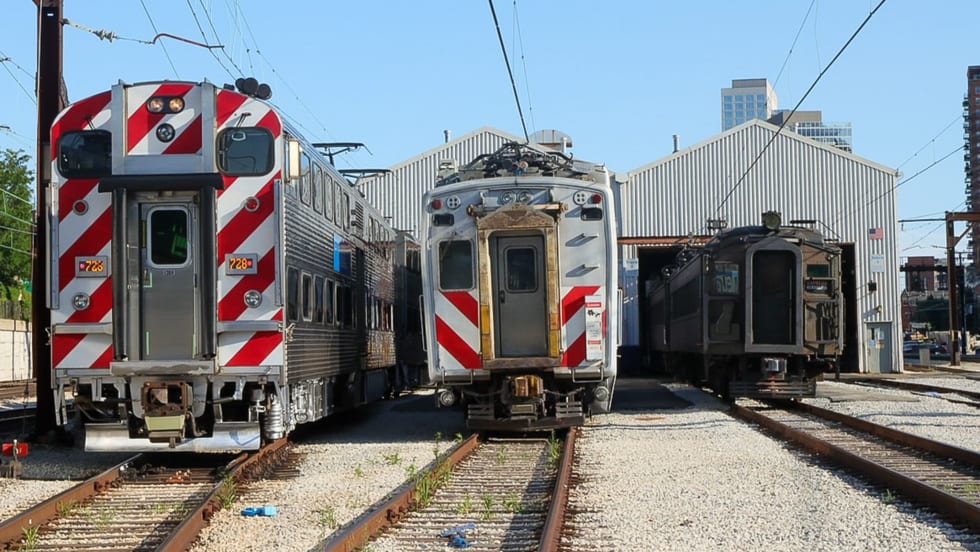
Metra Celebrates 100 Years of Electric Rail, Looks to the Future
The event was also a celebration of recent reforms to public transportation in the Chicago area, changes that could be as transformative in the future as the major civic achievement a century ago, said officials.
Read More →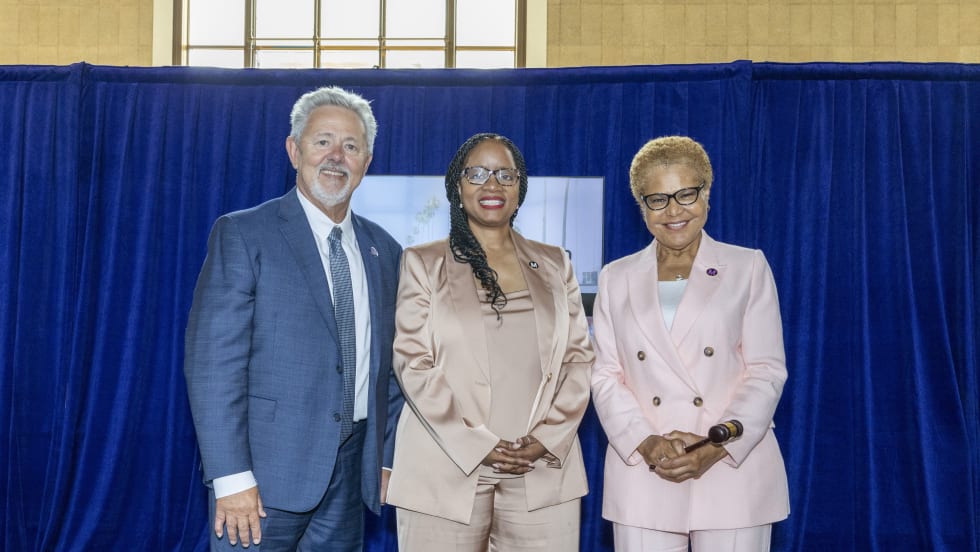
LA Metro Marks Banner Year, Sets Ambitious Goals for New Fiscal Year
Incoming LA Metro Board Chair and Los Angeles Mayor Karen Bass joined outgoing Board Chair Fernando Dutra and LA Metro CEO Stephanie Wiggins to review accomplishments from fiscal year 2026, which included the opening of new rail extensions, advancement of major transit projects, expanded safety programs, and new rider amenities.
Read More →
DART Taps Nathaniel P. Ford Sr. as Next President/CEO
Since 2012, Ford has served as the CEO of the Jacksonville Transportation Authority
Read More →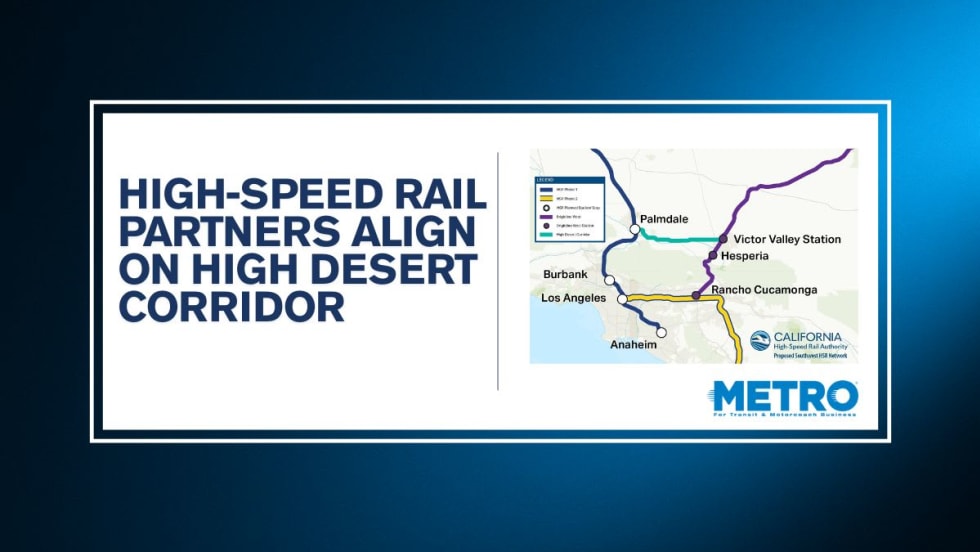
California High-Speed Rail Authority Signs MOU to Advance High Desert Corridor
The agreement deepens collaboration between the California High-Speed Rail Authority and the High Desert Corridor Joint Powers Agency, supporting design integration, cost savings, and faster delivery of a key Southern California rail link.
Read More →
Building the Next Generation of Transit Technology
In this edition of METROspectives, Luminator CEO Magnus Friberg discusses the company's transformation, the growing role of AI and software, and what's next for transit technology.
Read More →