



Fla. transit agencies collaborate on cross-agency fare app
The pilot app offers a three-day, $11 unlimited pass usable across Hillsborough Area Regional Transit Authority and Pinellas Suncoast Transit Authority bus lines.

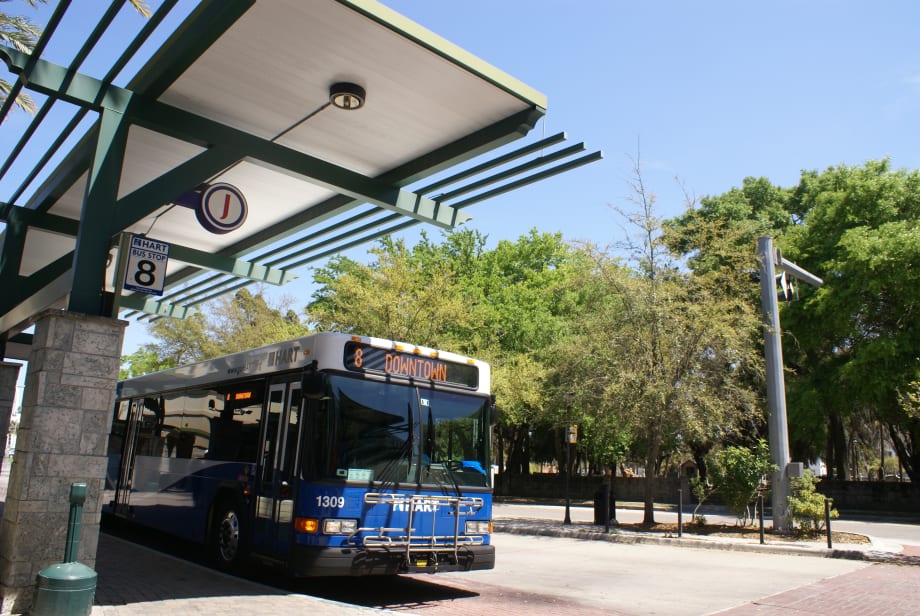
Photos Courtesy HART
Photos Courtesy HART
Story by Katherine Fleming
In an effort to modernize and streamline fare payment processing systems, Tampa Bay, Fla.-area transit agencies have created an app that allows passengers to use a single payment method across multiple agencies and types of transport.
The pilot app offers a three-day, $11 unlimited pass usable across Hillsborough Area Regional Transit Authority (HART) and Pinellas Suncoast Transit Authority (PSTA) bus lines. It has been so well-received that the agencies have decided to continue its use until a more robust app, which will offer more options, is made available in summer 2018.
The project was spearheaded by HART and PSTA, with additional stakeholders including Pasco County Public Transportation, Hernando County Transit, and Sarasota County Area Transit. Three other transits were involved initially, but dropped out. The app was developed by mobile developer Bytemark, with INIT completing systems integration.
The agencies decided to release the limited version of the app to test their systems, troubleshoot, and help the public get used to the concept before releasing the full app. The test version is a simple flash pass. “You get on the bus, show it to the driver and touch the pass, and the animation changes color to show it’s real,” explains Lucien Campillo. The final app will be scanned by a validator. It will have more options, allowing users to plan trips and purchase any fare type from any of the participating agencies, as well as store value in their accounts.
Campillo said that the impetus for the project came when the agency was considering how to update their fare boxes, which were over 30 years old.
“They did it across the region because they thought funding would be easier to find,” he explained.
HART and PSTA put in the bulk of the funding, and the project received grants from the Florida Department of Transportation and the Tampa Bay Area Regional Transportation Authority.
The app will make transit more convenient for passengers, especially as the region develops new transportation options. “It’s going make transit very seamless,” said Campillo. “There are new modes of transit coming here — ferries, possibly light rail, they're talking about a gondola in St. Petersburg — and they all need ways to collect fares.”
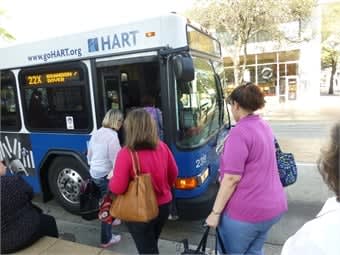
When passengers pay with the app rather than fumbling for the right change, boarding times can shorten by half or more, which reduces costs associated with bus idling, lessens carbon emissions, and helps vehicles stay on schedule.
In addition to increasing convenience, using the app results in cost savings for the agencies involved. When passengers pay with the app rather than fumbling for the right change, boarding times can shorten by half or more, which reduces costs associated with bus idling, lessens carbon emissions, and helps vehicles stay on schedule. Institutions or companies that offer transit cards for their employees will be able to manage accounts through the app, and universities that pay for transit cards for students can be billed by usage, saving money for the taxpayer as well.
Campillo said assembling the right team and making sure all groups were represented was critical to the project. The important factor was “understanding who has to be involved in the project team from the very beginning — making sure all the functions were represented through the agencies that were participating,” he said.
The app has been well-received by the public during the testing, according to Campillo.
“We were very impressed by how many people got it immediately and how many people started buying the product on it,” he said. “We were surprised by how few customer service calls we had to do, how well-received it was, and how exponential growth is continuing over the test period, so far.”
More Management
Building Stronger Leaders, More Resilient Transit Teams
Dr. Carol Parker Walsh discusses leadership development, employee retention, workplace culture, and preparing transit’s workforce for AI and automation.
Read More →
Roman Cornell on ABC Companies’ Evolution and the Future of Passenger Transportation
The company’s CEO discusses carrying forward a third-generation family legacy, ABC’s continued evolution in passenger transportation, support for increasingly complex fleets, and how technology and continued investment could help operators improve uptime.
Read More →
CATS Launches West Charlotte Microtransit Zone, Expands Transit Services
The new microtransit zone connects residents to key destinations as Charlotte Area Transit System rolls out the first phase of its 2055 Transit System Plan.
Read More →
VIA Bus Ridership Grows 10.1% Through August 2026
San Antonio's VIA Metropolitan Transit reported the highest bus ridership growth among major Texas transit systems. Federal Transit Administration data ranked it second among the nation's 50 largest transit systems.
Read More →
CSA Group Releases Climate Resilience Standard for Transit, Passenger Rail
Developed with support from the Standards Council of Canada, CSA D700 guides assessing climate-related risks and planning adaptation measures for transit and passenger rail systems.
Read More →
ETA CEO John Maglio on Transit Technology, Innovation, and Building Agency Trust
ETA founder and CEO John Maglio explores the evolution of transit technology, the importance of reliable systems, and how stronger partnerships can help agencies improve operations and the passenger experience.
Read More →
COTA Launches First Customer Experience Action Plan to Improve Transit Service
The new plan outlines improvements to service reliability, accessibility, communication, and the overall rider experience across Central Ohio's transit system.
Read More →
LA Metro September Ridership Climbs 3.9%, Led by Rail Growth
The agency recorded more than 27.2 million boardings, with rail ridership increasing 12.4% year over year and the D Line posting the largest gains.
Read More →
Utilimarc Launches SmartReplace to Optimize Fleet Replacement Decisions
AI-powered SmartReplace helps fleets prioritize vehicle replacements, model budget scenarios, and build more defensible long-term strategies.
Read More →
APTA Honors 2026 Award Winners, Hall of Fame Inductees at TRANSform & EXPO
Innovations in autonomous and zero-emission transportation, standout transit systems, and industry leadership took center stage among this year's honorees.
Read More →