



FMCSA establishes national training standards for new bus drivers
The entry-level driver training Final Rule retains many of the consensus recommendations of a negotiated rulemaking committee comprised of 25 stakeholders and FMCSA representatives.


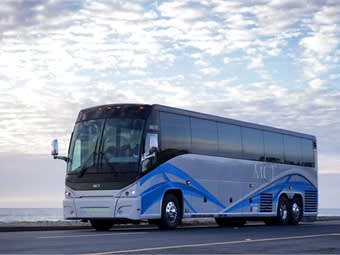
The Federal Motor Carrier Safety Administration (FMCSA) announced a Final Rule establishing comprehensive national minimum training standards for entry-level commercial truck and bus operators seeking to obtain a commercial driver’s license (CDL) or certain endorsements. The established standards address the knowledge and skills necessary for the safe operation of commercial motor vehicles and also establish minimum qualifications for entities and individuals who provide entry-level driver training.
The entry-level driver training Final Rule retains many of the consensus recommendations of a negotiated rulemaking committee comprised of 25 stakeholders and FMCSA representatives.
“Ensuring that drivers are properly trained is a critical element in improving road safety for everyone,” said U.S. Transportation Secretary Anthony Foxx. “The entry-level training standards for large truck and bus operators put forth today exemplify a commitment to safety from a broad coalition of commercial motor vehicle stakeholders.”
The comprehensive CDL training requirements, which emphasize safety and promote driving efficiency, will result in lives saved, reductions in fuel consumption and emissions, vehicle maintenance cost reductions, and industry-wide performance improvements. The rulemaking was mandated by Congress in MAP-21.
“This new rule represents the culmination of a sustained and coordinated effort to identify appropriate pre-licensing CDL standards that will enhance safety on our Nation’s roads,” said FMCSA Administrator T.F. Scott Darling, III. “Without the collective efforts of our stakeholders working closely with us, we could not have completed this important lifesaving rule. We especially appreciate the Entry-Level Driver Training Advisory Committee for its tireless efforts and expertise to enhance roadway safety through the negotiated rulemaking process.”
Under the Final Rule, applicants seeking a CDL would be required to demonstrate proficiency in knowledge training and behind-the-wheel training on a driving range and on a public road, with training obtained from an instructional program that meets FMCSA standards. There is no required minimum number of hours for the knowledge or behind-the-wheel portions of any of the individual training curricula, but training providers must determine that each CDL applicant demonstrates proficiency in all required elements of the training to successfully complete the program.
Mandatory, comprehensive training in all 50 states, the District of Columbia, and all U.S. territories would apply to the following individuals under the Final Rule:
First-time CDL applicants, including:
“Class A” CDLs
“Class B” CDLs
Current CDL holders seeking a license upgrade (e.g., a Class B CDL holder seeking a Class A CDL) or an additional endorsement necessary to transport hazardous materials, or to operate a motorcoach or school bus.
All of these individuals are subject to the entry-level driver training requirements and must complete a course of instruction provided by an entity that meets the qualification standards set forth in the Final Rule. FMCSA anticipates that many entities currently providing entry-level driver training, including motor carriers, school districts, independent training schools, and individuals will be eligible to provide training that complies with the new requirements.
Drivers who are not subject to or are excepted or exempted from federal CDL requirements are not subject to this Final Rule. For example, military drivers, farmers, and firefighters who are excepted from federal CDL requirements are not subject to this Final Rule.
The entry-level driver training Final Rule goes into effect on February 6, 2017, with a compliance date of February 2020.
To view the entry-level driver training Final Rule, click here.
More Motorcoach

From Surviving to Thriving: Building Stronger Transportation Organizations
Bus Business Consultants founder Brian Dickson shares lessons on leadership, organizational health, and creating options for long-term success in a changing transportation industry.
Read More →
Report: Canadian Motorcoach Industry Generates $4.4B in Economic Impact
The 2025 Motorcoach Economic Impact Report finds motorcoach travel supported nearly 25,000 jobs and generated $980 million in federal, provincial, and local taxes.
Read More →
Prevost Opens Expanded Chicago-Area Service Center
The $8.1 million Elk Grove Village investment nearly triples facility space while adding service capacity, parts storage, and customer amenities.
Read More →
People Movement: Dan Dipert Coaches Adds Third-Generation Leader, Keolis Names New Valley Metro VP/GM, and More
In this edition, we also cover recent appointments and announcements at the Wabtec, SilverRide, HNTB, and more, showcasing the individuals helping to shape the future of transportation.
Read More →
METRO Opens Submissions for 2026 Motorcoach Awards
Nominations are now being accepted for METRO Magazine’s Operator of the Year and Innovative Operator of the Year awards.
Read More →
Biz Briefs: Alstom Lands Canadian Contract, LYT to Supply California TSP, and More
In METRO's latest installment, we take a look at recent news from Complete Coach Works, Beep, FlixBus, and more partnerships making headlines across the transportation sector.
Read More →
Biz Briefs: RIPTA Unveils New Frontrunners, Clevland RTA Adds New Siemens, and More
In METRO's latest installment, we take a look at recent news from Siemens, Prevost, Dodge, and more partnerships making headlines across the transportation sector.
Read More →
People Movement: Holly Arnold Joins Transdev and More
In this edition, we also cover recent appointments and announcements at Pace, CamTran, MCI, and more, showcasing the individuals helping to shape the future of transportation.
Read More →
ABA Report: Motorcoach Travel Generates $161.6B Economic Impact
The 2025 analysis finds motorcoach travel supported nearly 900,000 jobs and generated $28 billion in federal, state, and local taxes.
Read More →
CharterUP’s Armir Harris on Technology, AI, and the Future of Group Mobility
In a recent episode of METROspectives, CharterUP Founder/CEO Armir Harris discussed the company’s evolution from an online charter bus marketplace into a technology platform supporting public- and private-sector mobility and much more.
Read More →