



FTA awards $1.6 billion to 27 transit projects
New Starts projects tabbed to receive funds include Connecticut's New Britain-Hartford Busway, Denver's 13-station Eagle Commuter Rail project and Seattle's Rapid C bus rapid transit line.

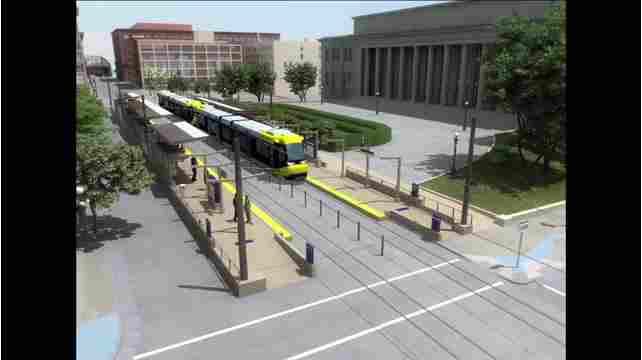
Screenshot from simulation of Minnesota's Central Corridor light rail project.
[IMAGE]Minn-Central-Corridor-screenshot-2.jpg[/IMAGE]Twenty seven transit projects across America have been tabbed to receive $1.58 billion in funding under the Federal Transit Administration's (FTA) New Starts program.
This program provides federal support for major capital construction projects such as subways, light rail, streetcars, and bus rapid transit. These projects include:
The New Britain-Hartford (Conn.) Busway will provide commuters traveling between New Britain and Hartford a more efficient and cost-effective alternative to the current daily commute on Interstate 84, the region’s most congested highway. The dedicated busway will provide the area’s relatively large transit-dependent population better access to the 81,000 jobs along the route and across the busway’s 11 stations, promote redevelopment opportunities along the 9.4-mile corridor, and provide faster transit access to major activity centers throughout the area. The FTA anticipates an overall federal commitment of $275.3 million to the $572.7 million project.
Denver’s 13-station Eagle Commuter Rail project, which will add nearly 23 miles of service to Denver’s transit system connecting downtown Denver and Denver International Airport to the east with numerous communities in between. Ultimately, the FTA projects contributing approximately $1 billion towards the $2 billion project, which is expected to create 5,400 jobs during peak construction. This is one component of FasTracks, a multi-billion dollar, multi-year transit-expansion program that will help Denver support smart, sustainable growth, create jobs, and compete for business for decades to come.
The Rapid C Bus Rapid Transit Line will help to relieve traffic congestion in West Seattle, Wash., improve access to downtown Seattle’s 150,000 jobs, and connect the popular Washington State Ferries serving Vashon Island and Southworth among other spots along the corridor. Nearly $21.3 million in discretionary 2011 funds has been budgeted for construction of the $28.4 million project. The C Line, which should be fully operational by the fall of 2012, is expected to create approximately 180 construction, manufacturing, and transportation jobs during the peak construction period.
The Central Corridor light rail project will connect Minnesota's two largest cities — Minneapolis and Saint Paul — by light rail for the first time. The FTA recently signed a Full Funding Grant Agreement making a long-term financial commitment to the $957 million light rail line, which will carry 40,000 riders along this busy 11-mile corridor. The project, which includes 18 new stations and 31 new rail cars, is scheduled to open in 2014. In addition to serving the downtown areas of the Twin Cities, the Central Corridor line will provide more efficient access to the University of Minnesota, the Midway area, the State Capitol complex, Target Field and the Metrodome, and many neighborhoods in between.
The Austin (Texas) MetroRapid is a 37.5-mile, 40-stop, bus rapid transit (BRT) system. The FTA is supporting the local vision with a $24.2 million investment in 2011 towards the nearly $50 million project. The project, which is scheduled to open in the summer of 2013, is the first phase of Capitol Metropolitan Transit Authority’s comprehensive and forward-leaning All Systems Go ten-corridor long-range transit plan.
A complete list of the 27 projects receiving New Starts funding allocations for 2011 can be found here.
More Bus

New York MTA Plans Largest Bus Fleet Upgrade in More Than a Decade
The agency is seeking manufacturers for 650 new CNG buses to replace aging vehicles, improve reliability, and advance its broader fleet modernization strategy.
Read More →
Building a Flexible Path to Transit Electrification
John Hroncich discusses BAE Systems’ modular and scalable approach, lessons learned from decades of real-world operations, and how agencies can identify electrification strategies that fit their fleets.
Read More →
Bus Tech Talk: Keeping Transit Technicians Ahead of the Technology Curve
LA Metro’s Obed Mejia discusses technician training, evolving maintenance technology, fleet replacement, and strategies for getting the most out of today’s transit fleets.
Read More →
Biz Briefs: RIPTA Unveils New Frontrunners, Clevland RTA Adds New Siemens, and More
In METRO's latest installment, we take a look at recent news from Siemens, Prevost, Dodge, and more partnerships making headlines across the transportation sector.
Read More →
People Movement: Holly Arnold Joins Transdev and More
In this edition, we also cover recent appointments and announcements at Pace, CamTran, MCI, and more, showcasing the individuals helping to shape the future of transportation.
Read More →
The High Cost of Transit Buses: Industry Leaders Look to Procurement Reform
Transit leaders and policymakers examine how standardized bus designs, streamlined procurement, and predictable funding could help agencies stretch budgets and deliver better service.
Read More →
The Business Voice Behind Public Transportation
As chair of APTA’s Business Members Board of Governors, Ray Melleady explains how more than 850 business members are partnering with transit agencies to advance funding, innovation, and industry-wide collaboration.
Read More →
From Surviving to Thriving: Building Stronger Transportation Organizations
Bus Business Consultants founder Brian Dickson shares lessons on leadership, organizational health, and creating options for long-term success in a changing transportation industry.
Read More →
Finding the ‘Happy Medium’: Optimizing Maintenance Without Sacrificing Reliability
The key to maintenance optimization isn’t doing less work—it’s doing the right work at the right time on the right assets.
Read More →
LA Metro, City of West Hollywood, and Partners Advance Smarter Bus Lane Enforcement
The award-winning partnership combines AI-powered detection with human oversight to improve bus reliability, accessibility, and enforcement efficiency.
Read More →