



Gatekeeper announces new acquisition, SEPTA contract
The assets acquired include a production facility; a workforce with technical expertise that expands capability in the train market.


Contracts for SEPTA include video system maintenance and support services of mobile video equipment on 2,400 of SEPTA’s 2,800 transit buses, as well as to supply and install cameras, uninterruptable power supplies, and crashworthy hard drives on selected Philadelphia trains.
SEPTA
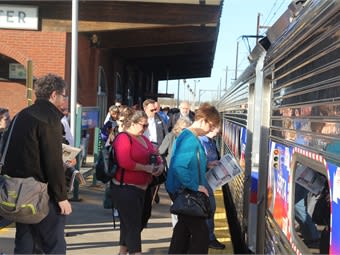
Contracts for SEPTA include video system maintenance and support services of mobile video equipment on 2,400 of SEPTA’s 2,800 transit buses, as well as to supply and install cameras, uninterruptable power supplies, and crashworthy hard drives on selected Philadelphia trains.
SEPTA
Mobile surveillance company, Gatekeeper Systems Inc. announced its newly formed subsidiary, Gatekeeper Systems USA Inc., purchased certain operating assets of Wilmington, Del.-based Spector Logistics Inc., which positions it for expansion in the U.S. transit market. Spector Logistics’ Founder Robert (Bob) Welsh has joined Gatekeeper in a business development role.
The assets acquired include a production facility; a workforce with technical expertise that expands the company’s capability in the train market; and a command and control center in Wilmington designed to manage portable video installations for special events, crowd surveillance, and remote site-monitoring.
Gatekeeper USA also acquired Spector’s contracts with the Southeastern Pennsylvania Transportation Authority (SEPTA), which are expected to generate approximately $1.33 million in revenue through the provision of video system maintenance and support services of mobile video equipment on 2,400 of SEPTA’s 2,800 transit buses, as well as to supply and install cameras, uninterruptable power supplies, and crashworthy hard drives on selected Philadelphia trains.
“Aligning with SEPTA provides an opportunity for additional revenue by way of a contract extension, as well as through the provision of additional video solutions and other services offered by Gatekeeper,” said Gatekeeper President/CEO Doug Dyment. “We feel fortunate to have acquired high quality and immediately accretive assets and are particularly excited to have Bob Welsh, with his extensive experience in the transit, law enforcement, and military markets, join our management team.”
More Security and Safety

Public Transit Conference Returning to GFX in 2027, Call for Papers Now Open
The Call for Papers is now open, allowing transit agency professionals and industry experts to help shape the PTC educational program by submitting session ideas for consideration.
Read More →
Safe Transit Act Proposes New Security Requirements for Federal Transit Funding
Proposed legislation would link federal transit dollars to safety measures while requiring security investments, onboard cameras, and new fare collection standards.
Read More →
FTA Ends Direct Oversight of MBTA Safety Actions
The federal agency closed its remaining special directive to the Massachusetts Department of Public Utilities following a safety review that began in 2022.
Read More →
Transit Agencies Highlight Safety Gains at National Summit
Leaders from 15 major transit systems shared crime-reduction results and safety initiatives while discussing the role of continued federal support.
Read More →
DART Launches Major Security, Fare Enforcement Initiative
The 90-day demonstration will deploy coordinated security teams at five light rail stations while testing controlled access and gathering data to guide future investments.
Read More →
RTD Launches NextRide App to Consolidate Trip Planning, Fares, Security Reporting
The app expands on RTD’s existing NextRide web application and allows customers to view real-time vehicle locations and service alerts, purchase and store digital fares, and access customer support.
Read More →
TAPTCO Updates OSHA Compliance Training for Transit Maintenance Operations
The revamped program addresses 26 OSHA standards for maintenance facilities, with TAPTCO pointing to training, documentation, and everyday shop hazards as continuing challenges for transit operations.
Read More →
FRA Announces $5.3B in Rail Investments, Including $2B for Amtrak
Funding will support grade-crossing improvements, infrastructure upgrades, and new Amtrak equipment in 23 states.
Read More →
Chicago, Maryland Expand Non-Law-Enforcement Safety, Rider Support
The CTA and MTA are launching new programs aimed at de-escalation, crisis response, rider assistance, and greater transparency.
Read More →
LA Metro, City of West Hollywood, and Partners Advance Smarter Bus Lane Enforcement
The award-winning partnership combines AI-powered detection with human oversight to improve bus reliability, accessibility, and enforcement efficiency.
Read More →