




RELATED: Cost-Cutting Strategies for Your Paratransit Program
Greater New Haven Transit launches paratransit mobile app
The app, provided by technology partner Routematch, is designed for Apple and Android devices.
July 24, 2018
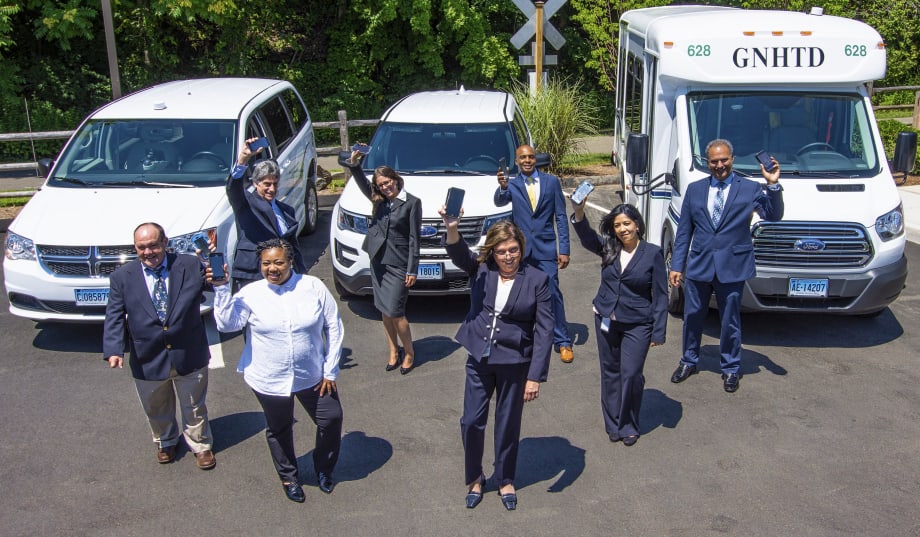
GNHTD is a growing transit agency that receives approximately 100 new client applications per month to utilize its elderly and disabled transportation service in the South Central Region of Connecticut.
GNHTD
2 min to read

GNHTD is a growing transit agency that receives approximately 100 new client applications per month to utilize its elderly and disabled transportation service in the South Central Region of Connecticut.
GNHTD
Conn.’s Greater New Haven Transit District (GNHTD) announced the availability of a mobile app and web portal for riders to request and manage their ADA paratransit trip and see where their buses are through their smartphones, tablets, and personal computers.
The app, provided by technology partner Routematch, is designed for Apple and Android devices. Riders who prefer to request and review trips from a computer can also use the app via a web site.
“Our riders want options and this app gives them flexibility to make their own mobility choices,” said Kim Dunham, executive director, GHNTD. “Some riders may prefer to call in while others would rather not wait to request or cancel a trip. Also, clients like to know where their ride is, so they can be ready or know they have extra time to spare while waiting for their ride. Having the map that shows where their bus is in real time gives them that freedom.”
GNHTD is a growing transit agency that receives approximately 100 new client applications per month to utilize its elderly and disabled transportation service in the South Central Region of Connecticut.
The mobile app allows GNHTD to manage incoming call volume by lessening the number of reservation, cancellation, and estimated time of arrival calls. The management team also expects to benefit from operational efficiencies, including fewer no-shows and late cancellations. Caretakers and family members can also benefit from using the GNHTD mobile app to monitor the ETA of family members and loved ones.
“Our goal is to provide a higher level of quality service to our riders while also running our operations as efficiently as possible,” added Dunham. “We are always seeking ways to do this through innovation and improved processes, and technology is part of the plan to help us work smarter, not harder.”
Deployment of the new app is the first step of several to better utilize technology for improved service delivery. Plans are underway to explore same day paratransit service and mobility-on-demand management that offers riders access to other services such as the local fixed-route system, transportation network companies, and first mile/last mile solutions in the New Haven region.
More than 300 clients, over 20% of the 1,500 active riders leveraging the GNHTD ADA paratransit service, signed up for the new app within the first four weeks of deployment, and the District expects more participants in the coming weeks. Funding partners include the FTA and Connecticut DOT.
More New Mobility

From Hardware to Digital Partner: Luminator Charts Its Next Chapter
CEO Magnus Friberg discusses Luminator’s shift toward becoming a digital partner, the growing importance of software and interoperability, and how AI can help agencies improve operations and passenger experience.
Read More →
Biz Briefs: Alstom Lands Canadian Contract, LYT to Supply California TSP, and More
In METRO's latest installment, we take a look at recent news from Complete Coach Works, Beep, FlixBus, and more partnerships making headlines across the transportation sector.
Read More →
CharterUP’s Armir Harris on Technology, AI, and the Future of Group Mobility
In a recent episode of METROspectives, CharterUP Founder/CEO Armir Harris discussed the company’s evolution from an online charter bus marketplace into a technology platform supporting public- and private-sector mobility and much more.
Read More →
Jacksonville’s NAVI Project Charts a New Course for Autonomous Public Transportation
Through its NAVI program, JTA is showing how autonomous vehicles, intelligent infrastructure, and coordinated operations can work together to deliver everyday public transportation.
Read More →
Biz Briefs: Luminator Marks Milestone and More
From manufacturers and suppliers to transit agencies and motorcoach operators, these updates offer a snapshot of the projects, partnerships and business moves driving the industry forward.
Read More →
New Tricks for Old Bureaucracies: Joshua Schank on Making Transit Innovation Stick
Former LA Metro Chief Innovation Officer Joshua Schank discusses why good ideas aren't enough, how transit agencies can overcome resistance to change, and why today's challenges demand more innovation.
Read More →
How DART's GoPass Is Redefining Regional Mobility
Serving 14 transit agencies, GoPass simplifies multimodal travel by allowing riders to plan, pay for, and manage an entire trip through one app.
Read More →
Biz Briefs: OCTA Taps Clean Energy for Hydrogen Station, Stadler to Supply Via Rail Vehicles, and More
From manufacturers and suppliers to transit agencies and motorcoach operators, these updates offer a snapshot of the projects, partnerships and business moves driving the industry forward.
Read More →CharterUP Expands Into New Mobility and Autonomous Transportation
Vice President of New Mobility Stephen Joos discusses how CharterUP is leveraging its nationwide transportation network, technology platform, and autonomous vehicle partnerships to expand into workforce mobility, campus shuttles, and transit solutions.
Read More →
METRO Magazine Announces 2026 Innovative Solutions Awards Winners
Projects Recognized for Advancing Mobility Through Technology, Accessibility, Workforce Innovation, and Operational Excellence
Read More →