



Helsinki Metro opens rail expansion featuring landmark stations
The extension comprises eight stations, each distinguished by original design by Finnish architects.

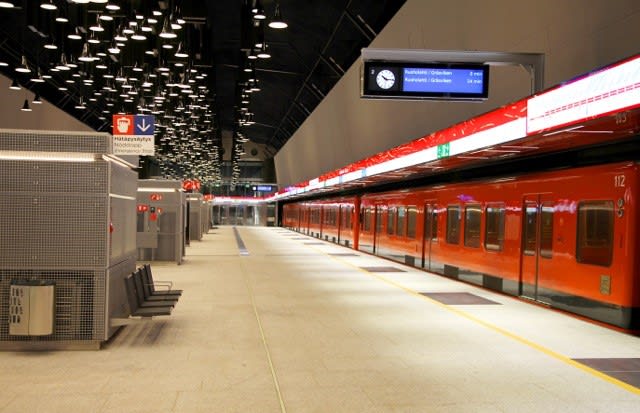
All photos courtesy Tuomas Uusheimo/ALA Architects

A long-awaited extension of the Helsinki metropolitan subway system, the Metro, opened to passenger service on Nov. 18. The extension comprises eight stations, each distinguished by original design by Finnish architects.
The extension takes the Metro to the west, from Helsinki to the neighboring city of Espoo. The stations are from east to west: Lauttasaari, Koivusaari, Keilaniemi, Aalto University, Tapiola, Urheilupuisto, Niittykumpu, and Matinkylä. All stations are underground and reflect the character of the neighborhood.

The Lauttasaari Metro station is marked by an artwork consisting of lights hanging from the ceiling. Lauttasaari and its sister station Koivusaari, both by Helin & Co Architects, are inspired by nature — by snow and ice in Lauttasaari, and by water and the sea in Koivusaari. The asymmetrical walls and ceiling of the Koivusaari station, which is under the sea, evoke an upturned boat and whales.
The Keilaniemi station serves a business district housing high-tech enterprises, and the station is shiny and smooth, with art suggesting digital technology. The next station, which serves the main Aalto University campus, contrasts with Keilaniemi by its matte and rough surfaces. The Aalto University station has a sculptural Corten-steel ceiling, which associates the station with the nearby red-brick campus buildings including the main building by Alvar Aalto. Both stations are by ALA Architects.

The Tapiola Metro station by Artto Palo Rossi Tikka Architects is distinguished by white, which is the dominating color of the Tapiola district, as well as by a three-meter-tall sculpture by Kim Simonsson.
The Matinkylä, Urheilupuisto and Niittykumpu stations are by HKP Architects. The Matinkylä station is defined by an arching white aluminum web covering the ceiling, the Niittykumpu station by colorful art, and the Urheilupuisto station by heavy pillars due to structural reasons.
The total number of stations in the Helsinki metropolitan Metro system is now 25. The system runs on one 22-mile east-to-west line through Helsinki and halfway through southern Espoo. The first section of the system opened in 1982. The planning and construction of a further extension of the Metro is underway in Espoo.

The Metro now connects important hubs in the Helsinki metropolitan area, where growth will largely take place on the public transit rail system. Apart from the Metro, the system consists of a commuter train network and a dense network of streetcars in the Helsinki inner city. Rapid transit light rail is under development.
More New Mobility
New Tricks for Old Bureaucracies: Joshua Schank on Making Transit Innovation Stick
Former LA Metro Chief Innovation Officer Joshua Schank discusses why good ideas aren't enough, how transit agencies can overcome resistance to change, and why today's challenges demand more innovation.
Read More →
How DART's GoPass Is Redefining Regional Mobility
Serving 14 transit agencies, GoPass simplifies multimodal travel by allowing riders to plan, pay for, and manage an entire trip through one app.
Read More →
Biz Briefs: OCTA Taps Clean Energy for Hydrogen Station, Stadler to Supply Via Rail Vehicles, and More
From manufacturers and suppliers to transit agencies and motorcoach operators, these updates offer a snapshot of the projects, partnerships and business moves driving the industry forward.
Read More →
CharterUP Expands Into New Mobility and Autonomous Transportation
Vice President of New Mobility Stephen Joos discusses how CharterUP is leveraging its nationwide transportation network, technology platform, and autonomous vehicle partnerships to expand into workforce mobility, campus shuttles, and transit solutions.
Read More →
METRO Magazine Announces 2026 Innovative Solutions Awards Winners
Projects Recognized for Advancing Mobility Through Technology, Accessibility, Workforce Innovation, and Operational Excellence
Read More →
Biz Briefs: STV teams with Amtrak, Motorcoach Operators Boost Fleet and Land Contracts, and More
From manufacturers and suppliers to transit agencies and motorcoach operators, these updates offer a snapshot of the projects, partnerships and business moves driving the industry forward.
Read More →
Biz Briefs: Masabi Teams with St. Louis Metro and More
In METRO's latest installment, we take a look at recent news from Transdev, Hitachi, and more partnerships making headlines across the transportation sector.
Read More →
Microtransit's Next Test: Becoming Part of the Network
Freebee shows how electric microtransit is moving beyond pilots to fill network gaps, connect riders to transit, and prove lasting value.
Read More →
Ford to Leave JTA After More Than 10 Years as CEO
He plans to continue his work advancing innovative mobility solutions to improve the quality of life in communities across the nation. He did not announce specific plans.
Read More →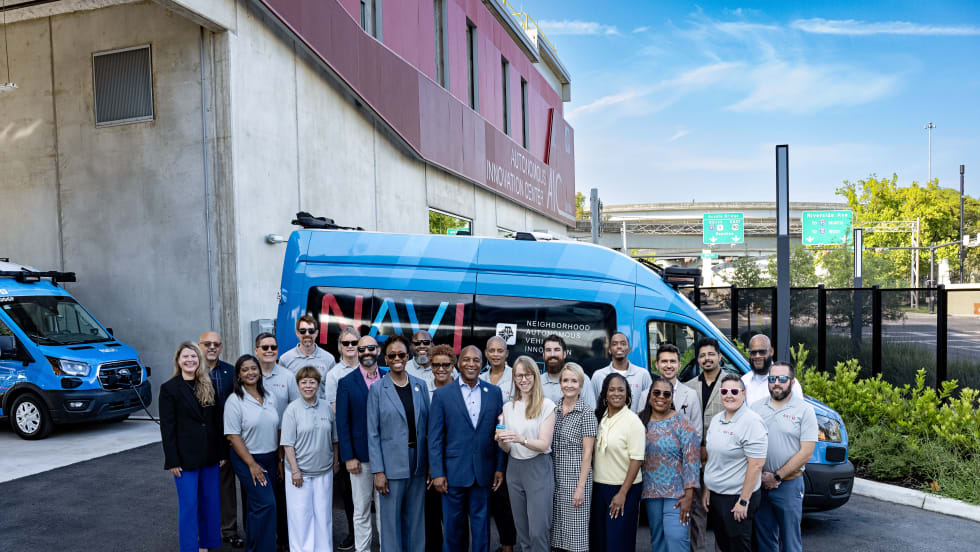
Florida's JTA Marks One Year NAVI Anniversary
During its first year of operation, NAVI has transported over 15,200 passengers and traveled more than 61,000 miles in autonomous mode without a safety incident caused by the autonomous driving system.
Read More →