



Houston METRO awards MCI 3-year contract for up to 169 coaches
The contract has an approximate total value of $84 million. The 169 coaches from this order were included in New Flyer’s fourth quarter backlog and orders press release announced on Jan. 11, 2017.

MCI
MCI
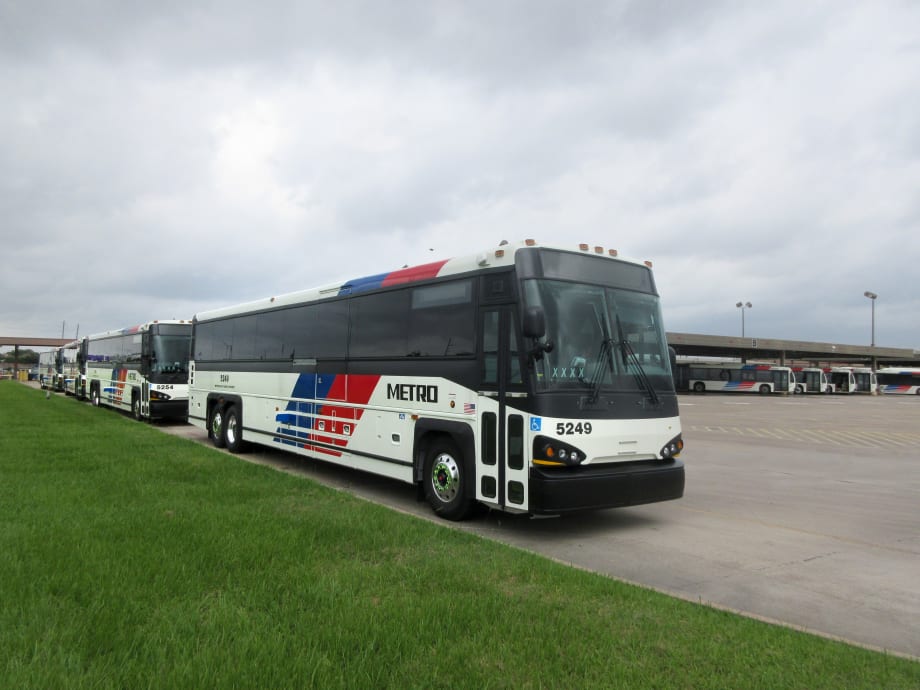
The board of directors for Houston-based METRO (Metropolitan Transit Authority of Harris County) awarded Motor Coach Industries (MCI), a subsidiary of New Flyer Industries Inc., a new three-year contract for 139 commuter coaches, including 10 options per year for a total of 169 coaches.
The contract has an approximate total value of $84 million. The 169 coaches from this order were included in New Flyer’s fourth quarter backlog and orders press release announced on Jan. 11, 2017.
The new METRO contract follows orders in 2014, 2015, and 2016 contracts for a combined total of 105 MCI coaches delivered.
Operating from Park & Ride locations throughout the greater Houston area and leveraging high-occupancy vehicle (HOV) lanes, METRO's new coaches will replace older models for an equipment upgrade of its commuter express services.
METRO’s new coaches are equipped with wheelchair lifts, Kiel seats with three-point passenger seatbelts, and baggage bay slide-out bike racks. Equipped with a Cummins ISX engine and Allison B500 transmission, they are powered by the newest EPA-mandated clean-diesel engine technology.
The MCI commuter coach, which is Buy America-compliant and Altoona-tested, is specifically designed for express service and highway speeds. It offers a rugged, semi-monocoque structure, which elevates passengers and drivers above traffic. In addition to seat belts, safety features include Electronic Stability Control (ESC), tire pressure monitoring, and a fire suppression system, along with a G. Vansco Vs IO Control multiplex system.
METRO and MCI have had a valuable relationship since 2001. Over the past 16 years, the system has purchased 391 MCI commuter coaches, which includes 122 coaches with a diesel-electric hybrid propulsion system. MCI is the first intercity coach manufacturer to offer public transit agencies an over-the-road intercity diesel-electric hybrid propulsion system, as well as coaches with CNG propulsion.
More Bus

New York MTA Plans Largest Bus Fleet Upgrade in More Than a Decade
The agency is seeking manufacturers for 650 new CNG buses to replace aging vehicles, improve reliability, and advance its broader fleet modernization strategy.
Read More →
Building a Flexible Path to Transit Electrification
John Hroncich discusses BAE Systems’ modular and scalable approach, lessons learned from decades of real-world operations, and how agencies can identify electrification strategies that fit their fleets.
Read More →
Bus Tech Talk: Keeping Transit Technicians Ahead of the Technology Curve
LA Metro’s Obed Mejia discusses technician training, evolving maintenance technology, fleet replacement, and strategies for getting the most out of today’s transit fleets.
Read More →
Biz Briefs: RIPTA Unveils New Frontrunners, Clevland RTA Adds New Siemens, and More
In METRO's latest installment, we take a look at recent news from Siemens, Prevost, Dodge, and more partnerships making headlines across the transportation sector.
Read More →
People Movement: Holly Arnold Joins Transdev and More
In this edition, we also cover recent appointments and announcements at Pace, CamTran, MCI, and more, showcasing the individuals helping to shape the future of transportation.
Read More →
The High Cost of Transit Buses: Industry Leaders Look to Procurement Reform
Transit leaders and policymakers examine how standardized bus designs, streamlined procurement, and predictable funding could help agencies stretch budgets and deliver better service.
Read More →
The Business Voice Behind Public Transportation
As chair of APTA’s Business Members Board of Governors, Ray Melleady explains how more than 850 business members are partnering with transit agencies to advance funding, innovation, and industry-wide collaboration.
Read More →
From Surviving to Thriving: Building Stronger Transportation Organizations
Bus Business Consultants founder Brian Dickson shares lessons on leadership, organizational health, and creating options for long-term success in a changing transportation industry.
Read More →
Finding the ‘Happy Medium’: Optimizing Maintenance Without Sacrificing Reliability
The key to maintenance optimization isn’t doing less work—it’s doing the right work at the right time on the right assets.
Read More →
LA Metro, City of West Hollywood, and Partners Advance Smarter Bus Lane Enforcement
The award-winning partnership combines AI-powered detection with human oversight to improve bus reliability, accessibility, and enforcement efficiency.
Read More →