




RELATED: FTA taps nonprofit to lead mobility-on-demand innovation project
IndyGo, 5 more agencies to receive mobility-on-demand innovation assistance
The Shared-Use Mobility Center, in partnership with the FTA, will provide resources to aid development of mobility-on-demand projects from around the country.
June 20, 2018
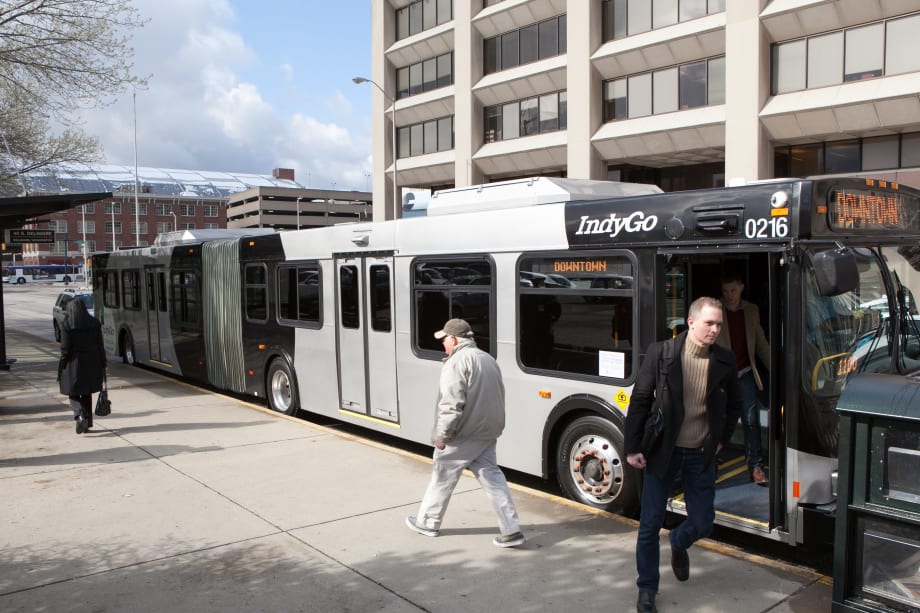
IndyGo is developing strategic plans for integrated mobility hubs in a series of “mobility districts,” selected according to their urban typology.
IndyGo
3 min to read
IndyGo is developing strategic plans for integrated mobility hubs in a series of “mobility districts,” selected according to their urban typology.
IndyGo
The Shared-Use Mobility Center (SUMC), a national nonprofit organization that works to foster cooperation in shared mobility, announced the selection of six public transportation agencies to receive free technical assistance to develop mobility-on-demand (MOD) projects through its MOD On-Ramp program. Independent evaluators from both public agencies and private firms, in consultation with the Federal Transit Administration (FTA), selected six projects from a pool of 28 proposals from around the country. Projects from the following six agencies were selected:
Capital Metro-Austin Public Transit (Austin, TX) – Electric/Autonomous vehicles
The Maryland Department of Transportation Maryland Transit Administration (Baltimore, MD) – Microtransit
IndyGO - Indianapolis Public Transportation Corporation (Indianapolis, IN) – Mobility hubs
Tompkins County Social Services (Ithaca region, NY) – Mobility-as-a-Service/Integration
The Memphis Area Transit Authority (Memphis, TN) – First-last mile
The San Francisco Bay Area Rapid Transit District (San Francisco Bay Area, CA) – ADA Paratransit
The On-Ramp program, part of a partnership with FTA, provides public transportation agencies and other transportation providers with MOD concepts with expert assistance to develop business plans and other project-building strategies. The selected participants will engage in a yearlong process that will assist with project development through supported engagement, peer mentoring, research, and other activities.
Participants will receive support to:
Conduct workshops in their communities to determine local mobility needs and set parameters for projects;
Participate in a national community of practice with peer agencies and related experts as well as access to in-person workshops;
Utilize research and analysis from SUMC and other experts;
Collaborate one-on-one with peers and identify resources to meet challenges; and
Develop feasible MOD business plans.
“We need to continue to innovate in public transit to find new ways to improve and expand transportation options for all," says SUMC Executive Director Sharon Feigon. "Shared mobility partnerships can test out new technologies and creative ideas that have the potential to improve customers’ rides and increase efficiencies for agencies. New pilots are one of the best ways to develop new service models."
About the Selected Projects
Capital Metro-Austin Public Transit is working to address the challenges of sprawl, congestion, and changing travel patterns in the region. They are examining shared, electric, and autonomous vehicles to connect to high-frequency/high-capacity transit service and to provide transportation for riders with disabilities.
Maryland Department of Transportation is developing a plan for microtransit to better connect high-opportunity job centers in the suburbs and low-income residential populations in the city.
Indianapolis Public Transportation Corp. is developing strategic plans for integrated mobility hubs in a series of “mobility districts,” selected according to their urban typology. Each plan will focus on connecting hubs to their existing transit network.
Tompkins County Social Services serves a largely rural area in the Ithaca metropolitan area. The county’s Way2Go community mobility education program, to both reduce solo driving trips and provide equitable transportation access to its residents, is proposing a Mobility as a Service pilot.
Memphis Area Transit Authority plans to develop a demand-responsive service to transport riders from their doorstep to arterial routes in selected corridors of the city. The program seeks to improve service to both people in disadvantaged neighborhoods and paratransit riders.
Bay Area Rapid Transit is aiming to create an on-demand wheelchair accessible vehicle ride-hailing service. The rides would be staged at BART stations, and would provide either short, single-leg trips, or first/last mile trips to the stations.
More New Mobility

From Hardware to Digital Partner: Luminator Charts Its Next Chapter
CEO Magnus Friberg discusses Luminator’s shift toward becoming a digital partner, the growing importance of software and interoperability, and how AI can help agencies improve operations and passenger experience.
Read More →
Biz Briefs: Alstom Lands Canadian Contract, LYT to Supply California TSP, and More
In METRO's latest installment, we take a look at recent news from Complete Coach Works, Beep, FlixBus, and more partnerships making headlines across the transportation sector.
Read More →
CharterUP’s Armir Harris on Technology, AI, and the Future of Group Mobility
In a recent episode of METROspectives, CharterUP Founder/CEO Armir Harris discussed the company’s evolution from an online charter bus marketplace into a technology platform supporting public- and private-sector mobility and much more.
Read More →
Jacksonville’s NAVI Project Charts a New Course for Autonomous Public Transportation
Through its NAVI program, JTA is showing how autonomous vehicles, intelligent infrastructure, and coordinated operations can work together to deliver everyday public transportation.
Read More →
Biz Briefs: Luminator Marks Milestone and More
From manufacturers and suppliers to transit agencies and motorcoach operators, these updates offer a snapshot of the projects, partnerships and business moves driving the industry forward.
Read More →
New Tricks for Old Bureaucracies: Joshua Schank on Making Transit Innovation Stick
Former LA Metro Chief Innovation Officer Joshua Schank discusses why good ideas aren't enough, how transit agencies can overcome resistance to change, and why today's challenges demand more innovation.
Read More →
How DART's GoPass Is Redefining Regional Mobility
Serving 14 transit agencies, GoPass simplifies multimodal travel by allowing riders to plan, pay for, and manage an entire trip through one app.
Read More →
Biz Briefs: OCTA Taps Clean Energy for Hydrogen Station, Stadler to Supply Via Rail Vehicles, and More
From manufacturers and suppliers to transit agencies and motorcoach operators, these updates offer a snapshot of the projects, partnerships and business moves driving the industry forward.
Read More →CharterUP Expands Into New Mobility and Autonomous Transportation
Vice President of New Mobility Stephen Joos discusses how CharterUP is leveraging its nationwide transportation network, technology platform, and autonomous vehicle partnerships to expand into workforce mobility, campus shuttles, and transit solutions.
Read More →
METRO Magazine Announces 2026 Innovative Solutions Awards Winners
Projects Recognized for Advancing Mobility Through Technology, Accessibility, Workforce Innovation, and Operational Excellence
Read More →