



IndyGo approved to maintain current service, fares
Last year at this time, the council approved an increase of $6 million for the 2013 budget, which allowed IndyGo to make noticeable upgrades to local bus service.

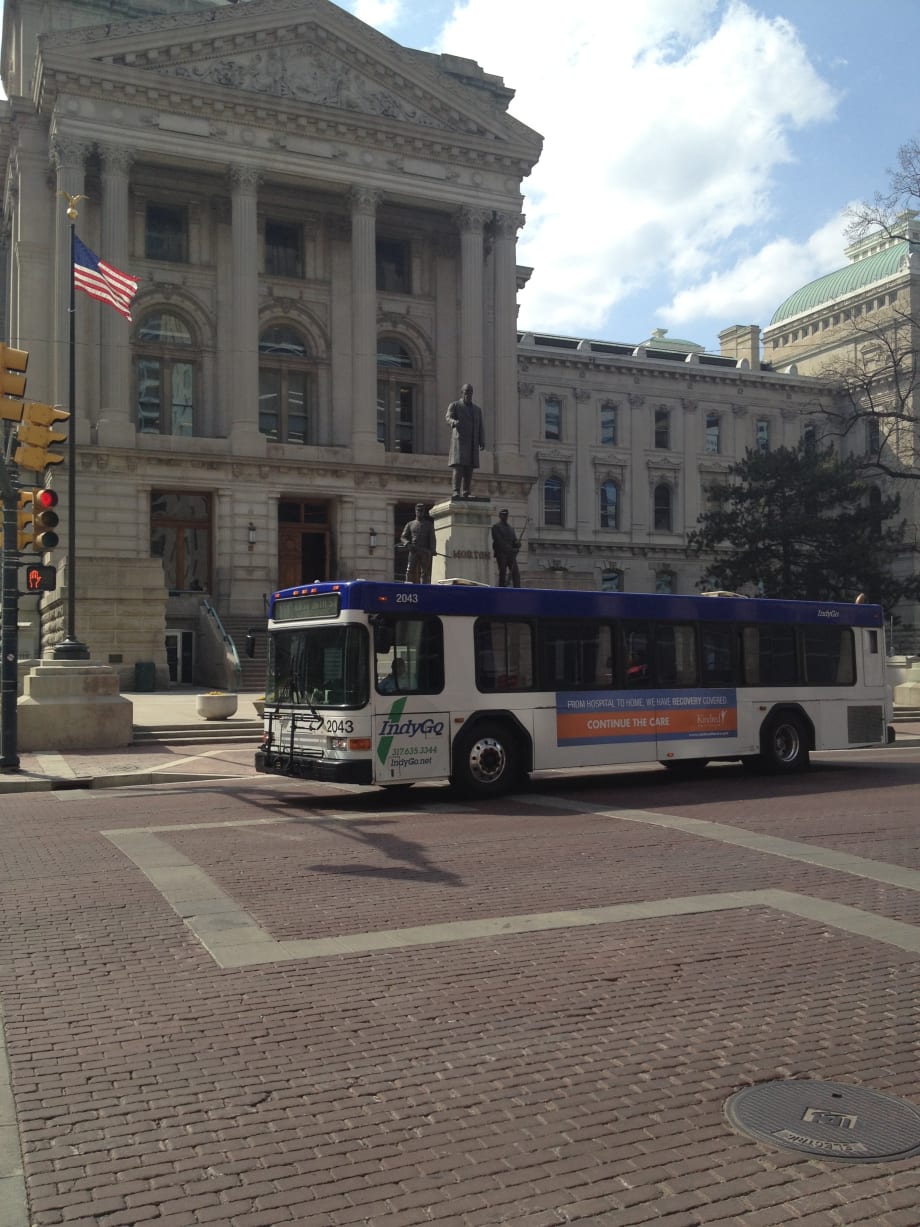

IndyGo's 2014 budget was approved by the Indianapolis City County Council, allowing the transit agency to maintain its current service levels and fare structure next year.
Last year at this time, the council approved an increase of $6 million for the 2013 budget, which allowed IndyGo to make noticeable upgrades to local bus service. The improvements, guided by the Indy Connect bus plan, were phased in over the first half of the year and included new frequent service on core lines, the addition of a route along the 86th/82nd St. corridor, additional Sunday service on Route 34, and route realignments for better productivity and access to destinations.
IndyGo has seen impressive ridership figures as a result of these improvements including double-digit percentage increases on each of IndyGo’s three lines with frequent service (routes 8, 10 and 39).
System-wide, August 2013 ridership soared to nearly one million trips, and by year’s end, ridership is expected to exceed 2012 totals despite huge spikes last year during the Super Bowl.
“The $6 million investment in service for 2013 has resulted in extraordinary ridership gains, evidence that there is a demand for more transportation options in our community,” said IndyGo’s President/CEO Michael Terry. “Stability in our service levels for 2014 is vital to maintaining expanded ridership.”
RELATED: "IndyGo's Michael Terry at BusCon 2013."
In addition to successful implementation and performance of enhanced service this year, IndyGo has garnered two federal grants that will allow the agency to retire its oldest buses sooner than would have otherwise been possible. IndyGo’s most recent and notable grant was a $10 million TIGER award, which will allow the agency to re-power approximately 20 existing diesel buses with a completely electric propulsion system.
Additionally, $10 million from the federal State of Good Repair grant program will replace nearly 30 older buses with brand new clean diesel ones.
More Bus
From Surviving to Thriving: Building Stronger Transportation Organizations
Bus Business Consultants founder Brian Dickson shares lessons on leadership, organizational health, and creating options for long-term success in a changing transportation industry.
Read More →
Finding the ‘Happy Medium’: Optimizing Maintenance Without Sacrificing Reliability
The key to maintenance optimization isn’t doing less work—it’s doing the right work at the right time on the right assets.
Read More →
LA Metro, City of West Hollywood, and Partners Advance Smarter Bus Lane Enforcement
The award-winning partnership combines AI-powered detection with human oversight to improve bus reliability, accessibility, and enforcement efficiency.
Read More →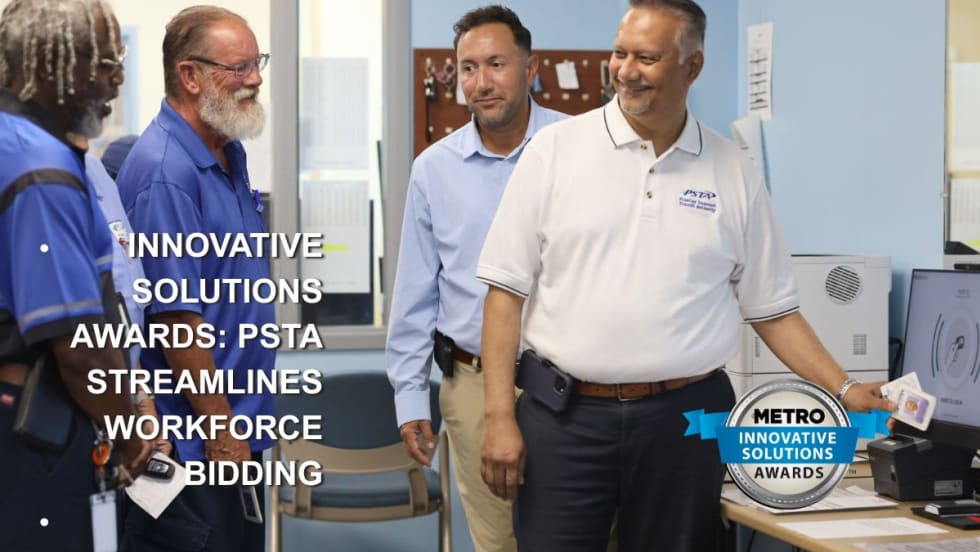
PSTA Modernizes Workforce Management with Digital Bidding System
The award-winning Workforce Transit Modernization project replaced paper bidding with a transparent digital platform, cutting administrative effort while improving access for operators.
Read More →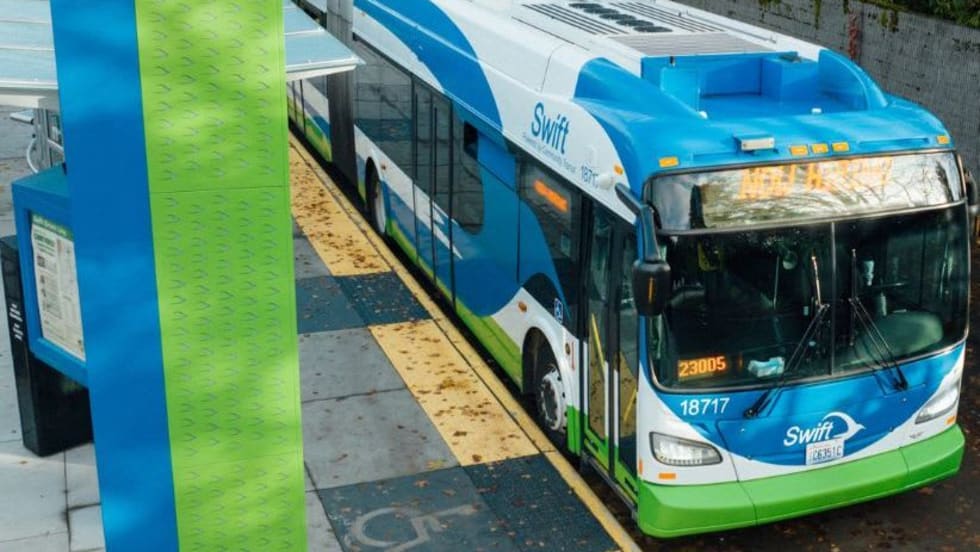
Washington's Community Transit Sets Six-Year Roadmap for Growth, Expansion
Approved TDP targets more bus service, new mobility options, Swift BRT expansion, and a potential Everett Transit annexation.
Read More →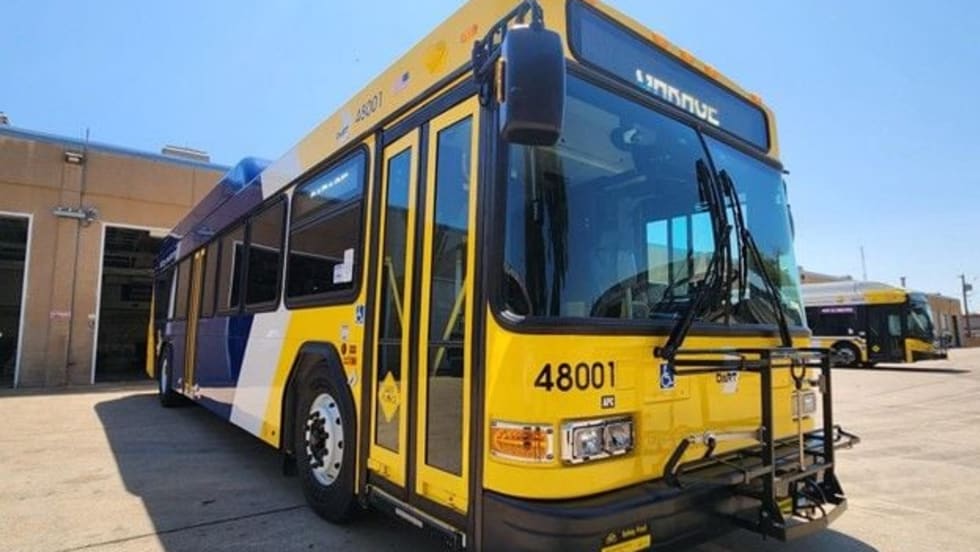
DART Customer Satisfaction Reaches Six-Year High
Overall satisfaction rose to 74.9%, while the agency’s Net Promoter Score reached a record 33.7.
Read More →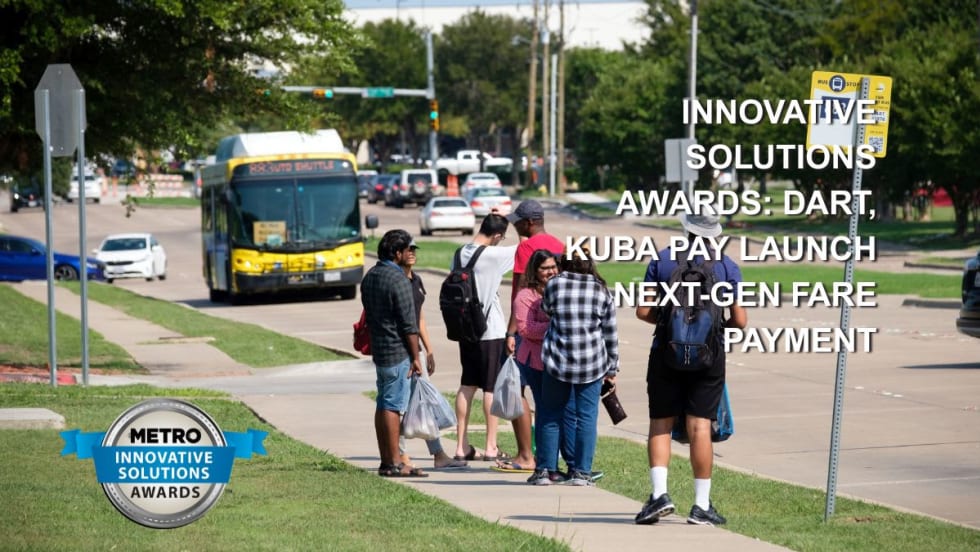
How DART's GoPass Is Redefining Regional Mobility
Serving 14 transit agencies, GoPass simplifies multimodal travel by allowing riders to plan, pay for, and manage an entire trip through one app.
Read More →
Biz Briefs: OCTA Taps Clean Energy for Hydrogen Station, Stadler to Supply Via Rail Vehicles, and More
From manufacturers and suppliers to transit agencies and motorcoach operators, these updates offer a snapshot of the projects, partnerships and business moves driving the industry forward.
Read More →
METRO Magazine Announces 2026 Innovative Solutions Awards Winners
Projects Recognized for Advancing Mobility Through Technology, Accessibility, Workforce Innovation, and Operational Excellence
Read More →
Biz Briefs: STV teams with Amtrak, Motorcoach Operators Boost Fleet and Land Contracts, and More
From manufacturers and suppliers to transit agencies and motorcoach operators, these updates offer a snapshot of the projects, partnerships and business moves driving the industry forward.
Read More →