



IndyGo growth continues with new services
Ridership has slowly grown from just over eight million in 2009 to 10.2 million in 2012, with that growth continuing or holding reasonably steady over the first few months of 2013.

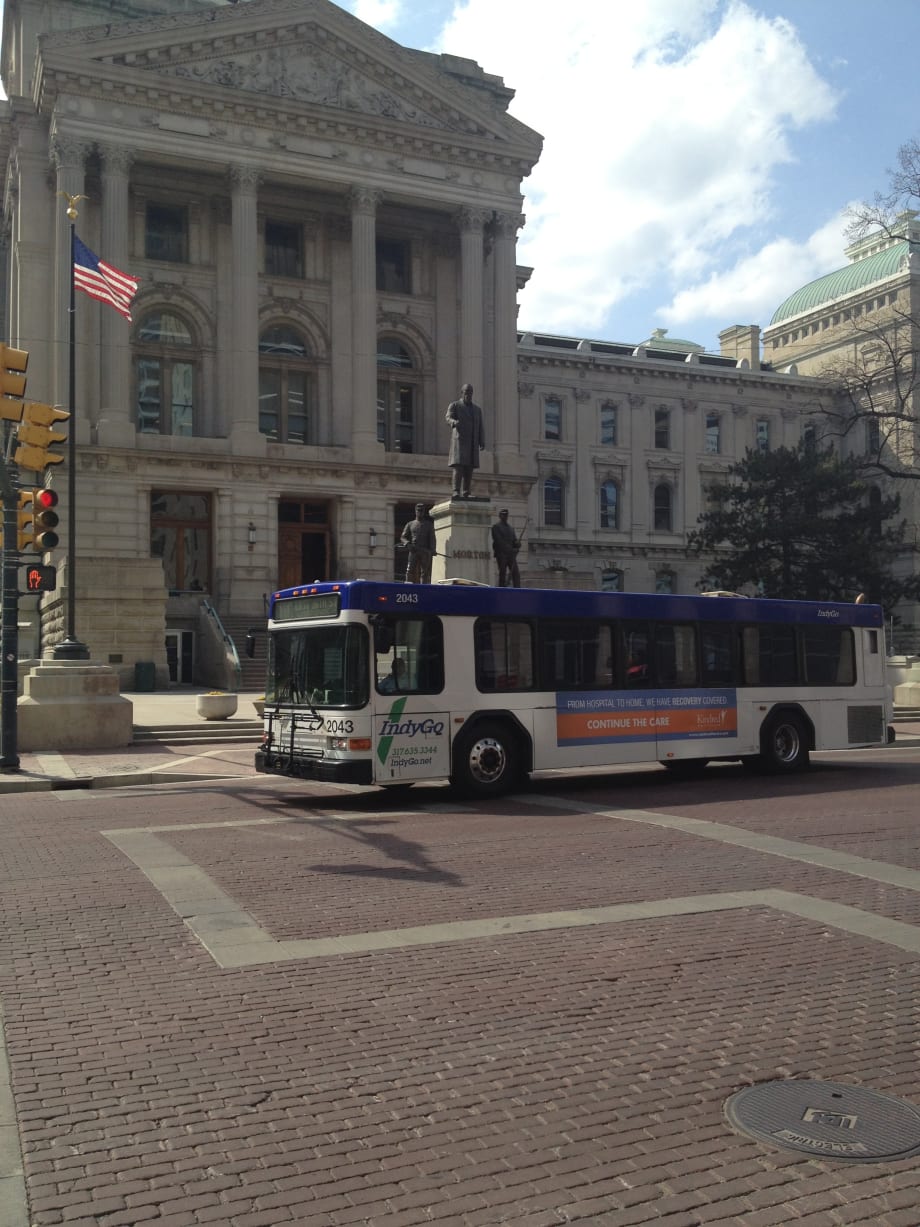
With an annual operating budget of approximately $65 million, the Indianapolis Public Transportation Corp. (IndyGo) provides public bus transit services to residents and visitors throughout Marion County — operating 30 local fixed routes and 155 buses as well as its Open Door ADA paratransit service.
Ridership has slowly grown from just over eight million in 2009 to 10.2 million in 2012, with that growth continuing or holding reasonably steady over the first few months of 2013.
“The demand is there. Last year, we provided more than 10 million rides, if you add in our paratransit service numbers. We are projecting hitting 10 million rides on our fixed-route services alone in 2013,” said Bryan Luellen, manager, marketing at IndyGo. “We are doing a lot of outreach with individual organizations as well as through our mass marketing campaigns — we feel these two strategies are helping augment the conversation about mass transit in the county.”
Super Bowl XLVI, with its special events, pre-game activities, festivities, and scarce or high-priced parking that came with it, contributed to part of IndyGo’s 2012 growth. Over a 10-day span culminating on Super Bowl Sunday, IndyGo delivered 325,212 rides — 39% more rides than a typical week. A more encouraging sign, perhaps, is that ridership in that same span of 2013 only saw a half-percent dip, according to Luellen.[PAGEBREAK]
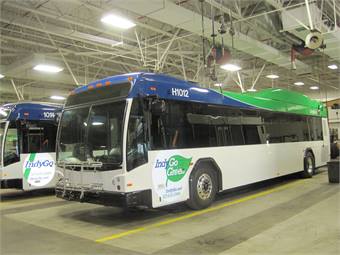
Mayor Greg Ballard recognized IndyGo at the third annual Indianapolis Sustainability Awards for its aggressive efforts in advancing sustainability throughout the community in 2011.
Also in 2012, Mayor Greg Ballard recognized IndyGo at the third annual Indianapolis Sustainability Awards for its aggressive efforts in advancing sustainability throughout the community in 2011. IndyGo received honors in the awards’ air category for its “Community Collaborations Program,” which supports local initiatives by providing in-kind sponsorships including co-promotion and media exposure through paid advertising.
Through the award-winning collaborations program, IndyGo amplified the message of partner organizations including Indianapolis Black Expo, The Children’s Museum of Indianapolis, Indy’s Campaign for Financial Fitness, Broad Ripple Art Fair, Marion County Public Health Department and Summer Servings hunger relief program for intercity youth.
As for 2013, thanks to a $6 million budget infusion approved by the City-County Council, IndyGo’s most-used routes — 8, 10 and 39 — saw frequencies increase to every 20 minutes or better early morning through early evening on weekdays, beginning in February.
“We haven’t seen the service levels on these three lines in 50 years, so it is huge for us,” said Luellen. “We are seeing ridership growth and standing loads, even with the new service levels, which have been doubled in some cases.”
Additional changes for bus service and the introduction of a new crosstown route for the 86th/82nd Street corridor are slated for June 2013, added Luellen.
In addition to service improvements in 2013, IndyGo’s plans for building the downtown transit center will ramp up this year. The new transit center, planned for construction across from the City-County Building, will dovetail with a city-garnered EPA planning grant to transform the public plaza just south of the City-County Building.
RELATED ARTICLE: Check out, "Five Questions:IndyGo President/CEO Michael Terry."
More Bus

New York MTA Plans Largest Bus Fleet Upgrade in More Than a Decade
The agency is seeking manufacturers for 650 new CNG buses to replace aging vehicles, improve reliability, and advance its broader fleet modernization strategy.
Read More →
Building a Flexible Path to Transit Electrification
John Hroncich discusses BAE Systems’ modular and scalable approach, lessons learned from decades of real-world operations, and how agencies can identify electrification strategies that fit their fleets.
Read More →
Bus Tech Talk: Keeping Transit Technicians Ahead of the Technology Curve
LA Metro’s Obed Mejia discusses technician training, evolving maintenance technology, fleet replacement, and strategies for getting the most out of today’s transit fleets.
Read More →
Biz Briefs: RIPTA Unveils New Frontrunners, Clevland RTA Adds New Siemens, and More
In METRO's latest installment, we take a look at recent news from Siemens, Prevost, Dodge, and more partnerships making headlines across the transportation sector.
Read More →
People Movement: Holly Arnold Joins Transdev and More
In this edition, we also cover recent appointments and announcements at Pace, CamTran, MCI, and more, showcasing the individuals helping to shape the future of transportation.
Read More →
The High Cost of Transit Buses: Industry Leaders Look to Procurement Reform
Transit leaders and policymakers examine how standardized bus designs, streamlined procurement, and predictable funding could help agencies stretch budgets and deliver better service.
Read More →
The Business Voice Behind Public Transportation
As chair of APTA’s Business Members Board of Governors, Ray Melleady explains how more than 850 business members are partnering with transit agencies to advance funding, innovation, and industry-wide collaboration.
Read More →
From Surviving to Thriving: Building Stronger Transportation Organizations
Bus Business Consultants founder Brian Dickson shares lessons on leadership, organizational health, and creating options for long-term success in a changing transportation industry.
Read More →
Finding the ‘Happy Medium’: Optimizing Maintenance Without Sacrificing Reliability
The key to maintenance optimization isn’t doing less work—it’s doing the right work at the right time on the right assets.
Read More →
LA Metro, City of West Hollywood, and Partners Advance Smarter Bus Lane Enforcement
The award-winning partnership combines AI-powered detection with human oversight to improve bus reliability, accessibility, and enforcement efficiency.
Read More →