



IndyGo Receives $150M Small Starts Grant for BRT Project
The 24-mile Blue Line BRT system will provide fast and frequent public transportation along one of Marion County, Indiana's main east-west travel corridors.

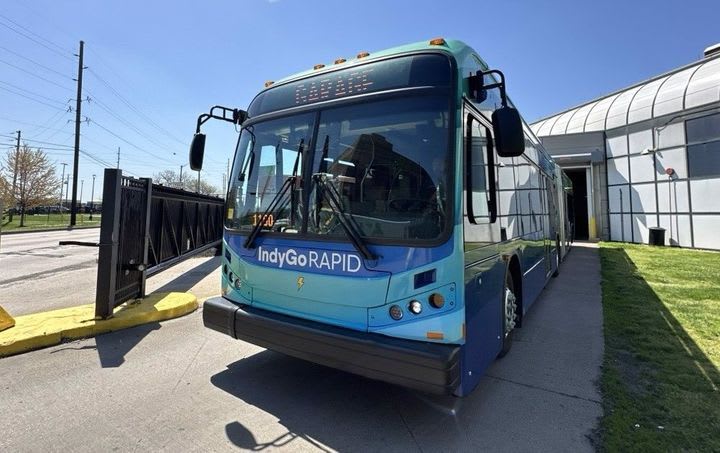
IndyGo's Blue Line corridor serves over 28 million visitors for conventions, meetings, and events and supports approximately 150,000 jobs.
Photo: IndyGo
The Federal Transit Administration (FTA) announced a grant award of $149.9 million to the Indianapolis Public Transportation Corporation (IndyGo) to help fund construction of the Blue Line Bus Rapid Transit (BRT) project in Central Indiana.
The 24-mile BRT line will provide fast and frequent public transportation along one of Marion County, Indiana's main east-west travel corridors.
The corridor serves over 28 million visitors for conventions, meetings, and events and supports approximately 150,000 jobs.
IndyGo’s Blue Line BRT
The project includes 12 miles of dedicated bus-only lanes in the urban core, helping speed riders on their way.
The corridor encompasses some of the region’s largest trip generators, including downtown Indianapolis, the State Capitol, the airport, and the Indianapolis Zoo. The Blue Line will also stop at three high schools and several planned redevelopment areas.
More than 28 million visitors come to the region each year for conventions, meetings, and events at sports venues that are within walking distance of the Blue Line, including Indianapolis Colts football games and Indiana Pacers basketball.
Other large attractions near the line include the Convention Center and a soccer stadium that is under construction.
“This investment in the Blue Line represents a real commitment to the city’s transportation infrastructure and will reduce transit travel times in the corridor by up to 30 percent,” said FTA Deputy Administrator Veronica Vanterpool. “With upgraded traffic signals, miles of resurfaced lanes, new and replaced sidewalks, curb ramps, bike stations, and crosswalks, FTA is building safer, more sustainable, and accessible pathways for everyone, including improved transit service for a large number of low-income and zero-car households.”
A Greener Option
The project includes 60-foot hybrid buses, helping improve air quality.
With more than 45,000 people within walking distance of a station in the corridor, service will operate 20 hours per weekday, with frequent service.
The 30 stations will offer a variety of transit choices, including access for pedestrians, cyclists, transfers to and from other routes, and park-and-ride commuters.
The federal support for the estimated $396 million project comes from FTA's Capital Investment Grants program, which helps communities carry out transformational transit projects.
More Bus

New York MTA Plans Largest Bus Fleet Upgrade in More Than a Decade
The agency is seeking manufacturers for 650 new CNG buses to replace aging vehicles, improve reliability, and advance its broader fleet modernization strategy.
Read More →
Building a Flexible Path to Transit Electrification
John Hroncich discusses BAE Systems’ modular and scalable approach, lessons learned from decades of real-world operations, and how agencies can identify electrification strategies that fit their fleets.
Read More →
Bus Tech Talk: Keeping Transit Technicians Ahead of the Technology Curve
LA Metro’s Obed Mejia discusses technician training, evolving maintenance technology, fleet replacement, and strategies for getting the most out of today’s transit fleets.
Read More →
Biz Briefs: RIPTA Unveils New Frontrunners, Clevland RTA Adds New Siemens, and More
In METRO's latest installment, we take a look at recent news from Siemens, Prevost, Dodge, and more partnerships making headlines across the transportation sector.
Read More →
People Movement: Holly Arnold Joins Transdev and More
In this edition, we also cover recent appointments and announcements at Pace, CamTran, MCI, and more, showcasing the individuals helping to shape the future of transportation.
Read More →
The High Cost of Transit Buses: Industry Leaders Look to Procurement Reform
Transit leaders and policymakers examine how standardized bus designs, streamlined procurement, and predictable funding could help agencies stretch budgets and deliver better service.
Read More →
The Business Voice Behind Public Transportation
As chair of APTA’s Business Members Board of Governors, Ray Melleady explains how more than 850 business members are partnering with transit agencies to advance funding, innovation, and industry-wide collaboration.
Read More →
From Surviving to Thriving: Building Stronger Transportation Organizations
Bus Business Consultants founder Brian Dickson shares lessons on leadership, organizational health, and creating options for long-term success in a changing transportation industry.
Read More →
Finding the ‘Happy Medium’: Optimizing Maintenance Without Sacrificing Reliability
The key to maintenance optimization isn’t doing less work—it’s doing the right work at the right time on the right assets.
Read More →
LA Metro, City of West Hollywood, and Partners Advance Smarter Bus Lane Enforcement
The award-winning partnership combines AI-powered detection with human oversight to improve bus reliability, accessibility, and enforcement efficiency.
Read More →