




RELATED: Proterra secures $140M for expansion, product development
King County Metro to buy 73 electric battery buses from Proterra
The agency is starting with 20 buses totaling $15.12 million. Eight of which are slated to enter service this year.
January 17, 2017
Proterra bus photo via King County Metro
2 min to read
Proterra bus photo via King County Metro
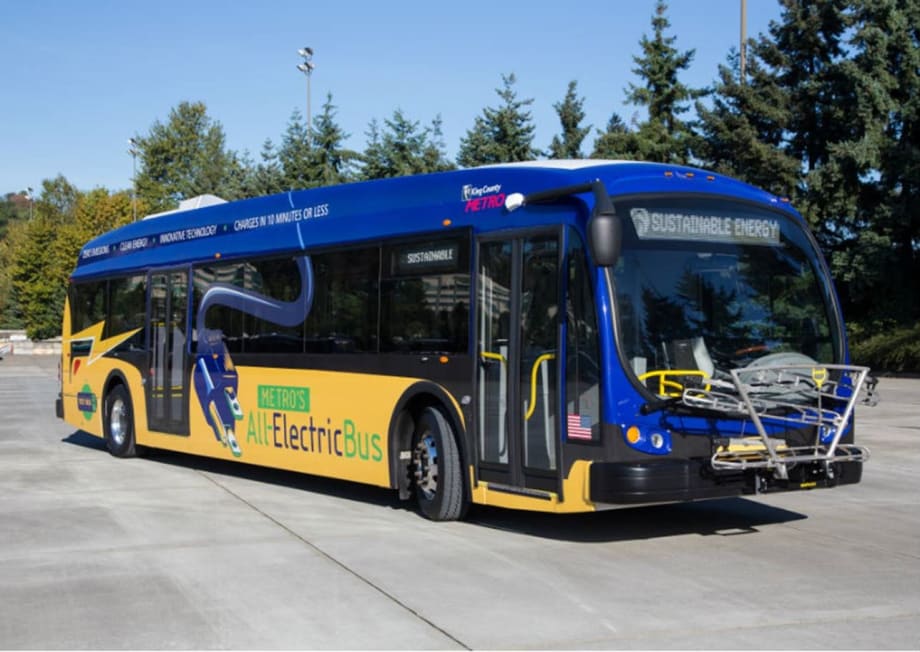
King County Metro announced plans to purchase up to 73 all-electric battery buses from Proterra at a cost of up to $55 million, starting with 20 buses totaling $15.12 million. Charging stations to support the initial orders of those buses will range from $5.5 million to $6.6 million.
The 40-foot battery buses have an estimated range of about 25 miles, with a quick charging time of just 10 minutes. Maintenance costs of all-electric buses are expected to decline versus hybrid-diesels, primarily because they have fewer moving parts, according to the agency.
Eight of the buses are slated to go into service this year; 12 more in 2019. Up to eight of the new 40-foot battery buses will likely operate on Metro Routes 226 and 241 in Bellevue, Wash. As part of a pilot project last year, Metro began running three all-electric buses on these routes, which serve some of the county’s densest job centers, including the Microsoft campus and downtown Bellevue.
As part of today’s announcement, Metro will acquire up to nine long-range electric buses from different manufacturers to test the battery technology with a range of about 140 miles. With this approximately $7 million acquisition, Metro is challenging the industry to produce buses that can travel farther. The agency also is calling on the industry to develop 60-foot long buses, better able to replace the articulated buses that make up 55% of its fleet.
King County Metro was the first transit agency to adopt diesel-electric hybrids, and it currently operates more than 170 electric trolley buses. By committing to replacing its current fleet with clean vehicles, Metro is influencing the development and expansion of the all-electric bus market.
In conjunction with this battery bus order, Metro is conducting a comprehensive analysis of the best approach for achieving a zero-emissions fleet. A Battery Bus stakeholder group is advising on the approach and priorities for achieving a zero emissions fleet.
More Bus

New York MTA Plans Largest Bus Fleet Upgrade in More Than a Decade
The agency is seeking manufacturers for 650 new CNG buses to replace aging vehicles, improve reliability, and advance its broader fleet modernization strategy.
Read More →
Building a Flexible Path to Transit Electrification
John Hroncich discusses BAE Systems’ modular and scalable approach, lessons learned from decades of real-world operations, and how agencies can identify electrification strategies that fit their fleets.
Read More →
Bus Tech Talk: Keeping Transit Technicians Ahead of the Technology Curve
LA Metro’s Obed Mejia discusses technician training, evolving maintenance technology, fleet replacement, and strategies for getting the most out of today’s transit fleets.
Read More →
Biz Briefs: RIPTA Unveils New Frontrunners, Clevland RTA Adds New Siemens, and More
In METRO's latest installment, we take a look at recent news from Siemens, Prevost, Dodge, and more partnerships making headlines across the transportation sector.
Read More →
People Movement: Holly Arnold Joins Transdev and More
In this edition, we also cover recent appointments and announcements at Pace, CamTran, MCI, and more, showcasing the individuals helping to shape the future of transportation.
Read More →
The High Cost of Transit Buses: Industry Leaders Look to Procurement Reform
Transit leaders and policymakers examine how standardized bus designs, streamlined procurement, and predictable funding could help agencies stretch budgets and deliver better service.
Read More →
The Business Voice Behind Public Transportation
As chair of APTA’s Business Members Board of Governors, Ray Melleady explains how more than 850 business members are partnering with transit agencies to advance funding, innovation, and industry-wide collaboration.
Read More →
From Surviving to Thriving: Building Stronger Transportation Organizations
Bus Business Consultants founder Brian Dickson shares lessons on leadership, organizational health, and creating options for long-term success in a changing transportation industry.
Read More →
Finding the ‘Happy Medium’: Optimizing Maintenance Without Sacrificing Reliability
The key to maintenance optimization isn’t doing less work—it’s doing the right work at the right time on the right assets.
Read More →
LA Metro, City of West Hollywood, and Partners Advance Smarter Bus Lane Enforcement
The award-winning partnership combines AI-powered detection with human oversight to improve bus reliability, accessibility, and enforcement efficiency.
Read More →