



L.A. Metro Board Approves Labor Deal, Expansion for Transit Ambassador Program
The move follows significant public support for the Transit Ambassador initiative and sets the stage for Metro to employ ambassadors, previously contracted through third-party vendors directly.

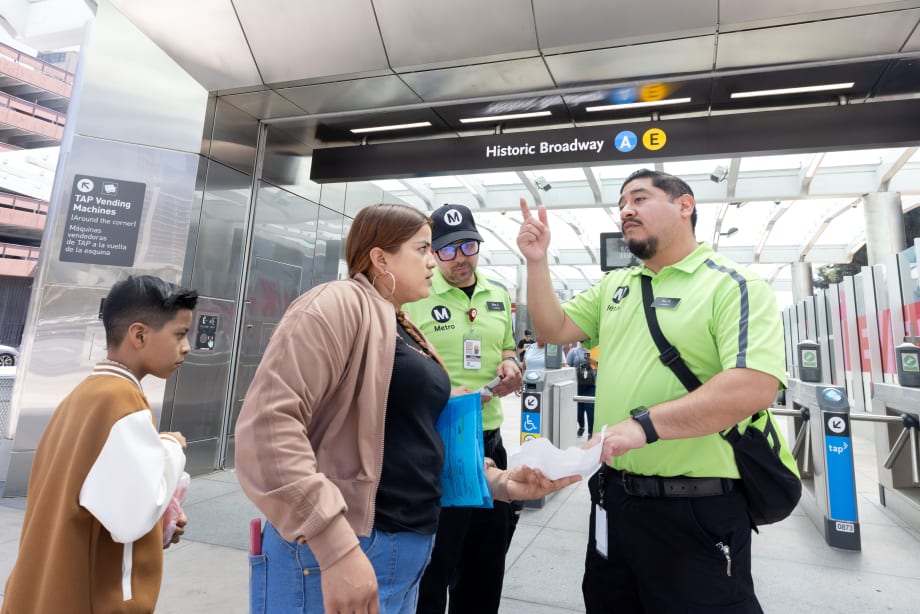
With this approval, Metro will begin onboarding existing ambassadors operating on the system and expand staff to improve coverage and rider support.
Photo: LA Metro
The Los Angeles County Metropolitan Transportation Authority (Metro) board officially approved a landmark collective bargaining agreement with the International Brotherhood of Teamsters, bringing Metro’s acclaimed Transit Ambassador program in-house and expanding its reach across the transit system.
In-House Operations and Program Expansion
The move follows significant public support for the Transit Ambassador initiative and sets the stage for Metro to employ ambassadors, previously contracted through third-party vendors directly.
As part of the board's decision, 85 new positions were added to support expanded coverage on more bus lines and newly opened stations by the end of 2025.
The transition to an in-house department was first authorized in October 2023. With this approval, Metro will begin onboarding existing ambassadors operating on the system and expand staff to improve coverage and rider support.
New Budget, New Roles
Metro amended its FY26 budget to include $11.8 million for new wages and benefits to support the collective bargaining agreement and expanded responsibilities.
The agreement creates 388 contract positions, including:
309 current ambassadors.
79 new ambassador roles.
49 field supervisors.
Two non-contract management positions to oversee daily operations, staff training, reporting, and customer experience enhancements.
The personnel will help staff high-priority projects, including the new Metro/LAX Transit Center, the A Line extension to Pomona, and the D Line extension to West Los Angeles.
Proven Impact on Rider Safety and Experience
The agency explained that Metro Ambassadors play a key role in the agency’s public safety framework, complementing security, law enforcement, and crisis response teams.
According to a 2023 Metro customer survey, 63% of riders who had seen Ambassadors reported feeling safer, a figure that rises notably among certain groups:
66% of women.
66% of riders earn less than $25,000/year.
68% of Hispanic/Latino riders and those under 18.
70% of Asian/Pacific Islander riders.
Beyond safety, Ambassadors connect riders with system resources, assist with navigation, and respond to emergencies. Their interventions have proven life-saving — 334 lives have been saved through suicide prevention and NARCAN administration, Metro officials said.
“Metro Ambassadors have been an incredible addition to our system, helping us make it friendlier and safer, while keeping a watchful eye out for issues that need to be addressed,” said Stephanie Wiggins, CEO of Metro. “They’re a key part of our customer experience and safety strategies, as we work to deliver the type of world-class transit service necessary for us to become the first choice for transportation among LA County residents and visitors.”
More Management

METRO Opens Submissions for 2026 Motorcoach Awards
Nominations are now being accepted for METRO Magazine’s Operator of the Year and Innovative Operator of the Year awards.
Read More →
New York MTA Advances Final Contract for Second Avenue Subway Expansion
Contract Four is the largest in the Second Avenue Subway Phase 2 project and includes construction of station infrastructure, tracks, and signals for the subway expansion, MTA officials said. Work on Contract Four will begin in 2027.
Read More →
Transit Agencies Highlight Safety Gains at National Summit
Leaders from 15 major transit systems shared crime-reduction results and safety initiatives while discussing the role of continued federal support.
Read More →

NITA Names New Leadership, Expands Reduced-Fare Program at First Board Meeting
The new regional transit authority appointed its first board chair and interim executive director while extending reduced fares across CTA, Metra, and Pace for eligible riders.
Read More →
Beyond the Checklist: A Structured Approach to Transit Maintenance
Reliability-Centered Maintenance helps transit agencies move beyond routine checklists to focus limited resources on the assets and failures that have the greatest impact on safety, reliability, and service.
Read More →
APTA 2026 Nominating Committee Selects Leadership Slate, Names Chair and Vice Chair Nominees
Leadership changes will help shape the association’s priorities and its representation of the transportation industry during the 2026–2027 term.
Read More →
DART Launches Major Security, Fare Enforcement Initiative
The 90-day demonstration will deploy coordinated security teams at five light rail stations while testing controlled access and gathering data to guide future investments.
Read More →
Advancing Fare Collection Through Technology and Innovation
Learn about delivering 1300 gates at 91 stations while managing fare evasion. Explore the large scale deployment, solution customization and real-world results that affect the region. Prepare for deployment in your region now.
Read More →
Game Day in Motion: Moving Millions During the 2026 World Cup
Between packed transit stations and team motorcoaches, see how agencies and operators across North America tackled the transportation demands of the 2026 FIFA World Cup.
Read More →
Surface Transportation Extension Averts Shutdown, Leaves Transit Funding Gap
The stopgap keeps federal transportation programs moving, but missing advance funding could complicate the transit and rail projects agencies are planning next.
Read More →