




RELATED: L.A. Metro chief unveils transformative $120 billion plan
L.A. Metro celebrates launch of Expo Line to Santa Monica
The 6.6-mile Expo extension runs from Culver City to Santa Monica and includes seven stations. Ridership on the new portion is projected to total 18,000 to 20,000 weekday boardings after the first year of service. The travel time from downtown L.A. to the Downtown Santa Monica Station is 48 minutes.
May 23, 2016
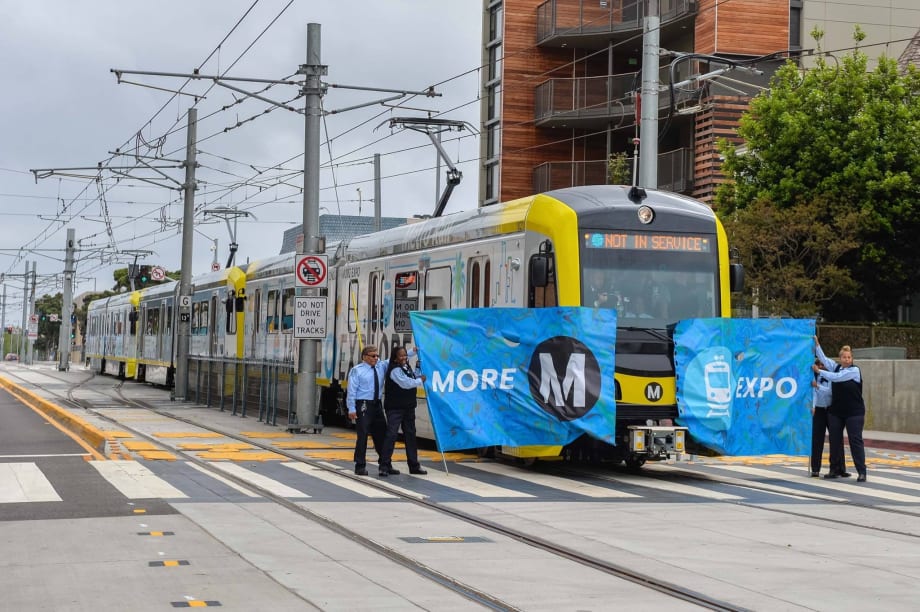
To kick off the grand opening, an Expo Line train carrying local, state and federal elected officials and executives from the Metro Exposition Construction Authority broke through a giant banner at Colorado Avenue and 5th Street near the Downtown Santa Monica Station. Photo: LA Metro
3 min to read
To kick off the grand opening, an Expo Line train carrying local, state and federal elected officials and executives from the Metro Exposition Construction Authority broke through a giant banner at Colorado Avenue and 5th Street near the Downtown Santa Monica Station. Photo: LA Metro
The Los Angeles County Metropolitan Transportation Authority (Metro) officially dedicated the Metro Expo Line Extension to Santa Monica at a special ceremony on May 20, 2016 at the new Downtown Santa Monica Station.
The $1.5-billion extension is the second rail project funded by Measure R to open this year — the Gold Line extension to Azusa debuted in March. Almost 68% of Los Angeles County voters in 2008 approved the Measure R half-cent sales tax increase to fund new transportation projects and programs.
The 6.6-mile Expo extension runs from Culver City to Santa Monica and includes seven stations. The Expo Line now stretches for 15.2 miles between downtown Los Angeles and downtown Santa Monica with 19 stations. In downtown L.A., the Expo Line offers easy transfers to the Blue Line, Purple Line and Red Line at the 7th/Metro Center Station. The Metro Rail system, which began with the Blue Line in 1990, now includes 105 miles spanning six lines.
Ridership on the new portion of the Expo Line is projected to total 18,000 to 20,000 weekday boardings after the first year of service. The travel time from downtown L.A. to the Downtown Santa Monica Station is 48 minutes. Expo service begins each day at about 4:45 a.m. and continues until about 1 a.m. on weekdays and 2 a.m. on weekends. Trains will run every 12 minutes until about 8 p.m., after which service will be every 20 minutes.
The Expo Line extension includes a paved bike path that runs adjacent to the tracks for most of the route between Culver City and the 17th Street/SMC Station. The bikeway includes lighting and landscaping. Each station has secure bike racks and lockers.
“The opening of the Expo Line extension today is a great reminder that we have come a long way in a short time,” said Metro CEO Phil Washington. “But we still have more to do with easing everyday congestion. We will continue to strive to deliver our investments on time and on budget for the transportation network that Los Angeles County deserves.”
The rail extension provides easy access to many jobs and destinations on the Westside. Among them: the Palms farmers market, Century City (via a bus connection), the Westside Pavilion, the Bergamot Station Arts Complex, the Water Garden office complex, Santa Monica College, Santa Monica Pier, Will Rogers State Beach, Third Street Promenade, Santa Monica Place, Palisades Park, Tongva Park and the Santa Monica Civic Center.
There will be parking available at three stations: Expo/Sepulveda, Expo/Bundy and 17th Street/SMC. As part of a test parking-fee program, the daily parking rate is $2 and the monthly fee is $39. Each station has a drop-off area and is served by buses from Metro, Big Blue Bus or Culver City Bus.
A regular Metro fare is $1.75 and includes two hours of free transfers for those using a TAP card. A daily pass that is good for unlimited rides on Metro is $7 and monthly passes are $100. There are discounts available for seniors, the disabled, Medicare recipients and students.
The Expo Line to Santa Monica was built by the Exposition Construction Authority and the project was completed on time and on budget. The project broke ground in 2011 with heavy construction beginning in 2012. In February, the project was turned over to Metro, which will operate the line. Extensive system testing and employee training has been conducted on the line over the past year.
The project includes a $103.5-million light rail vehicle maintenance yard in Santa Monica with many environmentally-friendly features. The 14-acre facility can house up to 48 train cars and is staffed around-the-clock by nearly 200 Metro employees.
More Rail

New York MTA Advances Final Contract for Second Avenue Subway Expansion
Contract Four is the largest in the Second Avenue Subway Phase 2 project and includes construction of station infrastructure, tracks, and signals for the subway expansion, MTA officials said. Work on Contract Four will begin in 2027.
Read More →
San Diego MTS Breaks Monthly Trolley Ridership Record
Agency officials said July’s ridership indicates MTS’s continued recovery from the pandemic.
Read More →
Report Examines NJ TRANSIT Reliability, Funding Challenges
The Garden State Initiative analysis examines the roles of Amtrak infrastructure, fleet management, and agency operations while recommending a more performance-based approach to improving reliability.
Read More →
Stadler, CapMetro Sign Long-Term Rail Fleet Support Agreement
Beginning in 2027, Stadler will provide on-site technical expertise, spare parts support, training, and obsolescence management to help extend the reliability and longevity of CapMetro’s GTW fleet.
Read More →
Biz Briefs: Alstom Lands Canadian Contract, LYT to Supply California TSP, and More
In METRO's latest installment, we take a look at recent news from Complete Coach Works, Beep, FlixBus, and more partnerships making headlines across the transportation sector.
Read More →
CATS Gold Line Marks 5 Years of Service, 2.8M Passenger Trips
With a six-mile expansion planned, the Charlotte streetcar is positioned to connect more neighborhoods and major transit hubs across the region.
Read More →
Why Simulating Pedestrian Movement Has Become Essential for Modern Rail Stations
Pedestrian microsimulation is helping rail planners identify bottlenecks, test station designs, and prepare complex transit hubs for growing passenger volumes.
Read More →
Amtrak Begins Major Construction at New York’s Sunnyside Yard
The new maintenance facility will support Amtrak’s Airo trainsets while improving maintenance efficiency and turnaround times in New York.
Read More →
Chicago Leaders Unveil Plans for O’Hare Airport Express Train
The privately developed project would offer a 15-minute trip between downtown and O’Hare’s Terminal 2, with trains operating every 15 minutes on a dedicated track. The service would use battery-electric trains and three existing freight rail rights-of-way.
Read More →
OCTA Maps Out 30-Year Strategy to Protect Coastal Rail Corridor
The draft feasibility report identifies strategies to protect the coastal rail line for decades as the agency continues near-term stabilization and sand placement efforts.
Read More →