



L.A. Metro CEO to leave agency in April
Art Leahy, who started his transportation career as a bus operator and became one of the nation’s leading transit officials, has headed Metro for six years.

Courtesy: L.A. Metro
Courtesy: L.A. Metro
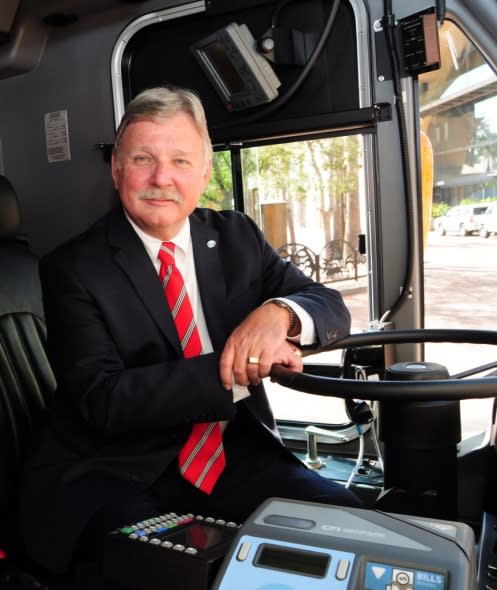
Art Leahy, CEO of the Los Angeles County Metropolitan Transportation Authority (Metro), today announced his last day of service will be April 5, 2015 when his current contract expires. Leahy, 65, who started his transportation career as a bus operator and became one of the nation’s leading transit officials, has headed Metro for six years. During that time he guided implementation of one of the largest public works programs in U.S. history and helped secure billions of dollars in federal and state funding to match local transit sales taxes to finance construction of dozens of transit and highway projects.
“It has a been a privilege, honor and pleasure to serve as Metro’s chief executive officer the past six years, “ Leahy said. “My time at Metro has been filled with enormous successes, intense challenges and opportunities that have and continue to shape mobility for Los Angeles County’s 10 million residents.”
Against a backdrop of the worst economic recession since the Great Depression, Leahy kept Metro solvent while he focused on fulfilling the mandate of Los Angeles County voters in carrying out the Measure R building program and ensuring quality service on the Metro system that has nearly 500 million annual boardings.
Today Metro has transit and highway projects and programs valued at more than $14 billion, eclipsing that of any other transportation agency in the nation.
RELATED:Rail Projects Find Ways to Cope with Scarce Federal Dollars
This includes an unprecedented five new rail projects under construction including the Expo line extension to Santa Monica and the Metro Gold Line Foothill Extension to Azusa, both scheduled to open next year, plus the Crenshaw/LAX Transit Project, the Regional Connector that will connect the Expo, Blue and Gold Lines in downtown Los Angeles, and the first phase of the Westside Purple Line subway extension to Wilshire and La Cienega. Just last week, Metro also received federal approval to start the engineering phase for extending the Purple Line to Century City.
Mi
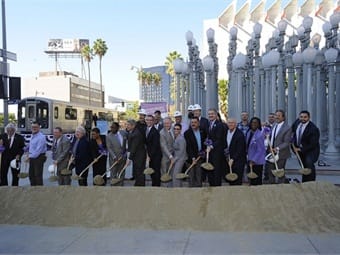
Purple Line subway extension groundbreaking.
norities and disadvantaged workers are enjoying opportunities for construction jobs and apprenticeships for these projects thanks to the nation’s first federally approved Project Labor Agreement and Construction Careers Program started under Leahy’s tenure.
Having started his transit career as a bus operator 44 years ago, at Metro Leahy focused on improving bus on-time performance, cleanliness and ADA compliance. The agency is taking delivery of 550 new buses and a new state-of-the-art bus maintenance facility will open later this year. The popular Silver Line express bus service from El Monte to Artesia was one of Leahy’s projects along with the Orange Line extension to Chatsworth.
Leahy also launched a $1.2 billion overhaul of the Metro Blue Line and guided the purchase of a new fleet of rail cars. And he helped turn Union Station into the hub of the region’s expanding bus and rail transit network and led the agency’s acquisition of the 75-year-old iconic facility.
Major highway projects such as the I-5 widening to Orange County have broken ground under Leahy’s watch and the new 10-mile northbound carpool lane on the I-405 freeway through the Sepulveda Pass has opened. Leahy led the successful Carmageddon I & II weekend closures for bridge work as part of that effort.
Prior to his tenure as Metro CEO, Leahy served as the chief executive officer at the Orange County Transportation Authority and GM of the transit agency in Minneapolis-St. Paul. During his leadership, both agencies garnered national transit industry honors as did Leahy.
Leahy grew up in Highland Park. Both his parents worked in transit and he followed in their footsteps. He started as a bus operator for the Southern California Rapid Transit District in Los Angeles in 1971 and rose through the ranks to become chief operations officer before taking leadership positions at other transit agencies.
Metro is the lead transportation planning and programming agency for Los Angeles County, a major builder of transit and highway projects and is one of the largest transit operators in the U.S. Metro employs more than 9,000 workers and has an annual $5 billion budget.
More Management

METRO Opens Submissions for 2026 Motorcoach Awards
Nominations are now being accepted for METRO Magazine’s Operator of the Year and Innovative Operator of the Year awards.
Read More →
New York MTA Advances Final Contract for Second Avenue Subway Expansion
Contract Four is the largest in the Second Avenue Subway Phase 2 project and includes construction of station infrastructure, tracks, and signals for the subway expansion, MTA officials said. Work on Contract Four will begin in 2027.
Read More →
Transit Agencies Highlight Safety Gains at National Summit
Leaders from 15 major transit systems shared crime-reduction results and safety initiatives while discussing the role of continued federal support.
Read More →

NITA Names New Leadership, Expands Reduced-Fare Program at First Board Meeting
The new regional transit authority appointed its first board chair and interim executive director while extending reduced fares across CTA, Metra, and Pace for eligible riders.
Read More →
Beyond the Checklist: A Structured Approach to Transit Maintenance
Reliability-Centered Maintenance helps transit agencies move beyond routine checklists to focus limited resources on the assets and failures that have the greatest impact on safety, reliability, and service.
Read More →
APTA 2026 Nominating Committee Selects Leadership Slate, Names Chair and Vice Chair Nominees
Leadership changes will help shape the association’s priorities and its representation of the transportation industry during the 2026–2027 term.
Read More →
DART Launches Major Security, Fare Enforcement Initiative
The 90-day demonstration will deploy coordinated security teams at five light rail stations while testing controlled access and gathering data to guide future investments.
Read More →
Advancing Fare Collection Through Technology and Innovation
Learn about delivering 1300 gates at 91 stations while managing fare evasion. Explore the large scale deployment, solution customization and real-world results that affect the region. Prepare for deployment in your region now.
Read More →
Game Day in Motion: Moving Millions During the 2026 World Cup
Between packed transit stations and team motorcoaches, see how agencies and operators across North America tackled the transportation demands of the 2026 FIFA World Cup.
Read More →
Surface Transportation Extension Averts Shutdown, Leaves Transit Funding Gap
The stopgap keeps federal transportation programs moving, but missing advance funding could complicate the transit and rail projects agencies are planning next.
Read More →