



L.A. Metro reduces bike-share fares, plans expansion
In reducing the walk-up price to just $1.75, Metro has now made the cost the same as a one-way fare for Metro’s Bus and Rail System.

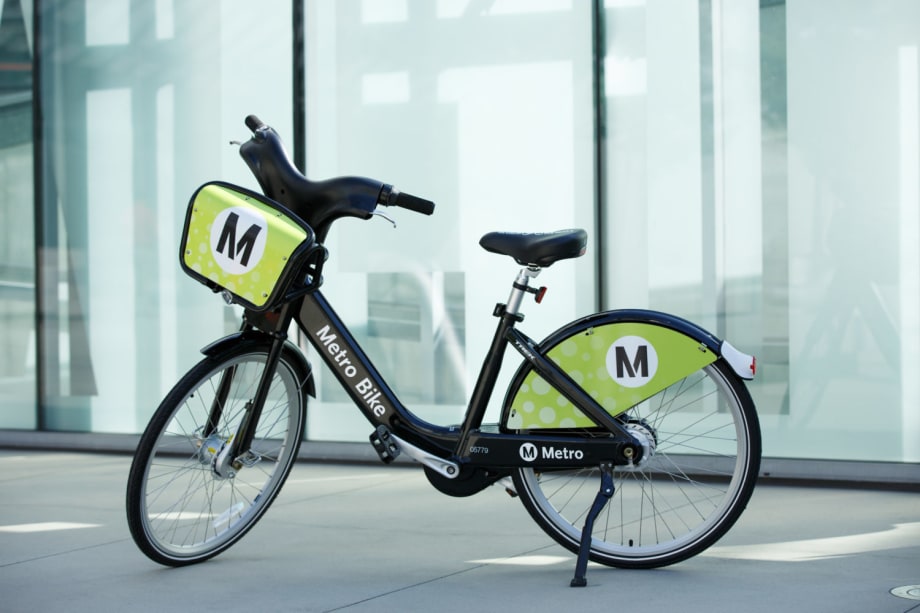
Metro will also be expanding its bike share program to new communities. In total, nearly 700 additional bikes and 79 additional stations are expected to be installed by mid-2019.
LA Metro
Metro will also be expanding its bike share program to new communities. In total, nearly 700 additional bikes and 79 additional stations are expected to be installed by mid-2019.
LA Metro
The Los Angeles County Metropolitan Transportation Authority (Metro) made several major improvements to its countywide bike-share program that will make using shared bicycles more affordable and accessible for short-distance trips.
Metro also plans to expand its bike share program utilizing new Smart Bikes in several new Downtown L.A. and Westside communities this winter. Smart Bikes do not require ending or starting a trip at a station and do not have to be docked, although designated stations will still be available.
Metro’s new fare structure is designed to increase ridership by lowering fares and providing Angelenos with several new fare options. For example, the Single Ride, Day Pass, and Monthly Pass options have all been reduced in price. The new fare structure includes:
Single Ride: $1.75 for each 30-minute trip and $1.75 for every 30-minutes thereafter.
Day Pass: $5 per day for unlimited free trips of 30 minutes or less. Trips are an additional $1.75 for every 30 minutes thereafter.
Monthly Pass: $17 per month for unlimited free trips of 30 minutes or less. Trips are an additional $1.75 for every 30 minutes thereafter.
Buy in Bulk: Single Ride passes discounted by up to 50%.
Metro plans to introduce several other new fare options later this year, including a $150 Annual Pass and reduced fare passes of $5 per month or $50 per year for eligible seniors, students, disabled/Medicare, and low-income individuals.
In reducing the walk-up price to just $1.75, Metro has now made the cost the same as a one-way fare for Metro’s Bus and Rail System.
“Metro is on a mission to help people in every community get where they’re going in ways that are affordable and convenient,” said L.A. County Supervisor and Metro Board Chair Sheila Kuehl. “We’re cutting bike-share fares and expanding our reach to make this clean, healthy transportation option more accessible and attractive to anyone who wants to hop on two wheels.”
Metro will also be expanding its bike-share program to new communities. In total, nearly 700 additional bikes and 79 additional stations are expected to be installed by mid-2019.
New Smart Bikes for this and future expansions will be introduced by Metro and its contractor Bicycle Transit Systems Inc. These Smart Bikes will provide riders flexibility to pick them up and drop them off anywhere within the service area as well as at designated locations, such as municipal racks and smaller stations located throughout the service areas. Smart Bike stations and traditional Metro Bike Share docks will be collocated in Koreatown where these services will overlap. Riders of Smart Bikes will be charged a convenience fee to drop off bikes anywhere in the area.
Metro has worked with cities to strategically place bike share stations near Metro Rail stations to encourage people to complete the first and last leg of their journey. Upon completion of TAP card integration development, a single pre-registered Metro TAP card will allow riders to transfer to Metro Bike Share from both Metro Bus and Rail lines with no additional charge for the first 30 minutes of a bike share trip. This new free transfer feature makes Metro Bike Share more integrated with transit than any other bike-share system in the U.S.
“We’ve made significant changes to our bike share program to ensure it becomes a more practical transportation solution and one that operates as a natural extension of our region’s public transit system,” said Metro CEO Phillip A. Washington.
Bike-sharing is an ideal transportation option for people to get where they need to go for trips to local destinations that may be too far to walk and too short or inconvenient to drive, and to complete the first and last leg of their journey from bus and rail.
More New Mobility

From Hardware to Digital Partner: Luminator Charts Its Next Chapter
CEO Magnus Friberg discusses Luminator’s shift toward becoming a digital partner, the growing importance of software and interoperability, and how AI can help agencies improve operations and passenger experience.
Read More →
Biz Briefs: Alstom Lands Canadian Contract, LYT to Supply California TSP, and More
In METRO's latest installment, we take a look at recent news from Complete Coach Works, Beep, FlixBus, and more partnerships making headlines across the transportation sector.
Read More →
CharterUP’s Armir Harris on Technology, AI, and the Future of Group Mobility
In a recent episode of METROspectives, CharterUP Founder/CEO Armir Harris discussed the company’s evolution from an online charter bus marketplace into a technology platform supporting public- and private-sector mobility and much more.
Read More →
Jacksonville’s NAVI Project Charts a New Course for Autonomous Public Transportation
Through its NAVI program, JTA is showing how autonomous vehicles, intelligent infrastructure, and coordinated operations can work together to deliver everyday public transportation.
Read More →
Biz Briefs: Luminator Marks Milestone and More
From manufacturers and suppliers to transit agencies and motorcoach operators, these updates offer a snapshot of the projects, partnerships and business moves driving the industry forward.
Read More →
New Tricks for Old Bureaucracies: Joshua Schank on Making Transit Innovation Stick
Former LA Metro Chief Innovation Officer Joshua Schank discusses why good ideas aren't enough, how transit agencies can overcome resistance to change, and why today's challenges demand more innovation.
Read More →
How DART's GoPass Is Redefining Regional Mobility
Serving 14 transit agencies, GoPass simplifies multimodal travel by allowing riders to plan, pay for, and manage an entire trip through one app.
Read More →
Biz Briefs: OCTA Taps Clean Energy for Hydrogen Station, Stadler to Supply Via Rail Vehicles, and More
From manufacturers and suppliers to transit agencies and motorcoach operators, these updates offer a snapshot of the projects, partnerships and business moves driving the industry forward.
Read More →CharterUP Expands Into New Mobility and Autonomous Transportation
Vice President of New Mobility Stephen Joos discusses how CharterUP is leveraging its nationwide transportation network, technology platform, and autonomous vehicle partnerships to expand into workforce mobility, campus shuttles, and transit solutions.
Read More →
METRO Magazine Announces 2026 Innovative Solutions Awards Winners
Projects Recognized for Advancing Mobility Through Technology, Accessibility, Workforce Innovation, and Operational Excellence
Read More →