



L.A. Metro's Washington unveils $120B plan to transform transportation
The potential ballot measure would ask voters to increase the countywide sales tax by a half-cent for 40 years and to continue an existing tax (Measure R) for an extra 18 years, meaning both would potentially run through 2057.

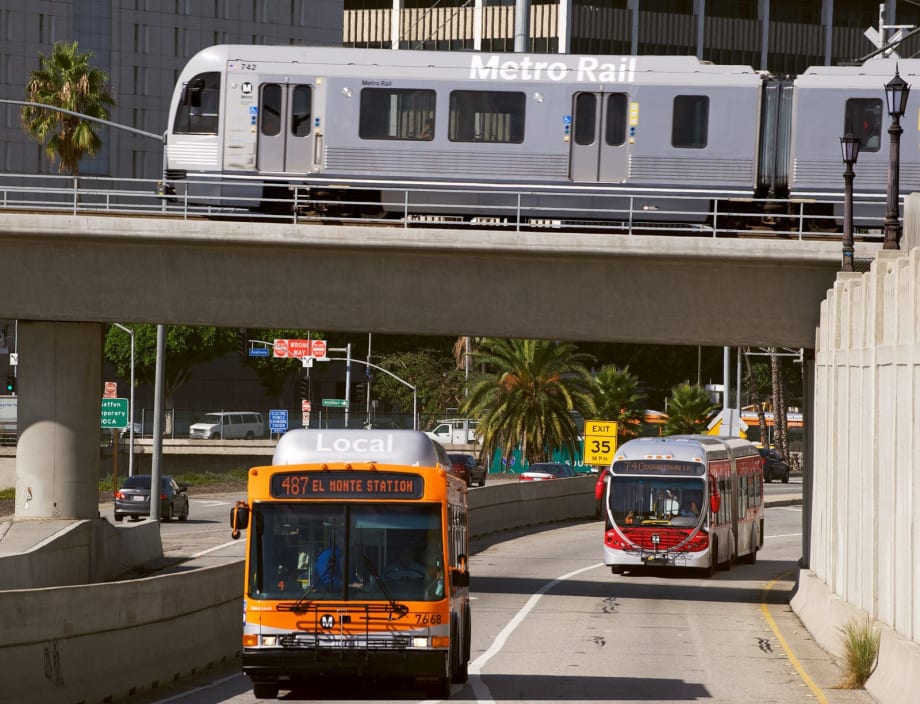
Los Angeles County Metropolitan Transportation Authority (Metro) CEO Phillip A. Washington unveiled staff recommendations for an expenditure plan as part of a possible November ballot measure that would fund a wide variety of transit and highway projects, roadway improvements and pedestrian and bike paths to be built over the next four decades.
“As LA Metro plans for future growth and transportation needs, it is imperative that we look at all mechanisms at our disposal to ensure the region’s mobility needs are met,” said Washington. “Working with our community stakeholders, this expenditure plan brings us a step closer in defining what projects are needed and where the funding could come from to complete those projects.”
The spending plan would also devote billions of dollars to pedestrian and cycling projects, commuter rail, transit operations and projects to keep buses, trains and facilities in good repair. The plan would return some revenues to local cities on a per capita basis — money those cities could spend on their own local transportation improvements.
The potential ballot measure would ask voters to increase the countywide sales tax by a half-cent for 40 years and to continue an existing tax (Measure R) for an extra 18 years, meaning both would potentially run through 2057. The staff report also provides the board with scenarios for a 45- or 50-year scenario. The Metro Board of Directors has final say on the spending plan and is scheduled to decide in June whether to put a ballot measure to voters.
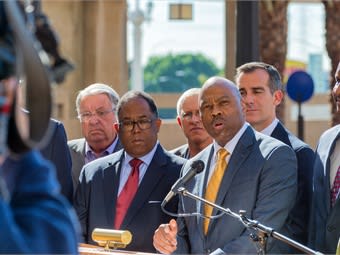
Phil Washington
The foundation of the plan includes a host of transportation improvement projects submitted by stakeholders across the county. Metro staff has been hard at work over the last couple of months evaluating those projects against some key performance metrics for how well the projects will ease congestion and enhance mobility, provide better access, improve safety, grow the economy and enhance quality of life.
The performance benefits of the plan include an increase of 80 million additional transit boardings per year or 3.2 billion additional riders during the 40-year period. Additionally, this will increase transit mode shares currently at 7% to a projected 20-30%. The major projects are estimated to reduce vehicle miles traveled by nearly five million daily (regionwide), reduce person hours of delay on the road by 15% and reduce daily hours of truck delay by 15%, resulting in greenhouse has reductions of 4%.
Metro estimates the new ballot measure would raise more than $120 billion. By comparison, the Measure R half-cent sales tax approved by county voters in 2008 is projected to raise $35 billion to $40 billion over its 30-year lifespan.
With the recent opening of the Metro Gold Line Extension to Azusa and the opening of the Expo Line extension to Santa Monica in May, Measure R has already funded the completion of two rail projects, three others that are under construction and numerous other highway and local improvements.
More New Mobility

From Hardware to Digital Partner: Luminator Charts Its Next Chapter
CEO Magnus Friberg discusses Luminator’s shift toward becoming a digital partner, the growing importance of software and interoperability, and how AI can help agencies improve operations and passenger experience.
Read More →
Biz Briefs: Alstom Lands Canadian Contract, LYT to Supply California TSP, and More
In METRO's latest installment, we take a look at recent news from Complete Coach Works, Beep, FlixBus, and more partnerships making headlines across the transportation sector.
Read More →
CharterUP’s Armir Harris on Technology, AI, and the Future of Group Mobility
In a recent episode of METROspectives, CharterUP Founder/CEO Armir Harris discussed the company’s evolution from an online charter bus marketplace into a technology platform supporting public- and private-sector mobility and much more.
Read More →
Jacksonville’s NAVI Project Charts a New Course for Autonomous Public Transportation
Through its NAVI program, JTA is showing how autonomous vehicles, intelligent infrastructure, and coordinated operations can work together to deliver everyday public transportation.
Read More →
Biz Briefs: Luminator Marks Milestone and More
From manufacturers and suppliers to transit agencies and motorcoach operators, these updates offer a snapshot of the projects, partnerships and business moves driving the industry forward.
Read More →
New Tricks for Old Bureaucracies: Joshua Schank on Making Transit Innovation Stick
Former LA Metro Chief Innovation Officer Joshua Schank discusses why good ideas aren't enough, how transit agencies can overcome resistance to change, and why today's challenges demand more innovation.
Read More →
How DART's GoPass Is Redefining Regional Mobility
Serving 14 transit agencies, GoPass simplifies multimodal travel by allowing riders to plan, pay for, and manage an entire trip through one app.
Read More →
Biz Briefs: OCTA Taps Clean Energy for Hydrogen Station, Stadler to Supply Via Rail Vehicles, and More
From manufacturers and suppliers to transit agencies and motorcoach operators, these updates offer a snapshot of the projects, partnerships and business moves driving the industry forward.
Read More →CharterUP Expands Into New Mobility and Autonomous Transportation
Vice President of New Mobility Stephen Joos discusses how CharterUP is leveraging its nationwide transportation network, technology platform, and autonomous vehicle partnerships to expand into workforce mobility, campus shuttles, and transit solutions.
Read More →
METRO Magazine Announces 2026 Innovative Solutions Awards Winners
Projects Recognized for Advancing Mobility Through Technology, Accessibility, Workforce Innovation, and Operational Excellence
Read More →