




RELATED: Transit Infrastructure Must Be Made Resilient to Climate Change Effects
Light rail extension to south of Seattle links downtown, university
The 1.6-mile South 200th Link Extension to Angle Street Station in the Seattle suburb of SeaTac connects Sound Transit travelers to the existing 18.8-mile Link light rail that runs north to Seattle-Tacoma Airport, the city’s downtown, Capitol Hill and the University of Washington.
December 21, 2016
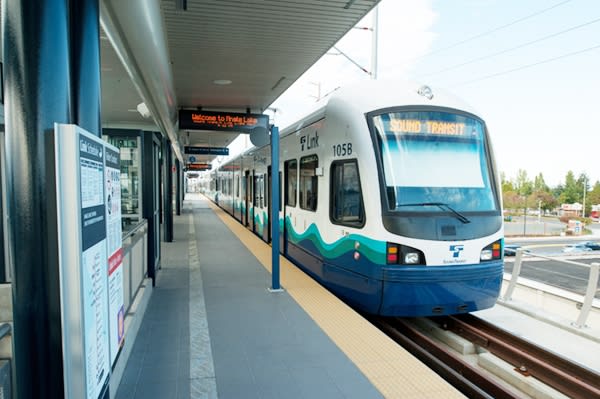
The 1.6-mile South 200th Link Extension connects to Sound Transit’s existing 18.8-mile light rail system, which runs from Seattle-Tacoma Airport to the University of Washington. Photo: ©2016 WSP | Parsons Brinckerhoff
3 min to read
The 1.6-mile South 200th Link Extension connects to Sound Transit’s existing 18.8-mile light rail system, which runs from Seattle-Tacoma Airport to the University of Washington. Photo: ©2016 WSP | Parsons Brinckerhoff
A new light rail extension, station, and parking garage south of Seattle are providing travelers with convenient transportation to the city’s downtown and the University of Washington.
The 1.6-mile South 200th Link Extension to Angle Street Station in the Seattle suburb of SeaTac connects Sound Transit travelers to the existing 18.8-mile Link light rail that runs north to Seattle-Tacoma Airport, the city’s downtown, Capitol Hill, and the University of Washington.
“This is part of Sound Transit’s Long-Range Plan to increase light rail service in the Puget Sound region,” said Ian Hubbard, project manager for WSP | Parsons Brinckerhoff, which provided design-build project management services on behalf of Sound Transit.
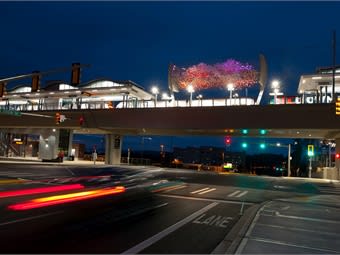
Angle Lake Station will serve as the southern terminus for Seattle’s light rail system until a planned extension of the system opens in 2023. Photo: ©2016 WSP | Parsons Brinckerhoff
The $383 million project included a double-track elevated guideway between the new terminal station and the existing tracks, as well as a park-and-ride garage. The project was completed ahead of schedule and $40 million under budget. Design work began in October 2012, with construction beginning in April 2013.
By 2018, 5,400 passengers are expected to use the new station on a daily basis. Angle Lake Station is the 16th station on the Link light rail line and will serve as the southern terminus until a planned extension of the light rail line to Kent/Des Moines opens in 2023.
Time Savings
The new 1,092-space parking garage built adjacent to Angle Lake Station offers a commuting alternative for students, workers and visitors heading to downtown Seattle and the University of Washington.
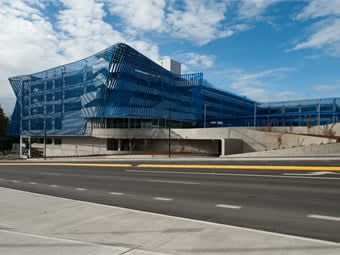
The Angle Street Station parking garage serves commuters and others travelling to downtown Seattle. Photo: ©2016 WSP | Parsons Brinckerhoff
“The parking garage provides commuters from the south end heading to Seattle the opportunity to park and ride the light rail as an alternative to commuting via the heavily congested Interstate 5 corridor,” said Daniel Babuca, resident engineer for the parking garage project. “A light rail trip will take 41 minutes to the downtown core and 48 minutes to University of Washington station, as opposed to a one- to two-hour trip driving on I-5.”
WSP | PB provided civil, structural, architectural, systems and mechanical, electrical and plumbing engineering for the parking garage, a concrete structure with a blue steel exterior.
The $32 million garage also provides 2,600 square feet of retail space on the ground level, and incorporates a public plaza that connects to the light rail station. The public space was developed in conjunction with the City of SeaTac as a flexible-use location for special events and farmers’ markets.
“The garage includes a photovoltaic system that will offset the power consumption of the facility and energy-efficient LED lighting, as well as four electric vehicle charging stations and an ability to expand and deploy additional stations based on demand,” Babuca said. “There are also spaces reserved for carpools and low emission/fuel efficient vehicles.”
Vehicles are limited to 24-hour parking in order to ensure that the facility is only used by commuters and carpoolers. Long-term parking for airline customers is not permitted. The garage will also alleviate congestion at the nearby 600-space Tukwila Station parking lot.
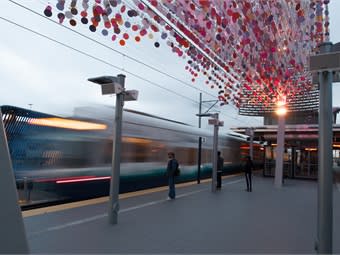
Angle Lake Station features “Cloud,” a sculpture consisting of hanging disks that can change appearance. Photo: ©2016 WSP | Parsons Brinckerhoff
Cloud Cover
The elevated Angle Lake Station consists of a canopied center platform built on precast girders with a topping slab and an at-grade plaza level.
A steel-framed canopy protects travelers from the elements, and escalators and elevators provide easier access to the station from the ground level.
One of the notable features of Angle Lake Station is a sculpture on the platform entitled “Cloud” by artist Laura Haddad. The sculpture consists of 6,000 hanging disks that alter their appearance when there are changes in light, weather, or when a train approaches.
More Rail

New York MTA Advances Final Contract for Second Avenue Subway Expansion
Contract Four is the largest in the Second Avenue Subway Phase 2 project and includes construction of station infrastructure, tracks, and signals for the subway expansion, MTA officials said. Work on Contract Four will begin in 2027.
Read More →
San Diego MTS Breaks Monthly Trolley Ridership Record
Agency officials said July’s ridership indicates MTS’s continued recovery from the pandemic.
Read More →
Report Examines NJ TRANSIT Reliability, Funding Challenges
The Garden State Initiative analysis examines the roles of Amtrak infrastructure, fleet management, and agency operations while recommending a more performance-based approach to improving reliability.
Read More →
Stadler, CapMetro Sign Long-Term Rail Fleet Support Agreement
Beginning in 2027, Stadler will provide on-site technical expertise, spare parts support, training, and obsolescence management to help extend the reliability and longevity of CapMetro’s GTW fleet.
Read More →
Biz Briefs: Alstom Lands Canadian Contract, LYT to Supply California TSP, and More
In METRO's latest installment, we take a look at recent news from Complete Coach Works, Beep, FlixBus, and more partnerships making headlines across the transportation sector.
Read More →
CATS Gold Line Marks 5 Years of Service, 2.8M Passenger Trips
With a six-mile expansion planned, the Charlotte streetcar is positioned to connect more neighborhoods and major transit hubs across the region.
Read More →
Why Simulating Pedestrian Movement Has Become Essential for Modern Rail Stations
Pedestrian microsimulation is helping rail planners identify bottlenecks, test station designs, and prepare complex transit hubs for growing passenger volumes.
Read More →
Amtrak Begins Major Construction at New York’s Sunnyside Yard
The new maintenance facility will support Amtrak’s Airo trainsets while improving maintenance efficiency and turnaround times in New York.
Read More →
Chicago Leaders Unveil Plans for O’Hare Airport Express Train
The privately developed project would offer a 15-minute trip between downtown and O’Hare’s Terminal 2, with trains operating every 15 minutes on a dedicated track. The service would use battery-electric trains and three existing freight rail rights-of-way.
Read More →
OCTA Maps Out 30-Year Strategy to Protect Coastal Rail Corridor
The draft feasibility report identifies strategies to protect the coastal rail line for decades as the agency continues near-term stabilization and sand placement efforts.
Read More →