



Local Motors' self-driving shuttle makes University at Buffalo debut
The shuttle, which is mostly 3D-printed, is capable of seating eight passengers and reaching 25 mph.

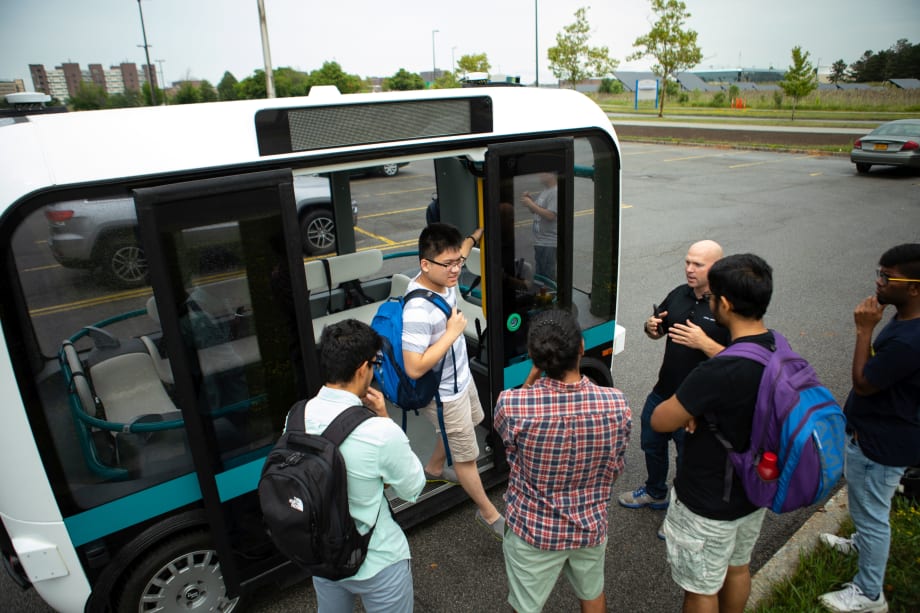
University at Buffalo researchers will use Olli, pictured above, to conduct comprehensive testing of autonomous and connected vehicles. Credit: Douglas Levere, University at Buffalo
University at Buffalo researchers will use Olli, pictured above, to conduct comprehensive testing of autonomous and connected vehicles.
Douglas Levere, University at Buffalo
Local Motors by LM Industries, known for 3D-Printed mobility solutions, announced the deployment and launch of operations of Olli at the University at Buffalo (UB). Olli is the world’s first co-created, self-driving, electric vehicle, designed to reinvent the future of urban mobility and sustainability.
Ultimately, UB researchers will use Olli — as well as other vehicles and simulators — to conduct comprehensive testing of autonomous and connected vehicles. The goal is to inform decisions regarding policy, safety, reliability and other future transportation issues. UB has no current plans to transport students in the shuttle; however, researchers will examine the feasibility and benefits of doing so on UB campuses, including the Buffalo Niagara Medical Campus.
RELATED: Autonomous vehicle deployments gaining in popularity
The project, which is being co-managed by the New York State Energy Research and Development Authority and the New York State Department of Transportation, supports Governor Andrew M. Cuomo’s clean energy goal to reduce greenhouse gas emissions 40% by 2030.
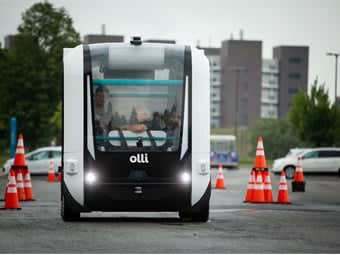
Local Motors' autonomous shuttle, which is mostly 3D printed, is capable of seating eight passengers and reaching 25 mph.
Douglas Levere, University at Buffalo
“We’re excited to have the Olli shuttle on campus, advancing the state as a leader in driverless technology while expanding our knowledge of human-automation interaction, critical to understanding artificial intelligence and machine learning” said University at Buffalo VP for Research and Economic Development Venu Govindaraju.
Created in 2016 by LM Industries’ subsidiary, Local Motors, Olli is a 3D-printed, self-driving, smart shuttle, built to change the future of mobility. Olli autonomously drives passengers to their desired destination, providing a safe, efficient, customizable, and environmentally-friendly transportation option for cities, companies, hospitals, stadiums and anywhere else around the world where people need to move.
More New Mobility

From Hardware to Digital Partner: Luminator Charts Its Next Chapter
CEO Magnus Friberg discusses Luminator’s shift toward becoming a digital partner, the growing importance of software and interoperability, and how AI can help agencies improve operations and passenger experience.
Read More →
Biz Briefs: Alstom Lands Canadian Contract, LYT to Supply California TSP, and More
In METRO's latest installment, we take a look at recent news from Complete Coach Works, Beep, FlixBus, and more partnerships making headlines across the transportation sector.
Read More →
CharterUP’s Armir Harris on Technology, AI, and the Future of Group Mobility
In a recent episode of METROspectives, CharterUP Founder/CEO Armir Harris discussed the company’s evolution from an online charter bus marketplace into a technology platform supporting public- and private-sector mobility and much more.
Read More →
Jacksonville’s NAVI Project Charts a New Course for Autonomous Public Transportation
Through its NAVI program, JTA is showing how autonomous vehicles, intelligent infrastructure, and coordinated operations can work together to deliver everyday public transportation.
Read More →
Biz Briefs: Luminator Marks Milestone and More
From manufacturers and suppliers to transit agencies and motorcoach operators, these updates offer a snapshot of the projects, partnerships and business moves driving the industry forward.
Read More →
New Tricks for Old Bureaucracies: Joshua Schank on Making Transit Innovation Stick
Former LA Metro Chief Innovation Officer Joshua Schank discusses why good ideas aren't enough, how transit agencies can overcome resistance to change, and why today's challenges demand more innovation.
Read More →
How DART's GoPass Is Redefining Regional Mobility
Serving 14 transit agencies, GoPass simplifies multimodal travel by allowing riders to plan, pay for, and manage an entire trip through one app.
Read More →
Biz Briefs: OCTA Taps Clean Energy for Hydrogen Station, Stadler to Supply Via Rail Vehicles, and More
From manufacturers and suppliers to transit agencies and motorcoach operators, these updates offer a snapshot of the projects, partnerships and business moves driving the industry forward.
Read More →CharterUP Expands Into New Mobility and Autonomous Transportation
Vice President of New Mobility Stephen Joos discusses how CharterUP is leveraging its nationwide transportation network, technology platform, and autonomous vehicle partnerships to expand into workforce mobility, campus shuttles, and transit solutions.
Read More →
METRO Magazine Announces 2026 Innovative Solutions Awards Winners
Projects Recognized for Advancing Mobility Through Technology, Accessibility, Workforce Innovation, and Operational Excellence
Read More →