



Low gas prices, gaps in intercity rail, bus forcing more to drive
Lower fuel prices and heightened competition from airlines have weakened demand for Amtrak and express coach bus lines, according to a study.

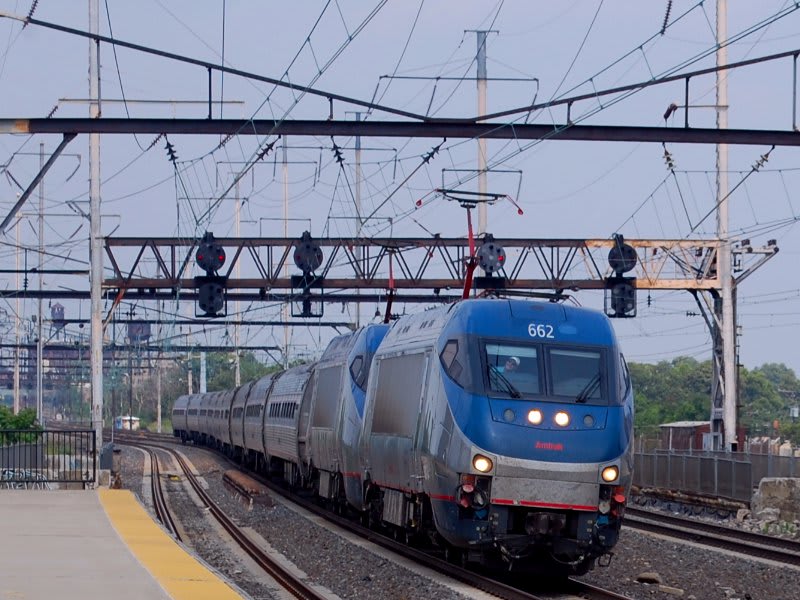
Starting in 2005, optimism ran high that expansions to the intercity bus and rail system would provide travelers with increasingly viable alternatives to driving, particularly on short- and middle-distance routes.
Lexcie
Starting in 2005, optimism ran high that expansions to the intercity bus and rail system would provide travelers with increasingly viable alternatives to driving, particularly on short- and middle-distance routes.
Lexcie
Declining gas prices and fewer public transportation options are forcing travelers back behind the wheel, according to a new study by DePaul University’s Chaddick Institute for Metropolitan Development.
“Low fuel prices have a serious downside,” said Joseph Schwieterman, professor in the School of Public Service and director of the institute. “When more people choose to drive, there can be a snowball effect that limits the public transportation options available to others, who then feel compelled to drive as well.” The study is co-authored by C. Scott Smith, assistant director of the institute; and graduate student Riley O’Neil.
Researchers found:
Lower fuel prices and heightened competition from airlines have weakened demand for Amtrak and express coach bus lines. Despite a recent uptick, new service offerings have lagged and not kept pace with the country’s rising population.
Gaps in ground transportation have emerged, making efforts to avoid driving on some popular routes more difficult than just a few years ago. These gaps are due to both slowed investment in new routes, as well as cutbacks by express coach lines outside of the busy Northeast region.
Numerous metropolitan areas remain largely inaccessible to travelers who seek to avoid flying or driving but are unwilling to use conventional bus lines such as Greyhound. These “Pockets of Pain” include Phoenix; Columbus, Ohio; Dayton, Ohio; Tulsa, Oklahoma; Ft. Myers, Fla.; and Sarasota, Fla.
Some short- and mid-distance routes with more than one million trips a year have no service by Amtrak or express coach lines, including Los Angeles to Phoenix; Cleveland to Detroit; Chicago to Columbus; Las Vegas to Phoenix; and Ft. Myers to Tampa.

Since 2015, Express coach lines began trimming frequency on some routes and ended service to other cities altogether.
Greyhound
Researchers at DePaul have been following the ebb and flow of bus and rail travel in the U.S. for more than a decade. Starting in 2005, optimism ran high that expansions to the intercity bus and rail system would provide travelers with increasingly viable alternatives to driving, particularly on short- and middle-distance routes, explained Schwieterman.
However by 2015, the hoped-for transformation of this intercity travel market has lost steam. Bus and train traffic had ebbed, buffeted by low fuel prices, heightened competition from airlines, and barriers to planned service improvements. The rollout of new trains slowed. Express coach lines began trimming frequency on some routes and ended service to other cities altogether.
“Everyone should take notice when momentum to improve bus and rail service diminishes, as these modes are critical to the mobility of those who cannot or prefer not to drive while also enhancing safety and fuel efficiency,” said Smith.
Drawing upon these findings, the researchers outline steps that public entities can take to give travelers more opportunities for ground-based intercity services. For example, researchers call for more effective arrangements to support states working together to improve rail corridors. They call for planners to follow the example of Boston, Denver, and Washington, D.C., by creating dedicated, centrally-located bus terminals that can help relieve overburdened curbside pickup spots. In addition, researchers cite Amtrak’s “Thruway Bus Network” program, which connects riders on buses and trains, as a model for other cities to follow. Schwieterman says California, Michigan, and Oregon have seen boosts in ridership through the program.
“There are proven ways for planners to better coordinate bus and rail services, and these success stories from around the country show that there are practical opportunities to help people lessen their dependence on driving,” said Schwieterman.
The full report is available for download, here.
More Management

METRO Opens Submissions for 2026 Motorcoach Awards
Nominations are now being accepted for METRO Magazine’s Operator of the Year and Innovative Operator of the Year awards.
Read More →
New York MTA Advances Final Contract for Second Avenue Subway Expansion
Contract Four is the largest in the Second Avenue Subway Phase 2 project and includes construction of station infrastructure, tracks, and signals for the subway expansion, MTA officials said. Work on Contract Four will begin in 2027.
Read More →
Transit Agencies Highlight Safety Gains at National Summit
Leaders from 15 major transit systems shared crime-reduction results and safety initiatives while discussing the role of continued federal support.
Read More →

NITA Names New Leadership, Expands Reduced-Fare Program at First Board Meeting
The new regional transit authority appointed its first board chair and interim executive director while extending reduced fares across CTA, Metra, and Pace for eligible riders.
Read More →
Beyond the Checklist: A Structured Approach to Transit Maintenance
Reliability-Centered Maintenance helps transit agencies move beyond routine checklists to focus limited resources on the assets and failures that have the greatest impact on safety, reliability, and service.
Read More →
APTA 2026 Nominating Committee Selects Leadership Slate, Names Chair and Vice Chair Nominees
Leadership changes will help shape the association’s priorities and its representation of the transportation industry during the 2026–2027 term.
Read More →
DART Launches Major Security, Fare Enforcement Initiative
The 90-day demonstration will deploy coordinated security teams at five light rail stations while testing controlled access and gathering data to guide future investments.
Read More →
Advancing Fare Collection Through Technology and Innovation
Learn about delivering 1300 gates at 91 stations while managing fare evasion. Explore the large scale deployment, solution customization and real-world results that affect the region. Prepare for deployment in your region now.
Read More →
Game Day in Motion: Moving Millions During the 2026 World Cup
Between packed transit stations and team motorcoaches, see how agencies and operators across North America tackled the transportation demands of the 2026 FIFA World Cup.
Read More →
Surface Transportation Extension Averts Shutdown, Leaves Transit Funding Gap
The stopgap keeps federal transportation programs moving, but missing advance funding could complicate the transit and rail projects agencies are planning next.
Read More →