



Luminator debuts full-color display sign system, stairwell light for transit
Both products will be on display at booth # 431 at the APTA Bus & Paratransit Conference Products & Services Showcase on May 9, 2017 in Reno, Nev.

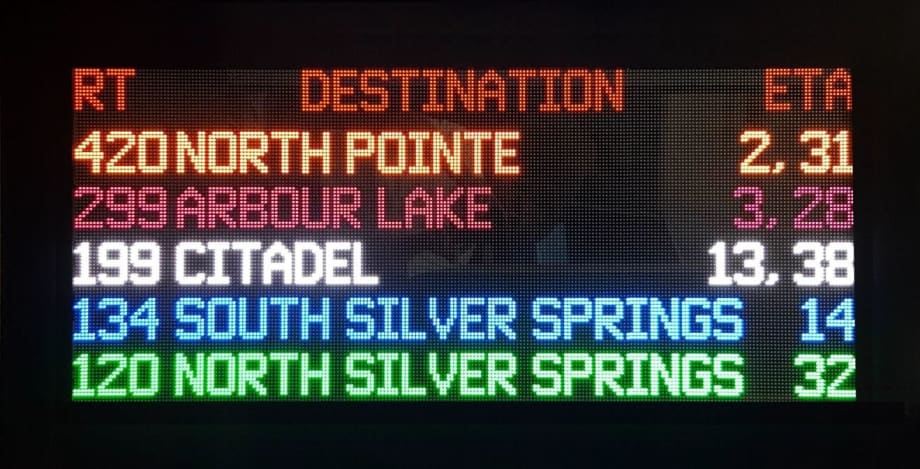
Luminator Technology Group's new LED full-color stationary display sign system for bus and rail mass transit systems.
Luminator Technology Group's new LED full-color stationary display sign system for bus and rail mass transit systems.
Luminator Technology Group (LTG) today introduced it’s full-color LED 5mm pitch stationary display sign system. Available in single or double-sided versions in NEMA 4X enclosures, this fine-pitch model is rugged, reliable, and readable.
Some of the key features of the mass transit display system include:
Built-in audio broadcast capabilities for prerecorded and real-time messages.
Text-to-speech capable
IP-based using wired or cellular connectivity
Software can interface with multiple transit agencies (bus and light rail transit) for more robust travel plan communication to passengers
Seamless integration to GTFS and GTFS real-time data. If the real-time predicted vehicle arrival data stream temporarily fails, then the display system will default back to scheduled arrival time data
Customized service updates can be created and immediately sent to the remote displays through the System User Console Message Studio software.
Software is remotely upgradeable in the field
Diagnostics monitoring is locally stored and reported back to the central server
Brightness – 3500 nits
Viewing angle – 160 (H) 120 (V)
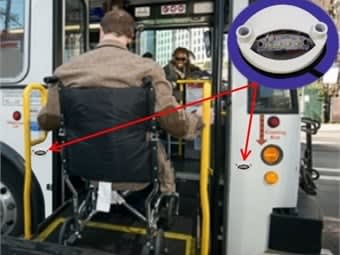
Luminator Technology Group's new high-brightness LED stairwell light ideal for paratransit bus lifts and ramps.
Additionally, LTG will introduce a high brightness LED stairwell light for applications such as wide door lifts and ramps. Paratransit bus lifts and ramps require more light than a standard bus stairwell to ensure suitable vision and safety for paratransit passengers as they enter and leave the vehicle during dark conditions.
To meet this need LTG has created a stairwell light that produces a stunning 236 foot-candles of white light and it is significantly brighter than many standard stairwell lights.
LTG will feature this new, high brightness stairwell light and the full-color display sign system at the upcoming APTA Bus & Paratransit Conference Products & Services Showcase on May 9, 2017. For more information and to view this new product, stop by booth # 431.
More Management

METRO Opens Submissions for 2026 Motorcoach Awards
Nominations are now being accepted for METRO Magazine’s Operator of the Year and Innovative Operator of the Year awards.
Read More →
New York MTA Advances Final Contract for Second Avenue Subway Expansion
Contract Four is the largest in the Second Avenue Subway Phase 2 project and includes construction of station infrastructure, tracks, and signals for the subway expansion, MTA officials said. Work on Contract Four will begin in 2027.
Read More →
Transit Agencies Highlight Safety Gains at National Summit
Leaders from 15 major transit systems shared crime-reduction results and safety initiatives while discussing the role of continued federal support.
Read More →

NITA Names New Leadership, Expands Reduced-Fare Program at First Board Meeting
The new regional transit authority appointed its first board chair and interim executive director while extending reduced fares across CTA, Metra, and Pace for eligible riders.
Read More →
Beyond the Checklist: A Structured Approach to Transit Maintenance
Reliability-Centered Maintenance helps transit agencies move beyond routine checklists to focus limited resources on the assets and failures that have the greatest impact on safety, reliability, and service.
Read More →
APTA 2026 Nominating Committee Selects Leadership Slate, Names Chair and Vice Chair Nominees
Leadership changes will help shape the association’s priorities and its representation of the transportation industry during the 2026–2027 term.
Read More →
DART Launches Major Security, Fare Enforcement Initiative
The 90-day demonstration will deploy coordinated security teams at five light rail stations while testing controlled access and gathering data to guide future investments.
Read More →
Advancing Fare Collection Through Technology and Innovation
Learn about delivering 1300 gates at 91 stations while managing fare evasion. Explore the large scale deployment, solution customization and real-world results that affect the region. Prepare for deployment in your region now.
Read More →
Game Day in Motion: Moving Millions During the 2026 World Cup
Between packed transit stations and team motorcoaches, see how agencies and operators across North America tackled the transportation demands of the 2026 FIFA World Cup.
Read More →
Surface Transportation Extension Averts Shutdown, Leaves Transit Funding Gap
The stopgap keeps federal transportation programs moving, but missing advance funding could complicate the transit and rail projects agencies are planning next.
Read More →