Transit Pilot Offers Lessons for Expanding Mobility Access
An Urban Institute evaluation found that a fare-free transit program increased ridership, reduced transportation barriers, and improved access to jobs, healthcare, and other essential services.
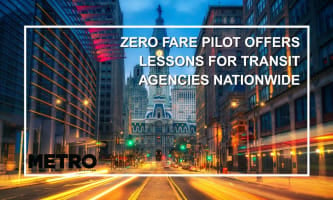
An Urban Institute study found Philadelphia's Zero Fare transit pilot increased mobility and helped participants access jobs, healthcare, education and other essential services.
Credit:
METRO
7 min to read
An Urban Institute evaluation highlighted that a fare-free transit program led to increased ridership.
The program successfully reduced transportation barriers for the community.
Improved access to jobs, healthcare, and other essential services was noted as a benefit of the program.
*Summarized by AI
Philadelphia’s Zero Fare transit pilot demonstrates that eliminating fares and enrollment barriers can significantly improve mobility, economic opportunity, and quality of life for low-income residents while strengthening public confidence in government and transit agencies, according to a recent implementation evaluation by the Urban Institute.
The study examines Philadelphia SEPTA’s innovative approach to transit assistance, which differs substantially from traditional discounted fare programs.
Ad Loading...
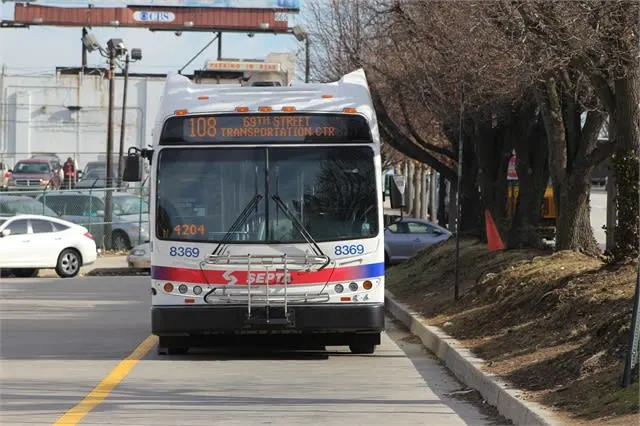
Rather than requiring residents to learn about a program, complete an application, and provide documentation, the city used existing administrative data to identify eligible participants and automatically mailed them fare cards that provided free access to SEPTA’s buses, trains, trolleys, and paratransit services.
Philadelphia has long faced one of the highest poverty rates among major US cities, and city officials increasingly view transportation costs as a significant obstacle to economic mobility, according to the study’s authors. The Zero Fare program was designed to address that challenge directly by removing both financial and administrative barriers to transit access.
“The administrators in city government designing the program recognized transit costs as a barrier to economic mobility and overall well-being for Philadelphia's low-income residents,” said Amelia Coffey, senior research associate at the Urban Institute. “They noted their goal was to design a program that would remove this barrier.”
The Urban Institute’s evaluation, conducted alongside an ongoing randomized controlled trial led by Georgetown University, focused on how the program was designed and implemented. Researchers interviewed city and SEPTA staff, community-based organizations involved in the program, and participants who received the benefit through both automatic enrollment and community-based outreach.
Their findings suggest the program has delivered benefits far beyond reducing transportation expenses.
How Transit Can Provide Access to Opportunity
According to the report, participants consistently described free transit as a tool that expanded access to employment, education, healthcare, shopping, and recreation while reducing stress associated with transportation costs.
“Free transit unlocks economic and personal opportunities for low-income riders,” the report stated. Recipients said the benefit made work, errands, education, and recreation more accessible; improved household finances; and reduced daily stress. Many participants told researchers the program had fundamentally improved their lives.
Coffey said those benefits often extended well beyond simple savings on transit fares.
“Saving money on transit had a much more profound impact on many low-income people than it would on people with more wiggle room in their household budgets; it meant reliable access to destinations around the city,” she explained. “Recipients discussed how it reduced daily stress and uncertainty around commuting to work and searching for jobs. A few reported that they were able to progress in their careers thanks to reliable transit access.”
Researchers also heard stories from residents who previously walked long distances because they could not afford transit fares and from people with disabilities who relied on free paratransit service to reach medical appointments and other essential destinations. Some participants reported improvements in mental health as transportation-related stress declined.
The Power of Automatic Enrollment
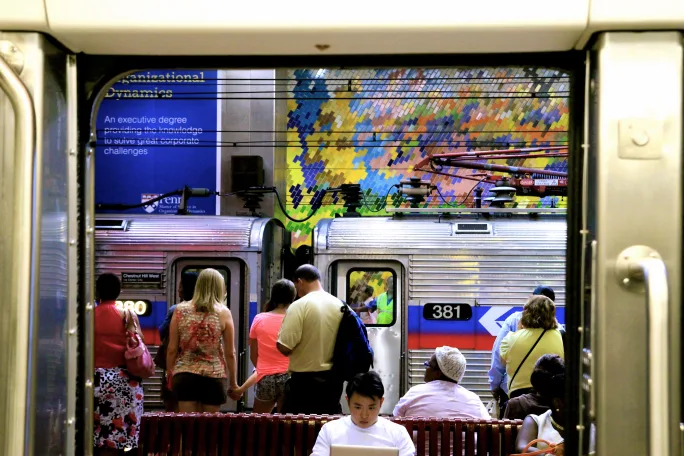
The Zero Fare pilot combined automatic enrollment with community-based outreach to expand access to transit assistance.
Credit:
SEPTA
One of the report’s strongest findings is the effectiveness of automatic enrollment in increasing participation rates.
Traditional public-benefit programs often require applicants to navigate complicated enrollment processes that can discourage participation even among people who qualify.
By contrast, Zero Fare automatically identified eligible residents through existing government records and mailed transit cards directly to them.
“The primary factor driving the high participation rate was automatic enrollment,” Coffey said. “Rather than having to go through multiple onerous steps to learn about, apply for, and receive the benefit, participants simply received a card in the mail. Evidence shows that traditional benefit enrollment steps dramatically reduce program participation rates.”
The Urban Institute found that participants overwhelmingly preferred the auto-enrollment model because it eliminated many of the time-consuming administrative hurdles associated with applying for public benefits. The approach also reduced the need for participants to verify eligibility or renew benefits through complex processes repeatedly.
However, researchers noted that automatic enrollment alone was not enough. Because many recipients were initially skeptical of receiving a free transit card they had not requested, city officials conducted extensive outreach and public education campaigns to explain the program and assure residents that it was legitimate.
“Without those efforts, fewer people would likely have used the card,” Coffey said.
Filling Critical Gaps While Innovating
While auto-enrollment proved effective for most participants, the program also relied heavily on community-based organizations to reach populations that could not easily be identified through administrative data.
Philadelphia reserved 10% of available Zero Fare cards for distribution through immigrant-serving organizations, recognizing that many immigrants are ineligible for the public assistance programs used to determine eligibility.
“Community-based organizations played a critical role in reaching immigrants,” Coffey said. “These organizations were able to leverage their trusted status in their communities to engage their clients and provide program access effectively.”
The report concluded that combining automatic enrollment with low-barrier, assisted enrollment through trusted community partners may be the most effective strategy to ensure broad participation while maintaining accessibility for hard-to-reach populations.
The evaluation also highlights the administrative advantages of the Zero Fare model.
City and SEPTA staff told researchers that relying on existing administrative data enabled the program to launch within months of receiving approval from city leadership. Because there was no application process to manage, the program required fewer staff resources and lower administrative costs than a traditional benefit program.
Researchers described the effort as an example of how government agencies can use existing data in innovative ways to simplify access to public services.
“Their careful data matching process allowed for reliable identification of eligible people without collecting new data,” the report noted, suggesting other agencies could adopt similar approaches to make public programs more efficient and user-friendly.
Automatic Fare Enrollment Benefits for Transit Agencies
Researchers said Philadelphia's approach offers lessons for agencies exploring new models for fare assistance programs.
Credit:
SEPTA
The study also points to potential advantages for transit providers.
Participants reported using SEPTA more frequently after receiving free transit access. At the same time, city and agency officials suggested that programs like Zero Fare could help strengthen transit systems over the long term.
According to the report, increased ridership can create a positive feedback loop in which more riders improve perceptions of safety, attract additional passengers, and generate greater support for transit investment. Those improvements can ultimately help agencies improve service quality and reliability.
The program’s financial structure also helped maintain SEPTA’s fare revenue model. Philadelphia reimburses the transit agency on a per-ride basis for trips taken by Zero Fare participants, creating a funding arrangement that Coffey said has proven financially viable.
“The viability of zero fare programs is a matter of budget priorities,” she said. “The city of Philadelphia has chosen to fund and administer this investment in transit access and has designed a cost-effective program model.”
Perhaps the most surprising finding from the evaluation was the program’s effect on public perceptions of government and transit agencies.
Researchers found that many participants reported more favorable views of both SEPTA and the city government after receiving the benefit. Participants frequently said the program made them feel that public institutions cared about their well-being.
“Benefits like Zero Fare play a role in restoring faith in institutions,” the report concluded. At a time when public trust remains low nationwide, researchers suggest that highly visible, easy-to-use benefits can help strengthen relationships between residents and government agencies.
“A large share of recipients said that the program improved their views of city government and of the transit system because it made them feel cared for,” Coffey added.
A Model for Other Cities?
As transit agencies and local governments continue to explore strategies for improving access to transportation, the Urban Institute said Philadelphia’s experience offers several lessons.
According to Coffey, the pilot demonstrated that automatic enrollment could increase participation by removing traditional application barriers. At the same time, partnerships with community-based organizations can help reach populations that may be missed through administrative data alone.
“Other cities and transit agencies considering options to reduce barriers to transit for low-income residents should look to Zero Fare as an exciting, innovative example,” she said. “The pilot results demonstrate that removing barriers to program enrollment greatly increases participation. Automatic enrollment works well for most people, and low-barrier assisted enrollment can help engage others who are harder to reach.”
Researchers said the findings may be useful for other agencies evaluating fare assistance programs and enrollment models for low-income riders in the future.
Quick Answers
The fare-free transit program increased ridership, reduced transportation barriers, and improved access to jobs, healthcare, and other essential services.
The Urban Institute conducted an evaluation to assess the outcomes of the fare-free transit program.
Increasing ridership is crucial as it indicates enhanced accessibility and efficiency in connecting people to necessary services and opportunities.
A fare-free transit program helps reduce financial and logistical barriers to transportation, making it easier for individuals to access essential services.
The evaluation of the fare-free transit program was conducted by the Urban Institute.
The Delaware River Port Authority and PATCO have transformed their internship program into a hands-on professional development experience that introduces students to the breadth of transportation careers — and creates a pipeline for future employees.
Once viewed primarily as transit operators, agencies are now leveraging land, partnerships, and long-term planning to boost ridership, expand housing, and strengthen communities.
An Urban Institute evaluation found that a fare-free transit program increased ridership, reduced transportation barriers, and improved access to jobs, healthcare, and other essential services.
Advances in data and analytics are giving transit agencies new opportunities to refine maintenance practices, improve efficiency and make more informed decisions about asset performance.
Mentorship programs at VTA and King County Metro are transforming the experience of new bus operators — boosting retention, improving safety, and strengthening connections among frontline workers, unions, and management.
With more operators nearing retirement and investor interest on the rise, now is the time to plan your exit strategy. Here’s how to prepare your business for a successful sale that avoids leaving money on the table.