



Mass. agency adds 32 Lightning Hybrids vehicles
Kiessling Transit has received a grant from the Commonwealth of Massachusetts that pays for 80% of the cost of the Lightning Hybrids’ systems to be installed on Kiessling Transit’s Ford E-450 passenger buses.

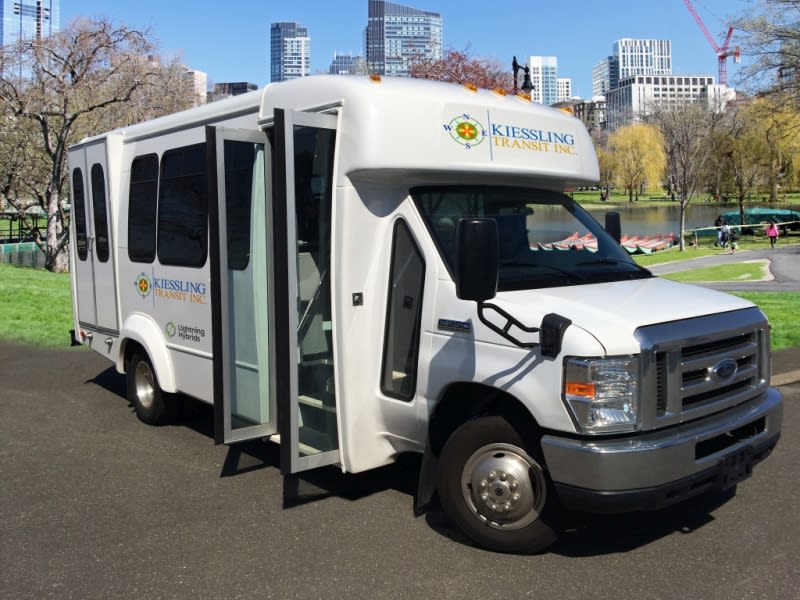
Lightning Hybrids, developer and manufacturer of the Energy Recovery System (ERS) for medium- and heavy-duty trucks and buses, announced an agreement with Norfolk, Mass.-based Kiessling Transit, which will almost double the number of hydraulic hybrid buses in its fleet.
The 32 unit order follows an order last year from the company for 35 units that were commissioned in September 2015. Those vehicles have recorded close to a total of one million miles. The ERS has demonstrated improvements of 25% in fuel efficiency and significantly reduced tailpipe emissions. In addition, Lightning Hybrids has identified ways to reduce vehicle idle time by up to 30%.
Kiessling Transit has received a grant from the Commonwealth of Massachusetts that pays for 80% of the cost of the Lightning Hybrids’ systems to be installed on Kiessling Transit’s Ford E-450 passenger buses, making them cleaner, more fuel efficient and improving braking efficiency.
The ERS is a patented, parallel hydraulic hybrid system that has no electric batteries. Instead, it applies a hydraulic system to the driveline of a vehicle to regenerate braking energy. Hydraulic pumps and a lightweight accumulator brake the vehicle, store the energy and then use that stored energy to provide power to the wheels.
When put in service, the buses will provide an immediate positive impact on the environment due to the reduced emissions of the system. For example, vehicles with Lightning Hybrids’ technology produce half of the NOx emissions and 25% fewer CO2 emissions, compared to vehicles without the company’s system, according to Lightning Hybrids. In addition to these emissions reductions, the Kiessling fleet will see decreased fuel use, longer brake life, better low-end torque, and lower maintenance and operational costs.
More Technology
Almaviva Looks to Open Architecture to Advance Transit Technology
Eric Reese discusses how interoperability, open architecture, and modular design can help transit agencies control costs, reduce vendor lock-in, and upgrade technology without starting over.
Read More →
Driving Smarter Paratransit
John Hanlon shares how AlphaRoute is leveraging AI-powered technology to help paratransit providers optimize operations, support frontline staff, and enhance the rider experience.
Read More →
From Hardware to Digital Partner: Luminator Charts Its Next Chapter
CEO Magnus Friberg discusses Luminator’s shift toward becoming a digital partner, the growing importance of software and interoperability, and how AI can help agencies improve operations and passenger experience.
Read More →

Beyond the Checklist: A Structured Approach to Transit Maintenance
Reliability-Centered Maintenance helps transit agencies move beyond routine checklists to focus limited resources on the assets and failures that have the greatest impact on safety, reliability, and service.
Read More →
NJ TRANSIT Advances Bus Technology Upgrades Across Statewide Fleet
More than 1,500 buses now feature upgraded technology designed to improve arrival predictions and provide free Wi-Fi, with deployment expected to reach nearly 2,000 buses by the end of 2026.
Read More →
Building a Flexible Path to Transit Electrification
John Hroncich discusses BAE Systems’ modular and scalable approach, lessons learned from decades of real-world operations, and how agencies can identify electrification strategies that fit their fleets.
Read More →
Biz Briefs: Alstom Lands Canadian Contract, LYT to Supply California TSP, and More
In METRO's latest installment, we take a look at recent news from Complete Coach Works, Beep, FlixBus, and more partnerships making headlines across the transportation sector.
Read More →
From Legacy Silos to Conversational Intelligence
What if transit leaders could ask any operational question and get a trusted answer in seconds? Conversational AI is transforming how agencies use their data.
Read More →
USDOT Announces Rail Vehicle Replacement Grants, Chattanooga AV Shuttle Funding
More than $191 million in federal funding will help three transit agencies replace aging rail vehicles and support a new autonomous shuttle service in Chattanooga.
Read More →
Bus Tech Talk: Keeping Transit Technicians Ahead of the Technology Curve
LA Metro’s Obed Mejia discusses technician training, evolving maintenance technology, fleet replacement, and strategies for getting the most out of today’s transit fleets.
Read More →