



MCI completes delivery of Denver RTD's 42 Commuter Coach order
The delivery follows 2013 and 2015 orders, bringing Denver RTD’s fleet to include 161 newer MCI Commuter Coaches operating on Denver RTD’s regular-route express service and its new Flatiron Flyer BRT service between Denver and Boulder.

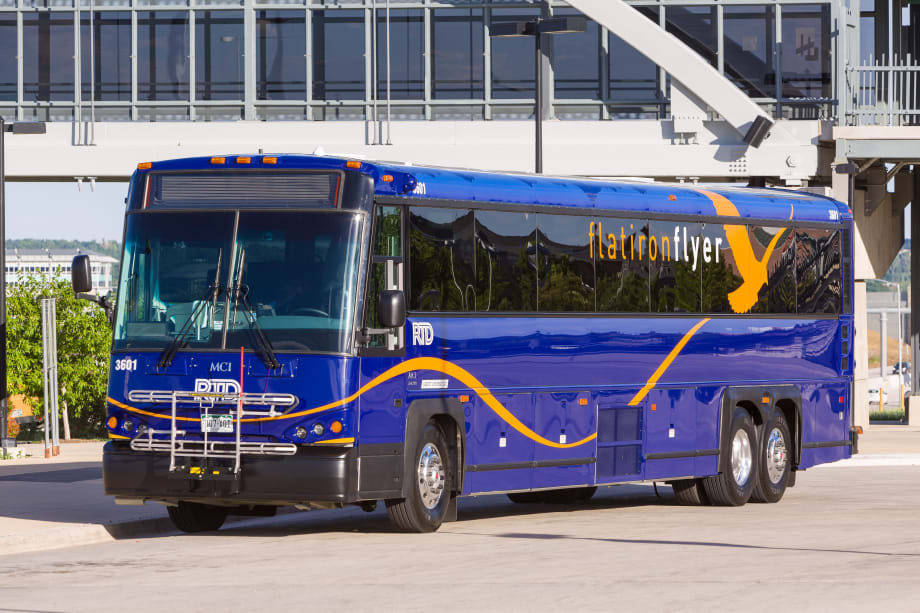
Motor Coach Industries (MCI), a subsidiary of New Flyer Industries Inc., completed the delivery of 42 D-Series Commuter Coaches to the Denver Regional Transportation District (RTD).
The delivery follows 2013 and 2015 orders, bringing Denver RTD’s fleet to include 161 newer MCI Commuter Coaches operating on Denver RTD’s regular-route express service and its new Flatiron Flyer BRT service between Denver and Boulder. The new coaches replace older models past their useful life on regular-route express service.
The Buy America-compliant MCI Commuter Coach features plush, forward-facing seating and overhead parcel racks with individual reading lights and airflow controls. Engineered to provide a comfortable, safe ride on express and highway routes, Denver RTD's new Commuter Coaches are each equipped with 110-volt/USB outlets at each seat, bike racks, a wheelchair lift and the latest clean-diesel engine technology for near-zero emissions.
Denver RTD’s FasTracks transit expansion will add 122 miles of new commuter rail and light rail, 18 miles of BRT service, 21,000 new parking spaces at rail and bus stations, and enhanced bus service across the eight-county district. Denver’s Transit Center in Union Station features light rail, a 22-gate bus concourse, a Greyhound gate and Amtrak all under one roof in a bustling urban setting.
More Bus
Biz Briefs: New Flyer Delivers in Columbus, Houston, Beep and Freebee Merge, and More
In this edition of Biz Briefs, we spotlight the latest developments shaping the future of mobility.
Read More →
People Movement: Dan Dipert Coaches Adds Third-Generation Leader, Keolis Names New Valley Metro VP/GM, and More
In this edition, we also cover recent appointments and announcements at the Wabtec, SilverRide, HNTB, and more, showcasing the individuals helping to shape the future of transportation.
Read More →
New York MTA Plans Largest Bus Fleet Upgrade in More Than a Decade
The agency is seeking manufacturers for 650 new CNG buses to replace aging vehicles, improve reliability, and advance its broader fleet modernization strategy.
Read More →
Building a Flexible Path to Transit Electrification
John Hroncich discusses BAE Systems’ modular and scalable approach, lessons learned from decades of real-world operations, and how agencies can identify electrification strategies that fit their fleets.
Read More →
Bus Tech Talk: Keeping Transit Technicians Ahead of the Technology Curve
LA Metro’s Obed Mejia discusses technician training, evolving maintenance technology, fleet replacement, and strategies for getting the most out of today’s transit fleets.
Read More →
Biz Briefs: RIPTA Unveils New Frontrunners, Clevland RTA Adds New Siemens, and More
In METRO's latest installment, we take a look at recent news from Siemens, Prevost, Dodge, and more partnerships making headlines across the transportation sector.
Read More →
People Movement: Holly Arnold Joins Transdev and More
In this edition, we also cover recent appointments and announcements at Pace, CamTran, MCI, and more, showcasing the individuals helping to shape the future of transportation.
Read More →
The High Cost of Transit Buses: Industry Leaders Look to Procurement Reform
Transit leaders and policymakers examine how standardized bus designs, streamlined procurement, and predictable funding could help agencies stretch budgets and deliver better service.
Read More →
The Business Voice Behind Public Transportation
As chair of APTA’s Business Members Board of Governors, Ray Melleady explains how more than 850 business members are partnering with transit agencies to advance funding, innovation, and industry-wide collaboration.
Read More →
From Surviving to Thriving: Building Stronger Transportation Organizations
Bus Business Consultants founder Brian Dickson shares lessons on leadership, organizational health, and creating options for long-term success in a changing transportation industry.
Read More →