



Metra expands undercover train observation team
Agency has doubled its team of employees tasked with riding its trains to observe and report on conductor and ticket agent performance, onboard and station amenities and customer interactions.

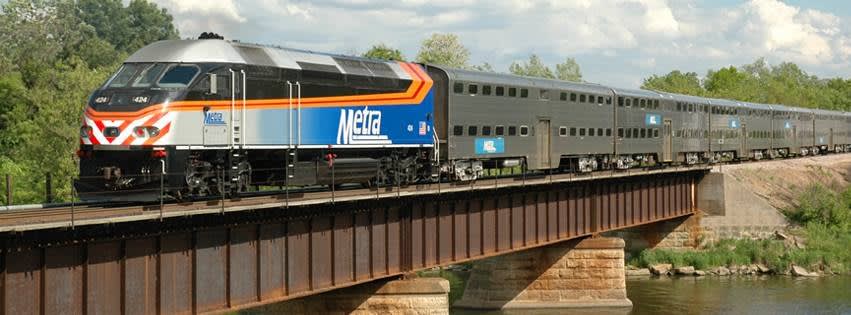
Metra photo via Facebook
Metra photo via Facebook
Chicago's Metra announced Wednesday that it has doubled its team of employees tasked with riding its trains to observe and report on conductor and ticket agent performance, onboard and station amenities and customer interactions.
Like mystery shopper programs used by retail outlets, these individuals ride anonymously and are tasked with checking the condition of the railcars for cleanliness and temperature control and determining if equipment such as the public address system is functioning properly. The team also observes conductors to learn if they are taking the appropriate measures to collect fares, performing other onboard duties and properly enforcing train rules. While not onboard Metra trains, the observation team checks the condition of stations and parking lots, as well as the quality of platform announcements and ADA signage. In addition, the team will also be asked to report examples of superior customer service.
“Our primary goal here is to identify and correct issues before they become a bigger problem,” said Metra Executive Director/CEO Don Orseno. “Having more eyes and ears in the field will provide our operations-level managers and the agency’s leadership the type of feedback we need to improve our service and operations.”
Metra routinely monitors and investigates specific complaints about fare collection practices, conductor and ticket agent performance, onboard and station amenities and customer interactions on all its rail lines. However, for the last six months, Metra has deployed a three-person undercover team to help evaluate train operations and amenities.
Starting this week, the team will be expanded from three to six employees, all of whom are reassigned from existing positions within Metra’s Transportation Department. The expanded team will be deployed about 10 times per week with the goal of having 40 train observation reports per month. Team members are trained about a conductor’s onboard responsibilities and performance expectations and are provided a checklist of amenities to evaluate.
Monitoring fare collection practices will be a high priority for the train observation team throughout the summer. Metra customers are required to present a ticket or pass to conductors onboard trains or risk a fine for unlawful theft of service. Conductors are also required to pass through each train car to verify tickets and collect fares. While crowding, the need to aid passengers and other exceptional situations onboard trains can slow and in some cases prevent conductors from completing their fare collection responsibilities, such cases are the exception rather than the rule.
“We owe it to our customers to try to collect fares from everyone who uses our service,” Orseno said. “With cost estimates to achieve a state of good repair for our system over the next decade currently at $11.7 billion – now more than ever, we need to maximize critical fare revenue.”
The train observation team will also be charged with observing and reporting on train conductors who go above and beyond the agency’s current requirements for customer service. Those found to be exceeding performance expectations will be acknowledged for their efforts and their performance will be shared among their peers.
“Good managers recognize the good and the bad,” Orseno said. “Just as we will use this team to help us find issues that need to be corrected, we will also seek to honor the excellent work being done by our train crews and station agents every day.”
The expanded train observation team will be scheduled on all 11 Metra rail lines starting this week and will rotate throughout the summer. After this deployment, Metra will review and evaluate the results of this initiative to determine next steps.
More Rail

New York MTA Advances Final Contract for Second Avenue Subway Expansion
Contract Four is the largest in the Second Avenue Subway Phase 2 project and includes construction of station infrastructure, tracks, and signals for the subway expansion, MTA officials said. Work on Contract Four will begin in 2027.
Read More →
San Diego MTS Breaks Monthly Trolley Ridership Record
Agency officials said July’s ridership indicates MTS’s continued recovery from the pandemic.
Read More →
Report Examines NJ TRANSIT Reliability, Funding Challenges
The Garden State Initiative analysis examines the roles of Amtrak infrastructure, fleet management, and agency operations while recommending a more performance-based approach to improving reliability.
Read More →
Stadler, CapMetro Sign Long-Term Rail Fleet Support Agreement
Beginning in 2027, Stadler will provide on-site technical expertise, spare parts support, training, and obsolescence management to help extend the reliability and longevity of CapMetro’s GTW fleet.
Read More →
Biz Briefs: Alstom Lands Canadian Contract, LYT to Supply California TSP, and More
In METRO's latest installment, we take a look at recent news from Complete Coach Works, Beep, FlixBus, and more partnerships making headlines across the transportation sector.
Read More →
CATS Gold Line Marks 5 Years of Service, 2.8M Passenger Trips
With a six-mile expansion planned, the Charlotte streetcar is positioned to connect more neighborhoods and major transit hubs across the region.
Read More →
Why Simulating Pedestrian Movement Has Become Essential for Modern Rail Stations
Pedestrian microsimulation is helping rail planners identify bottlenecks, test station designs, and prepare complex transit hubs for growing passenger volumes.
Read More →
Amtrak Begins Major Construction at New York’s Sunnyside Yard
The new maintenance facility will support Amtrak’s Airo trainsets while improving maintenance efficiency and turnaround times in New York.
Read More →
Chicago Leaders Unveil Plans for O’Hare Airport Express Train
The privately developed project would offer a 15-minute trip between downtown and O’Hare’s Terminal 2, with trains operating every 15 minutes on a dedicated track. The service would use battery-electric trains and three existing freight rail rights-of-way.
Read More →
OCTA Maps Out 30-Year Strategy to Protect Coastal Rail Corridor
The draft feasibility report identifies strategies to protect the coastal rail line for decades as the agency continues near-term stabilization and sand placement efforts.
Read More →