




Outstanding Public Transportation Manager
Metrolink’s Leahy ‘navigates complex relationships’
One of the nation’s leading transit officials, Leahy served as CEO of the Los Angeles County Metropolitan Transportation Authority (Metro) for six years. During that time, he guided implementation of one of the largest public works programs in U.S. history, securing billions in federal and state dollars to help finance construction of dozens of transit and highway projects.
October 11, 2017
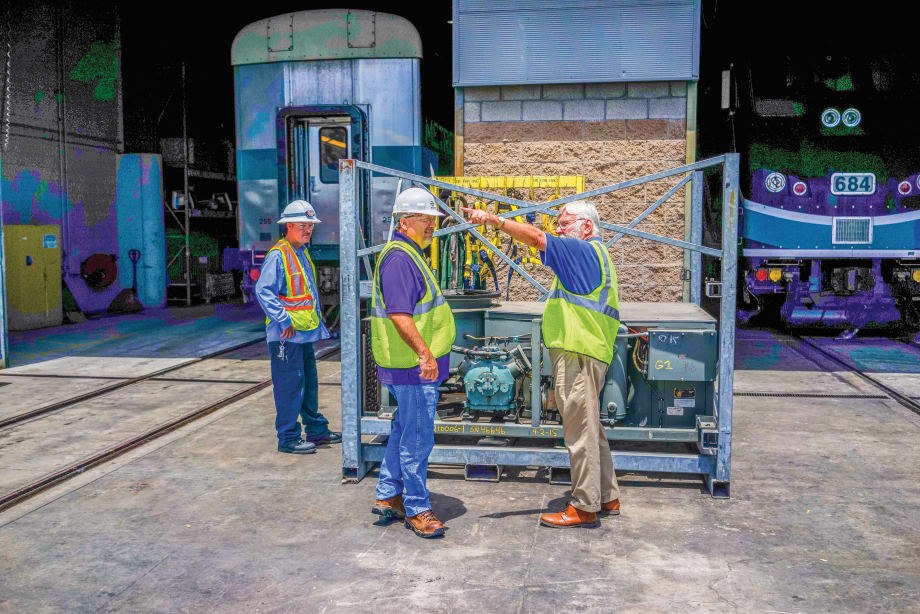
Leahy (far right) is CEO of one of the largest commuter rail agencies in the nation.
3 min to read
Leahy (far right) is CEO of one of the largest commuter rail agencies in the nation.
Art Leahy was appointed as Metrolink’s CEO in April 2015. He brings more than 40 years of public transportation leadership and experience to Metrolink.
One of the nation’s leading transit officials, Leahy served as CEO of the Los Angeles County Metropolitan Transportation Authority (Metro) for six years. During that time, he guided implementation of one of the largest public works programs in U.S. history, securing billions in federal and state dollars to help finance construction of dozens of transit and highway projects.
He led the completion of numerous projects funded by Los Angeles County’s Measure R. Metro has transit and highway projects valued at more than $14 billion, eclipsing that of any other transportation agency in the nation.
This includes an unprecedented five new rail projects under construction, including phase 2 of the Expo Line extension to Santa Monica and the Metro Gold Line Foothill Extension to Azusa, as well as the Crenshaw/LAX Transit Project, the Regional Connector in downtown Los Angeles, and the first phase of the Westside Purple Line subway extension to Wilshire and La Cienega. Leahy also launched a $1.2-billion overhaul of the Metro Blue Line and guided the purchase of a new fleet of railcars. And, he helped transform the iconic Union Station into the hub of the region’s expanding bus and rail transit network and led the agency’s acquisition of the 75-year-old iconic facility.
Prior to his tenure as Metro CEO, Leahy led OCTA (2001-2009) and served as the GM of Metro Transit (1997-2001) in Minneapolis-St. Paul.
Growing up in the Highland Park community in Los Angeles, both of Leahy’s parents worked in transit and he followed in their footsteps. He started as a bus operator for the Southern California Rapid Transit District in Los Angeles in 1971 and rose through the ranks to become chief operations officer before taking the position in Minneapolis.
Growing up,what career path did you see yourself following?
Being either a teacher or a pilot.
How did you first become involved in the transportation industry?
I was in college and needed a temporary job. Transportation was a good fit since both of my parents were in the transportation industry. My mom was a streetcar operator and my dad was a bus operator. I had no intention of staying in the transportation industry, but here I am almost 50 years later.
What are some of your accomplishments during your career you’re most proud of?
Led operations during the Olympics.
Recovered bus and rail service after the Northridge, Calif. earthquake of 1994.
Restoration of subway and light rail service in Los Angeles.
Worked on the only design/build improvements of an operating freeway (SR 22).
What current project are you excited about?
Deploying Tier 4 clean locomotives across the fleet.
What pivotal moment helped you get to where you are today?
Early in my career, I was in a meeting with my GM. We were discussing a difficult issue and out of nowhere, he turned to me and said, ‘What do you think we should do, Art?’ It put me on the spot, but more importantly it taught me to listen and always be prepared in meetings.
What skills do you possess that have helped you succeed?
Being a functional integrator —understands how all departments work together.
Able to navigate complex relationships between board members, elected officials and employees of all levels.
Good manager — able to motivate and develop team members.
Who has inspired you during your career?
Bob Korach and Jack Gilstrap — two influential supervisors who prepared me to be an executive.
What do you like to do outside of work (hobbies/favorite pastimes)?
Reading and traveling.
More Management

Building Stronger Leaders, More Resilient Transit Teams
Dr. Carol Parker Walsh discusses leadership development, employee retention, workplace culture, and preparing transit’s workforce for AI and automation.
Read More →
Roman Cornell on ABC Companies’ Evolution and the Future of Passenger Transportation
The company’s CEO discusses carrying forward a third-generation family legacy, ABC’s continued evolution in passenger transportation, support for increasingly complex fleets, and how technology and continued investment could help operators improve uptime.
Read More →
CATS Launches West Charlotte Microtransit Zone, Expands Transit Services
The new microtransit zone connects residents to key destinations as Charlotte Area Transit System rolls out the first phase of its 2055 Transit System Plan.
Read More →
VIA Bus Ridership Grows 10.1% Through August 2026
San Antonio's VIA Metropolitan Transit reported the highest bus ridership growth among major Texas transit systems. Federal Transit Administration data ranked it second among the nation's 50 largest transit systems.
Read More →
CSA Group Releases Climate Resilience Standard for Transit, Passenger Rail
Developed with support from the Standards Council of Canada, CSA D700 guides assessing climate-related risks and planning adaptation measures for transit and passenger rail systems.
Read More →
ETA CEO John Maglio on Transit Technology, Innovation, and Building Agency Trust
ETA founder and CEO John Maglio explores the evolution of transit technology, the importance of reliable systems, and how stronger partnerships can help agencies improve operations and the passenger experience.
Read More →
COTA Launches First Customer Experience Action Plan to Improve Transit Service
The new plan outlines improvements to service reliability, accessibility, communication, and the overall rider experience across Central Ohio's transit system.
Read More →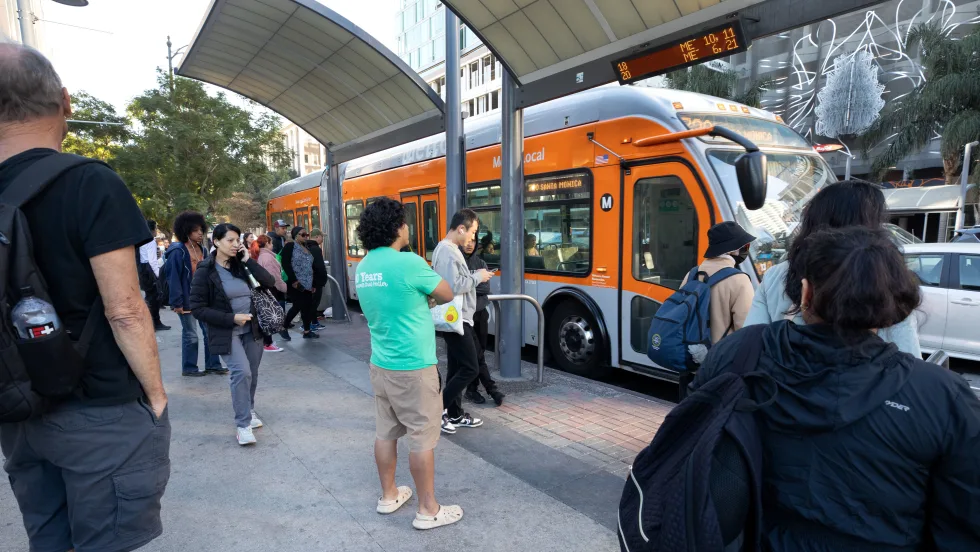
LA Metro September Ridership Climbs 3.9%, Led by Rail Growth
The agency recorded more than 27.2 million boardings, with rail ridership increasing 12.4% year over year and the D Line posting the largest gains.
Read More →
Utilimarc Launches SmartReplace to Optimize Fleet Replacement Decisions
AI-powered SmartReplace helps fleets prioritize vehicle replacements, model budget scenarios, and build more defensible long-term strategies.
Read More →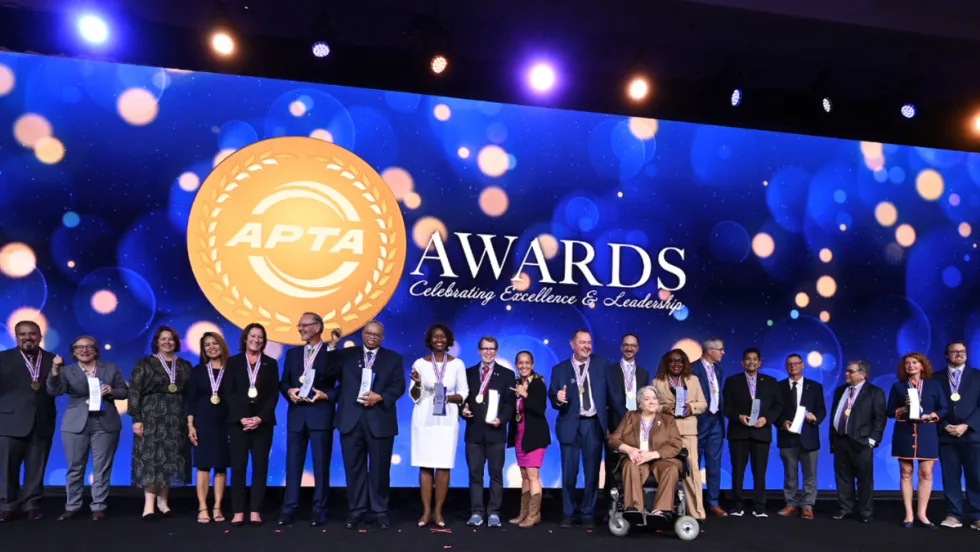
APTA Honors 2026 Award Winners, Hall of Fame Inductees at TRANSform & EXPO
Innovations in autonomous and zero-emission transportation, standout transit systems, and industry leadership took center stage among this year's honorees.
Read More →