



More transportation options can cut congestion, costs, report says
Increasing transit round-trip work commutes by four days (or eight trips) each month can reduce driving costs by 14 to 26%.

If commuters integrate carpooling, public transit, and telecommuting into their daily commutes, they could save more than $1,800 annually, according to a new Natural Resources Defense Council (NRDC) study.
By adopting the strategies contained in the report, NRDC estimates that individuals can reduce their total vehicle miles traveled by 10% to 50%.
"Driving Commuter Choice in America, Expanding Transportation Choices Can Reduce Congestion, Save Money and Cut Pollution" found that the four types of commuters in America — city, suburban, rural and town, and non-commuters — could see the greatest amount of savings between $400 to $1,800 if they switched to carpooling every day. Transit savings range from nearly $450 to $600 annually.
“All across the country, a shift is taking place,” said Rob Perks, Transportation State Campaign Director for NRDC. “Increasingly, Americans are choosing to live in walkable communities, where they have more transportation choices that allow them to live closer to their jobs, and shops and schools, rather than stuck in traffic. Along with the personal freedom these communities provide, it’s exactly the kind of growth our country needs to cut pollution, save money and create a vibrant quality of life.”
If 25% of Americans adopted one of these alternative driving choices, the U.S. could reduce annual transportation emissions by 3% to 12%, reduce transportation fuel use by billions of gallons per year, and save consumers tens of billions of dollars in transportation spending each year.
In addition, more choices in transportation would allow commuters to drive less, leading to less congestion in metropolitan areas, less wear and tear on roads, and less spending to maintain the nation’s infrastructure.
Report recommendations include:
• Increase transit use: Increasing transit round-trip work commutes by four days (or eight trips) each month can reduce driving costs by 14% to 26%.
• Increase carpooling: Switching to carpooling 20 days per month reduces the number of driving trips and vehicle miles traveled, and can reduce driving costs by about 40% to 50%.
• Increase trip-chaining: Use trip-chaining (mostly by planning trips in advance) for errands, appointments, etc. Reducing non-work trips by 75% per month could reduce driving costs by 10% to 15%.
• Increase telecommuting: Telecommuting four days each month could reduce driving costs by 11% to 14%. Commuters could save billions on transportation expenses while reducing our nation’s vulnerability to oil price shocks and helping the environment. A modest expansion of telecommuting could save Americans a total of $1.9 billion annually and reduce oil demand by 20 million barrels of oil per year. An average telecommuter (twice per month) saves $169 in auto-related costs annually (gas, maintenance and tires), not counting savings from tolls or parking.
“With gas prices on the rise, many commuters are turning to transit as a convenient, low-cost alternative to paying more at the pump. One of the fastest, cheapest ways to solve the problem of high gas prices is to break our nation’s addiction to oil by investing in clean, efficient modes of transit that go farther on a gallon of gas — or no gas at all,” said Perks.
NRDC’s report recommends policy solutions to invest in expanded transportation choices allowing Americans to enjoy the freedom of being able to travel shorter distances or less often by car.
Building more compact, walkable, transit-oriented neighborhoods and better transportation solutions will ensure our communities are sustainable. Improving the country’s infrastructure, lessening traffic congestion, decreasing oil dependence, reducing harmful air and global warming pollution, and improving our quality of life are choices to move America beyond oil.
More New Mobility

From Hardware to Digital Partner: Luminator Charts Its Next Chapter
CEO Magnus Friberg discusses Luminator’s shift toward becoming a digital partner, the growing importance of software and interoperability, and how AI can help agencies improve operations and passenger experience.
Read More →
Biz Briefs: Alstom Lands Canadian Contract, LYT to Supply California TSP, and More
In METRO's latest installment, we take a look at recent news from Complete Coach Works, Beep, FlixBus, and more partnerships making headlines across the transportation sector.
Read More →
CharterUP’s Armir Harris on Technology, AI, and the Future of Group Mobility
In a recent episode of METROspectives, CharterUP Founder/CEO Armir Harris discussed the company’s evolution from an online charter bus marketplace into a technology platform supporting public- and private-sector mobility and much more.
Read More →
Jacksonville’s NAVI Project Charts a New Course for Autonomous Public Transportation
Through its NAVI program, JTA is showing how autonomous vehicles, intelligent infrastructure, and coordinated operations can work together to deliver everyday public transportation.
Read More →
Biz Briefs: Luminator Marks Milestone and More
From manufacturers and suppliers to transit agencies and motorcoach operators, these updates offer a snapshot of the projects, partnerships and business moves driving the industry forward.
Read More →
New Tricks for Old Bureaucracies: Joshua Schank on Making Transit Innovation Stick
Former LA Metro Chief Innovation Officer Joshua Schank discusses why good ideas aren't enough, how transit agencies can overcome resistance to change, and why today's challenges demand more innovation.
Read More →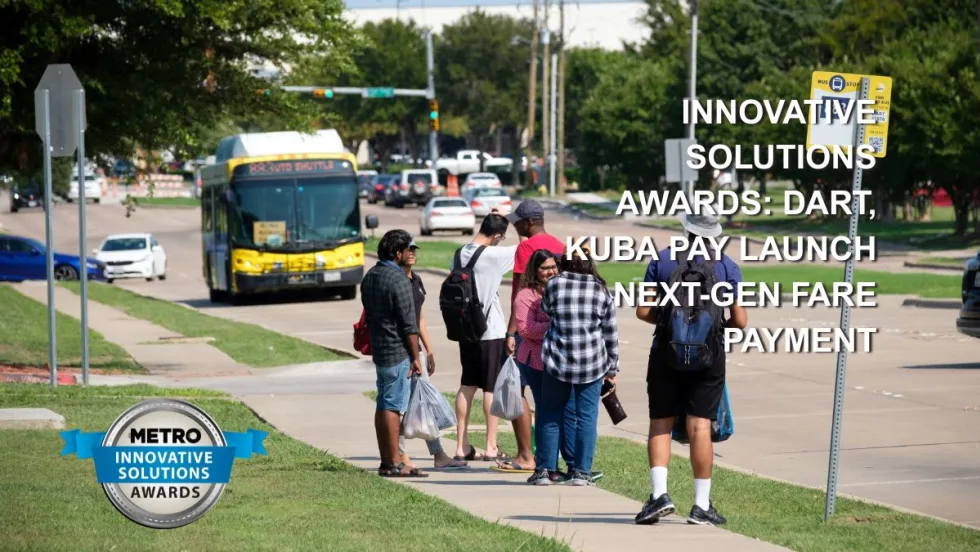
How DART's GoPass Is Redefining Regional Mobility
Serving 14 transit agencies, GoPass simplifies multimodal travel by allowing riders to plan, pay for, and manage an entire trip through one app.
Read More →
Biz Briefs: OCTA Taps Clean Energy for Hydrogen Station, Stadler to Supply Via Rail Vehicles, and More
From manufacturers and suppliers to transit agencies and motorcoach operators, these updates offer a snapshot of the projects, partnerships and business moves driving the industry forward.
Read More →CharterUP Expands Into New Mobility and Autonomous Transportation
Vice President of New Mobility Stephen Joos discusses how CharterUP is leveraging its nationwide transportation network, technology platform, and autonomous vehicle partnerships to expand into workforce mobility, campus shuttles, and transit solutions.
Read More →
METRO Magazine Announces 2026 Innovative Solutions Awards Winners
Projects Recognized for Advancing Mobility Through Technology, Accessibility, Workforce Innovation, and Operational Excellence
Read More →