



Motorcoach is greenest mode of transportation, ABA report finds
Compared motorcoach travel to travel by private automobiles, heavy urban rail, light rail, urban transit bus, TNCs, and more.
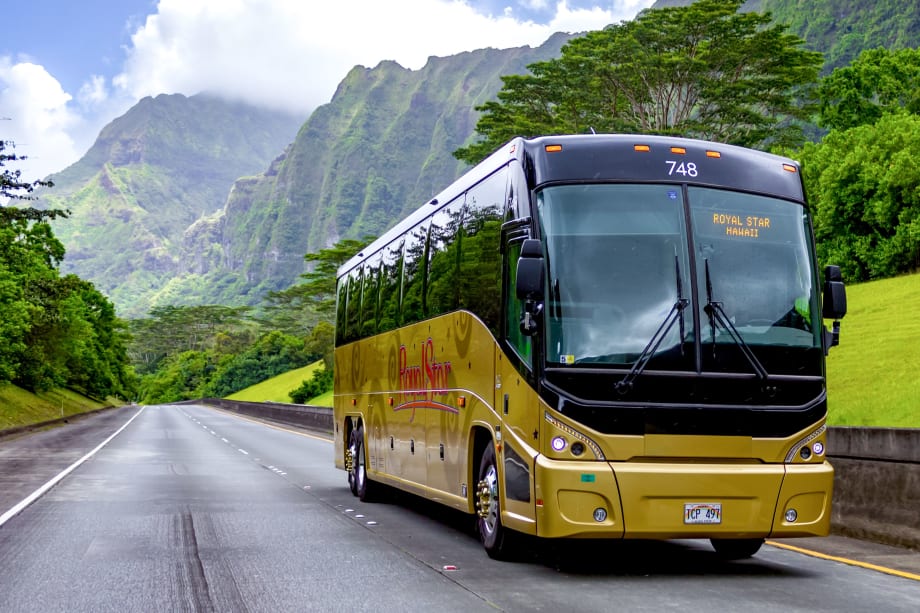
Motorcoaches on average used 493 Btu/pass-mi and produced 37 g/pass-mi of carbon dioxide.
MCI
Motorcoaches on average used 493 Btu/pass-mi and produced 37 g/pass-mi of carbon dioxide.
MCI
Motorcoach travel remains the greenest mode of transportation, according to the American Bus Association Foundation’s recently updated environmental study of different modes of transportation.
The study compared motorcoach travel to travel by private automobiles, heavy urban rail, light rail, commuter rail, intercity rail, domestic air travel, urban transit bus, electric trolley bus, ferry boat, vanpool, demand-response, and transportation network companies (TNCs). For all modes both energy use and emissions are expressed in terms of units per passenger mile operated. The metrics used for energy intensity are passenger miles per diesel-equivalent gallon (pass-mi/DEG) and Btu per passenger mile (Btu/pass-mi).
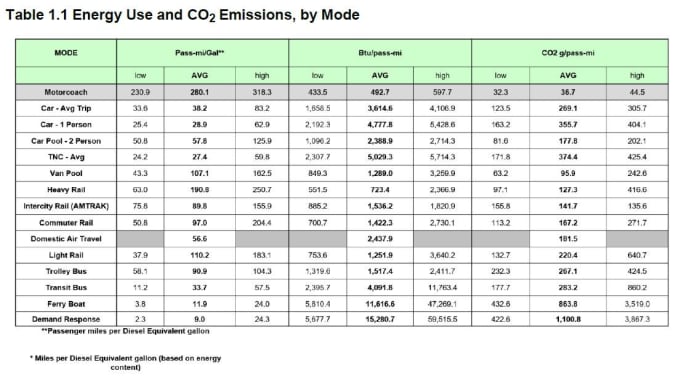
Motorcoaches on average used 493 Btu/pass-mi and produced 37 g/pass-mi of carbon dioxide. On average, motorcoaches use the least amount of energy and produce the lowest carbon dioxide emissions per passenger mile of any of the transportation modes analyzed.
The most energy- and carbon dioxide-intensive mode is demand-response at an average of 15,281 Btu/pass-mi and 1,101 g CO2/pass-mi. Vanpools on average produce two-and-a-half times as much carbon dioxide per passenger mile as motorcoaches, commuter rail produces more than four-and-a-half times as much, two-person car pools produce more than four-and-a-half times as much, and single commuters produce more than seven times as much.
On average TNCs are slightly less energy efficient than single commuting, using 5,029 Btu/pass-mi and emitting 374 g CO2/pass-mi. This is because, on average, TNCs only generate 0.95 passenger miles per vehicle-mile-driven, compared to one passenger mile per vehicle-mile for single commuting. TNCs carry an average of 1.5 passengers per trip (not including the driver), but for every 5.2 miles driven with passengers, the driver travels three miles empty, either waiting or driving from the last drop off to the next pick up.
The future of eco-friendly motorcoach travel will even look better than it does today, as more new fuel-efficient vehicles enter the market and replace current vehicles over the next 10 years, emissions per-passenger-mile from motorcoach will fall, according to the Foundation.
To view the full report, click here.
More Motorcoach

METRO Opens Submissions for 2026 Motorcoach Awards
Nominations are now being accepted for METRO Magazine’s Operator of the Year and Innovative Operator of the Year awards.
Read More →
Biz Briefs: Alstom Lands Canadian Contract, LYT to Supply California TSP, and More
In METRO's latest installment, we take a look at recent news from Complete Coach Works, Beep, FlixBus, and more partnerships making headlines across the transportation sector.
Read More →
Biz Briefs: RIPTA Unveils New Frontrunners, Clevland RTA Adds New Siemens, and More
In METRO's latest installment, we take a look at recent news from Siemens, Prevost, Dodge, and more partnerships making headlines across the transportation sector.
Read More →
People Movement: Holly Arnold Joins Transdev and More
In this edition, we also cover recent appointments and announcements at Pace, CamTran, MCI, and more, showcasing the individuals helping to shape the future of transportation.
Read More →
ABA Report: Motorcoach Travel Generates $161.6B Economic Impact
The 2025 analysis finds motorcoach travel supported nearly 900,000 jobs and generated $28 billion in federal, state, and local taxes.
Read More →
CharterUP’s Armir Harris on Technology, AI, and the Future of Group Mobility
In a recent episode of METROspectives, CharterUP Founder/CEO Armir Harris discussed the company’s evolution from an online charter bus marketplace into a technology platform supporting public- and private-sector mobility and much more.
Read More →
People Movement: ABC Names John Walsh as Chief Commercial Officer
In this edition, METRO also covers recent appointments and announcements at the DART, STV, and more, showcasing the individuals helping to shape the future of transportation.
Read More →
From Surviving to Thriving: Building Stronger Transportation Organizations
Bus Business Consultants founder Brian Dickson shares lessons on leadership, organizational health, and creating options for long-term success in a changing transportation industry.
Read More →
Biz Briefs: Luminator Marks Milestone and More
From manufacturers and suppliers to transit agencies and motorcoach operators, these updates offer a snapshot of the projects, partnerships and business moves driving the industry forward.
Read More →
ABAF Study Reveals Growing Insurance Crisis for Motorcoach Operators
Preliminary findings show 98% of operators faced premium increases over the past five years, while shrinking insurer participation is putting added pressure on businesses and customers.
Read More →