




RELATED: Transit Infrastructure Must Be Made Resilient to the Effects of Climate Change
MTA averts L Train shutdown to repair Superstorm Sandy damage
The massive reconstruction work, announced in 2016, called for a full closure of the tunnel for 18 months.
January 9, 2019
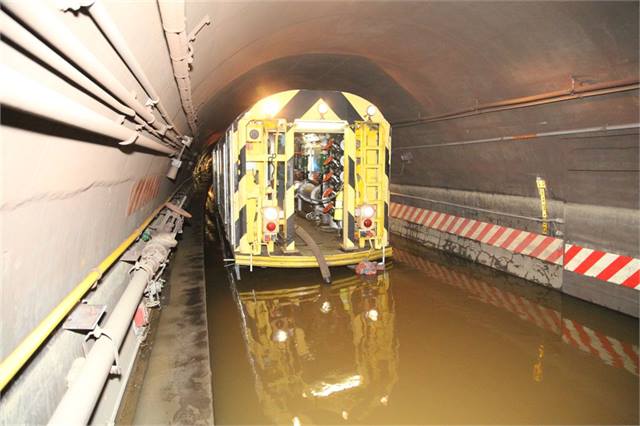
A 2016 photo of a New York City Transit railcar in a tunnel flooded by Superstorm Sandy. Photo: NY MTA
4 min to read
A 2016 photo of a New York City Transit railcar in a tunnel flooded by Superstorm Sandy. Photo: NY MTA
New York's Metropolitan Transportation Authority (MTA) accepted the recommendations of a panel of engineering experts that determined a complete closure of the L Train Tunnel to repair damage from Superstorm Sandy damage in 2012 is unnecessary. The massive reconstruction work needed to the Canarsie Tunnel, which carries the L train under the East River between Brooklyn and Manhattan, requiring a full closure of the tunnel for 18 months, was announced in 2016.
The report – which followed weeks of extensive review and analysis by the deans and faculty of the Columbia University and Cornell University engineering schools – presents a series of innovative engineering methods to streamline the required repair work and limit the impact on L Train service, which provides 400,000 daily rides. Work could be completed on nights and weekends only, with a single tube providing continued service in both directions during work periods.
The plan has been presented to and reviewed by the MTA, and it has been confirmed that the report’s goals are achievable within a 15-to-20-month timeframe. The MTA still plans to implement additional subway service where needed, including the G, M and 7 Trains.
While the new plan eliminates the need for a complete shutdown of the tunnel, L Train Project rebuilding and improvements will continue as planned to address long–term capacity on the line. These include constructing new power substations; storm and flooding resiliency measures; and station improvements, such as providing ADA accessibility and other capacity upgrades at the Bedford Avenue Station in Brooklyn and the 1st and 6th Avenue Stations in Manhattan.
In 2012, the L Train Tunnel (AKA Canarsie Tunnel) – which is 1.5 miles long and runs under the East River – was filled with corrosive salt water due to Superstorm Sandy. As a result, the 100-year-old tunnel sustained critical damage, including the Circuit Breaker House, system and power cables, and the cement benchwall that holds and protects the cables. Crucial repair work was planned to begin in the spring of 2019, including the laborious and time-consuming process of removing – by hand – and replacing all 32,000 feet of benchwall, as well as installing 126,000 feet of power cable and 176,000 feet of communications cable inside the benchwall. This work would require a complete shutdown of service through the tunnel for 15 months.
In December 2018, Governor Andrew M. Cuomo empaneled an expert review team, including leadership from Cornell University's College of Engineering and Columbia University's Fu Foundation School of Engineering and Applied Science, to do a final review of the plan ahead of the Project and its tunnel shutdown. The review team was charged with examining the current plan and recommending new designs, new systems, or technology that would improve the project and/or expedite the timetable, or confirm the current plan as the best way forward.
Members of the panel toured the L Train Tunnel, as well as the Hudson River tunnel along with Amtrak leadership to further inform their analysis. They also consulted with MTA and New York City Transit, the project contractors, and conducted their own intensive analysis and performed hundreds of hours of pro bono work.
The expert review team also considered rail tunnels in cities around the world – such as Hong Kong, London, and Riyadh – in order to implement the most efficient design in New York City. Among the findings, the team found that other modern tunnel designs under construction do not use benchwalls to protect cables.
The extensive review and analysis led to the following recommendations that have been made to the MTA:
L Train Tunnel Project Recommendations:
Implement a new power and control system design.
Implement racking system design to suspend cables on side of tunnel.
Decouple cable system housing from benchwall.
Jacket cables with low smoke, zero halogen fireproof material.
Abandon all old cables in benchwall.
Leave benchwall unless structurally compromised and fortify using fiber reinforced polymer.
Install “smart” sensor systems to monitor benchwall integrity.
Install walkway where benchwall is removed.
Increase flood resilience measures.
Enhance public safety.
The benefits to these recommendations include:
New system design achieves all functional outcomes, while reducing work and allowing simultaneous, not sequential execution of critical tasks.
Racking system will allow greater access to cables for inspection or future upgrades.
Installation of smart sensor system will allow for monitoring on a continuous basis rather than a periodic basis.
Upgrades to the pump system and rail will occur in tandem with the cable and benchwall work.
Dramatic reduction in non-value added project scope (i.e. avoiding complete removal and reconstruction of the benchwall).
Enhanced safety and functionality of the project.
Enhanced flood resilience.
This new system design approach can be potentially applied to other projects, such as the Second Avenue Subway Phase 2 and Hudson River Train Tunnels.
These recommendations would mean the following:
No closure of service is necessary with this new design.
Work can be completed with weekend and nighttime closures of only one tube at a time leaving the other to run trains in both directions.
More Rail
Scenes from APTA TRANSform & EXPO 2026
Transit leaders, manufacturers, and industry professionals gathered in Chicago to explore new technologies, share ideas, and discuss the future of public transportation.
Read More →
USDOT Awards $416 Million for Florida Rail Crossing Safety Upgrades, New Brightline Station
The projects aim to reduce risks for motorists and pedestrians at rail crossings while expanding passenger rail access along Florida’s Space Coast.
Read More →
OCTA Declares Emergency to Protect Rail Corridor From Coastal Erosion
The California agency is accelerating shoreline protection and plans to place approximately 690,000 cubic yards of sand along the San Clemente coast to protect a key passenger and freight rail link.
Read More →
More Than a Summer Job: Building the Next Generation of Transit Talent
The Delaware River Port Authority and PATCO have transformed their internship program into a hands-on professional development experience that introduces students to the breadth of transportation careers — and creates a pipeline for future employees.
Read More →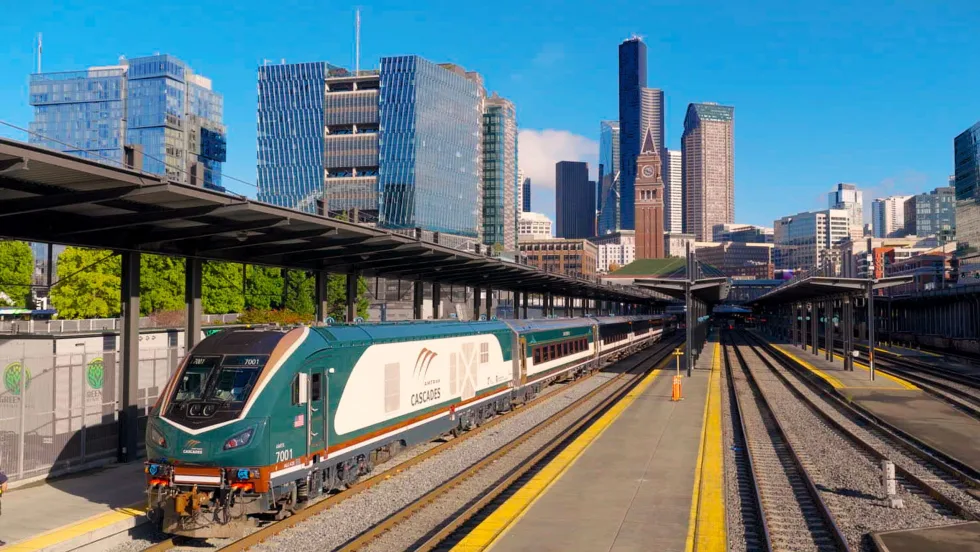
Airo Trains Make Their Amtrak Cascades Debut in the Pacific Northwest
Effective immediately, two cutting-edge Airo trainsets will join the Amtrak Cascades route, operating four daily trips between Vancouver, B.C., Seattle, Portland, and Eugene, Oregon, marking the first introduction of Airo trains into passenger service anywhere in the country.
Read More →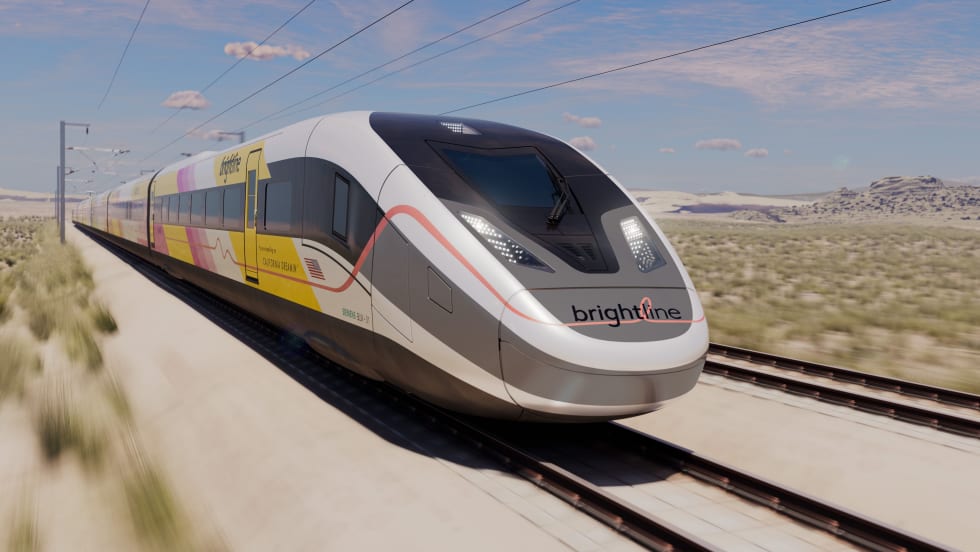
Florida's Brightline Announces Financial Restructuring
Brightline Florida says train operations will continue as normal as certain parent entities enter Chapter 11 and financial stakeholders provide $490 million in new long-term capital.
Read More →
ENC Lands MATA Contract and More in Biz Briefs
In this edition of Biz Briefs, we spotlight the latest developments shaping the future of mobility.
Read More →
Strada360’s Steve Lassey on Turning Transit Data Into Better Decisions
From breaking down data silos to preparing for AI, Strada360 CEO Steve Lassey discusses how transit agencies can use technology to improve operations, customer information, and long-term decision-making.
Read More →
SEPTA Details Accelerate Vision for Transit System
The plan outlines investments in trolley modernization, new Metro and Regional Rail vehicles, accessible stations, and more frequent bus and rail service.
Read More →
FTA Ends Direct Oversight of MBTA Safety Actions
The federal agency closed its remaining special directive to the Massachusetts Department of Public Utilities following a safety review that began in 2022.
Read More →