



N.Y. MTA issues letter urgently requesting robust federal aid
Letter to the New York Congressional Delegation requests more than $4 billion in federal aid as it continues to respond to COVID-19.



MTA Chairman & CEO Patrick J. Foye convenes a meeting in the situation room on Mon., March 16, 2020 to discuss the ongoing response to the coronavirus. (Marc A. Hermann / MTA New York City Transit)
MTA Chairman/CEO Patrick J. Foye today sent a letter to the New York Congressional Delegation urgently requesting more than $4 billion in federal aid as it continues to respond to the coronavirus pandemic.
The full text of the letter is available below and in PDF format.
Members of the New York State Congressional Delegation:
The nation is in the midst of an extraordinary challenge, facing the consequences of the novel coronavirus pandemic. Public health experts expect the outbreak will continue to worsen, with far reaching impacts to the country’s public and economic health.
In the midst of this crisis, the Metropolitan Transportation Authority, the lifeblood of the New York metropolitan region, is continuing to serve the public. We continue to operate our subways, railroads, buses, and Access-A-Ride services around the clock, helping to get essential employees – medical professionals, childcare workers, first responders, public utility employees, our transportation workers – where they need to be. We’ve substantially increased the intensity and frequency of cleaning protocols across the system, disinfecting all stations and touchpoints twice a day. Our entire fleet of subways, buses and rail cars is disinfected on a 72-hour cycle – except for Access-A-Ride vehicles serving the disabled, which are sanitized daily. Whatever the cost, the MTA's first priority is protecting the health of our customers as well as the brave MTA employees who continue to show up for work – as they have done after past emergencies like 9/11 and Superstorm Sandy.
But the stark reality is that as more people stay home following the advice of medical experts, the MTA is now facing financial calamity. Based on most recent daily reports, ridership has fallen approximately 60 percent on the subways, 49 percent on buses, 90 percent on Metro-North and 67 percent on Long Island Rail Road. As a result, MTA revenue has plummeted as we provide these essential services. We project the full impact will be over $4 billion by the end of 2020 – even without accounting for the expected collapse of the more than $6 billion in state and local taxes dedicated to the MTA.
For these reasons, I am urgently requesting substantial federal aid at the level of MTA revenue losses ($3.7 billion assuming ridership trends this week continue for six months) and COVID-19 expenses (approximately $300 million annualized) as we continue to respond to the coronavirus pandemic.
The MTA has already committed to finding $2.8 billion in savings over the next several years. No agency of our size can find additional billions in savings equivalent to the damages we have and will sustain as a result of this pandemic. This is a national disaster that requires a national response.
A supplemental formula increase to existing funding sources does not go far enough. And flexing federal funds currently allocated for capital projects cannot be the solution. Not only does this approach unnecessarily pit our operating costs against needed State of Good Repair investments to maintain our system, it has the potential to slow the critical growth of the MTA. Such a huge blow would come at a time when we have achieved tremendous progress: across our system – subways, buses, and commuter railroads alike – on-time performance has achieved sustained improvement and ridership was steadily growing, defying national trends. Our hard-fought, historic capital plan will benefit our customers and the New York economy.
New York produces nearly 10 percent of the entire U.S. GDP, and the nation will need a strong New York to fully rebound from the current crisis. The mass transit system operated by the MTA is essential to that objective, and restoring it is a matter of national interest. But it’s also a matter of fairness. As you know, New York is one of the top donor states, sending Washington $35 billion more every year than it receives in federal assistance. Now that it’s desperately needed, we’re asking for the federal government to redirect some of this money back to New York.
Time and again, New Yorkers have supported disaster relief for other states and Puerto Rico when they were devastated by natural disasters and other Acts of God. Now we are asking Congress to step up again and deliver for the system that is the lifeblood of New York City and the engine of the region’s economic future.
Sincerely,
Patrick J. Foye
Chairman and Chief Executive Officer
Metropolitan Transportation Authority
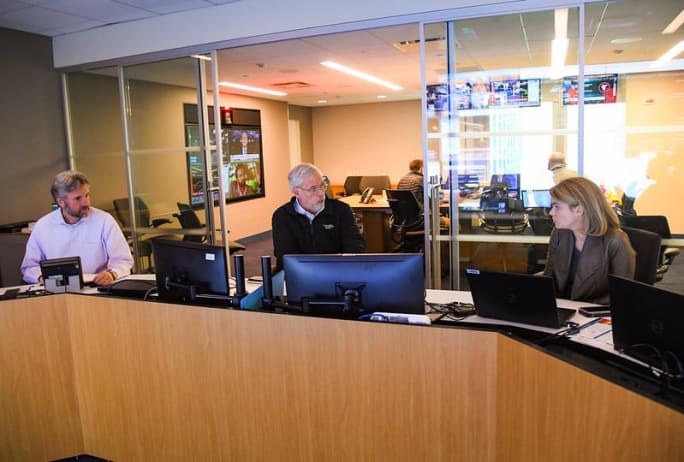
Chief Operating Officer Mario Péloquin (l.), MTA Chairman & CEO Patrick J. Foye (c.) and NYCT Interim President Sarah Feinberg (r.). (Marc A. Hermann / MTA New York City Transit)
More Management

METRO Opens Submissions for 2026 Motorcoach Awards
Nominations are now being accepted for METRO Magazine’s Operator of the Year and Innovative Operator of the Year awards.
Read More →
New York MTA Advances Final Contract for Second Avenue Subway Expansion
Contract Four is the largest in the Second Avenue Subway Phase 2 project and includes construction of station infrastructure, tracks, and signals for the subway expansion, MTA officials said. Work on Contract Four will begin in 2027.
Read More →
Transit Agencies Highlight Safety Gains at National Summit
Leaders from 15 major transit systems shared crime-reduction results and safety initiatives while discussing the role of continued federal support.
Read More →

NITA Names New Leadership, Expands Reduced-Fare Program at First Board Meeting
The new regional transit authority appointed its first board chair and interim executive director while extending reduced fares across CTA, Metra, and Pace for eligible riders.
Read More →
Beyond the Checklist: A Structured Approach to Transit Maintenance
Reliability-Centered Maintenance helps transit agencies move beyond routine checklists to focus limited resources on the assets and failures that have the greatest impact on safety, reliability, and service.
Read More →
APTA 2026 Nominating Committee Selects Leadership Slate, Names Chair and Vice Chair Nominees
Leadership changes will help shape the association’s priorities and its representation of the transportation industry during the 2026–2027 term.
Read More →
DART Launches Major Security, Fare Enforcement Initiative
The 90-day demonstration will deploy coordinated security teams at five light rail stations while testing controlled access and gathering data to guide future investments.
Read More →
Advancing Fare Collection Through Technology and Innovation
Learn about delivering 1300 gates at 91 stations while managing fare evasion. Explore the large scale deployment, solution customization and real-world results that affect the region. Prepare for deployment in your region now.
Read More →
Game Day in Motion: Moving Millions During the 2026 World Cup
Between packed transit stations and team motorcoaches, see how agencies and operators across North America tackled the transportation demands of the 2026 FIFA World Cup.
Read More →
Surface Transportation Extension Averts Shutdown, Leaves Transit Funding Gap
The stopgap keeps federal transportation programs moving, but missing advance funding could complicate the transit and rail projects agencies are planning next.
Read More →