



New park-and-ride structure exemplifies Calif. agency’s sustainability commitment
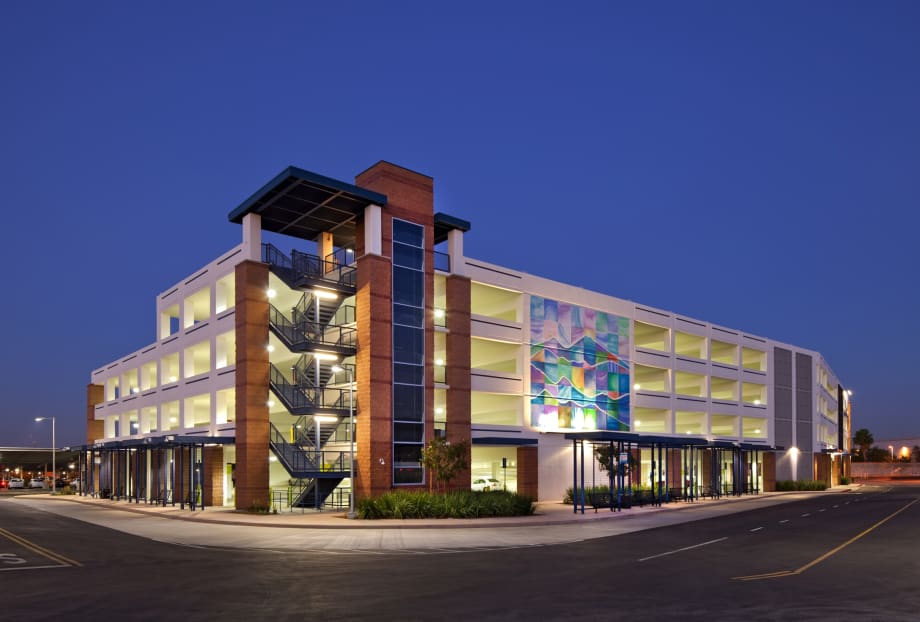
The five-level, 216,000-sq ft, 620-car parking structure is Foothill Transit’s first-ever agency-owned park and ride facility. The design embraces the materials and themes of the neighborhood, while promoting Foothill Transit’s goals of a dynamic visual experience for those entering the city by public transit.

Paul Turang Photography
Paul Turang Photography
Parking structures operate long hours, sometimes all day and night. Some spaces are infrequently occupied and open to daylight, making additional lighting unnecessary. With energy costs rising, it is essential to be proactive when making energy-saving decisions to lessen costs and consumption, reduce maintenance and increase sustainability efforts.
Park and ride lots can help ease commutes by offering a convenient and safe location to transfer from a single passenger vehicle or bicycle to a carpool, vanpool or transit. Ridesharing or using transit saves time and money, while reducing traffic congestion and energy consumption. Public transportation is a safe and affordable way to commute that saves energy, reduces traffic congestion and helps the environment. It has many benefits for individuals and communities alike.
Parking Structures and Lighting
Security is one of the most critical issues facing the owners and operators of parking facilities today. Local government officials are also concerned about the security of these facilities — some of which are city owned or operated — because parking affects the economic viability of a community. Crime Prevention Through Environmental Design (CPTED), which emphasizes the proper design and effective use of a created environment to reduce crime and enhance the quality of life, is applicable to parking facilities.
The single most important CPTED security feature is lighting. Good lighting deters crime and produces a more secure atmosphere. It is one of the few facility features that has been documented to reduce crime in parking facilities. Another important lighting consideration is glare, which reduces the contrast of an object against its background, making it difficult for the eye to perceive depth accurately. Glare is a potential hazard for all drivers; particularly senior citizens and other individuals with weak or impaired vision.
Foothill Transit Park and Ride Facility - City of Industry, Calif.
The recently constructed $9.9 million Foothill Transit Park & Ride Facility parking structure provides parking for transit customers who choose public transportation for their commutes into downtown Los Angeles.
This five-level, 216,000-sq ft, 620-car parking structure is Foothill Transit’s first-ever agency-owned park and ride facility. The design embraces the materials and themes of the neighborhood, while promoting Foothill Transit’s goals of a dynamic visual experience for those entering the city by public transit. The facility has pedestrian plazas, secure bike lockers for local cyclists, LED lighting, and a large art mural by California artist Hannah Daly that decorates the north and south side of the structure. Future plans include 18 electric vehicle charging stations and rooftop solar panels.
The agency, which provides public transportation for the San Gabriel and Pomona valleys, utilizes park and ride lots owned by Caltrans or other cities but wanted to open its own to better serve the needs of Foothill Transit's customers.
“Increased safe and easy access to public transportation benefits everyone,” said Doug Tessitor, Foothill Transit’s board chair. “Each person on board is one less car on the freeway. And, this new Industry Park & Ride makes it possible for all of us to enjoy cleaner air and safer, less congested streets.”
Paul Turang Photography
LED Luminaires
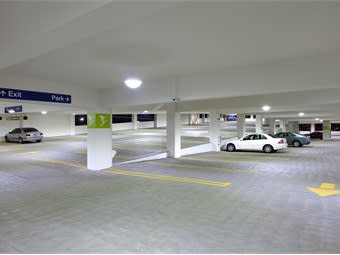
Committed to sustainability and patrons’ safety was the driving force for installing 249 LED luminaires both in the structure and on the exterior perimeter walls. While no state or federal mandates regulated the lighting technology, management and the board want to be innovative and have an energy efficient structure.
“We are pleased with the results that include reduced energy consumption than if we installed traditional fixtures. One of our goals is to have low operational expense while improving visibility and safety for anyone using the Park & Ride structure, especially during evening hours.” said Sharlane Bailey, Foothill Transit director, facilities.
The LED luminaires were recommended by Walker Parking Consultants, the largest parking consulting and parking design firm in the world with 15 offices in the U.S., one office in Abu Dhabi, over 225 employees and more than 12,000 completed parking projects.
“We presented a 25-year total lifecycle cost analysis showing they could save approximately $1.5 million using the recommended LED luminaires instead of T8 fluorescent fixtures,” explained Kevin Waters, LA-based project manager Walker Parking Consultants.
Foothill Transit has a strong commitment to safety and security, as well as wanting to maintain a pleasant aesthetic look to the structure. Bailey and the board view lighting as an important safety resource in the parking structure while also reducing its impact on the environment through the installation of LED luminaires. The luminaires selected provide superior glare control without compromising light levels, helping to ensure the safety and security of park and ride patrons.
Foothill Transit’s mission statement is to be the premier public transit provider committed to safety, courtesy, quality, responsiveness, efficiency and innovation. The design of the Park & Ride incorporates the elements of Foothill Transit’s mission statement.
Sustainability Commitment
Foothill Transit is committed to a sustainable environment and part of its mission statement is innovation. To that end, Foothill Transit has a total fleet of 331 buses, 316 of which are CNG powered and 15 fast-charge battery electric buses. Additionally, Foothill Transit is the first transit agency in the nation to electrify a bus route; line 291 utilizes nine fast-charge electric buses that serve the cities of Pomona and La Verne, Calif. To reduce GHG emissions, the agency implemented a solar array project at its two operating facilities located in Arcadia and Pomona, Calif.
In addition, Foothill Transit’s Arcadia facility has developed an Environmental & Sustainability Management System program and is ISO 14001 Certified. Foothill Transit is currently working on having the Pomona Operations & Maintenance facility certified under ISO standards.
Mark Bolton is regional sales manager with Kenall and may be reached at 425-999-0485 or mbolton@kenall.com. Gurnee, Ill.-based Kenall produces and supports high quality and durable lighting solutions for the most demanding environments.
More Management

METRO Opens Submissions for 2026 Motorcoach Awards
Nominations are now being accepted for METRO Magazine’s Operator of the Year and Innovative Operator of the Year awards.
Read More →
New York MTA Advances Final Contract for Second Avenue Subway Expansion
Contract Four is the largest in the Second Avenue Subway Phase 2 project and includes construction of station infrastructure, tracks, and signals for the subway expansion, MTA officials said. Work on Contract Four will begin in 2027.
Read More →
Transit Agencies Highlight Safety Gains at National Summit
Leaders from 15 major transit systems shared crime-reduction results and safety initiatives while discussing the role of continued federal support.
Read More →

NITA Names New Leadership, Expands Reduced-Fare Program at First Board Meeting
The new regional transit authority appointed its first board chair and interim executive director while extending reduced fares across CTA, Metra, and Pace for eligible riders.
Read More →
Beyond the Checklist: A Structured Approach to Transit Maintenance
Reliability-Centered Maintenance helps transit agencies move beyond routine checklists to focus limited resources on the assets and failures that have the greatest impact on safety, reliability, and service.
Read More →
APTA 2026 Nominating Committee Selects Leadership Slate, Names Chair and Vice Chair Nominees
Leadership changes will help shape the association’s priorities and its representation of the transportation industry during the 2026–2027 term.
Read More →
DART Launches Major Security, Fare Enforcement Initiative
The 90-day demonstration will deploy coordinated security teams at five light rail stations while testing controlled access and gathering data to guide future investments.
Read More →
Advancing Fare Collection Through Technology and Innovation
Learn about delivering 1300 gates at 91 stations while managing fare evasion. Explore the large scale deployment, solution customization and real-world results that affect the region. Prepare for deployment in your region now.
Read More →
Game Day in Motion: Moving Millions During the 2026 World Cup
Between packed transit stations and team motorcoaches, see how agencies and operators across North America tackled the transportation demands of the 2026 FIFA World Cup.
Read More →
Surface Transportation Extension Averts Shutdown, Leaves Transit Funding Gap
The stopgap keeps federal transportation programs moving, but missing advance funding could complicate the transit and rail projects agencies are planning next.
Read More →