




Transit Score Rank of Large U.S. Cities
Rank City Score
1 New York 84.1
2 San Francisco 80.4
3 Boston 74.4
4 Washington, D.C. 70.6
5 Philadelphia 66.8
6 Chicago 64.7
7 Miami 59.4
8 Baltimore 57.8
9 Minneapolis 57.5
10 Seattle 57.0
New York Ranks Best City for Public Transit in 2016
New York's Transit Score ranking by Walk Score increased 2.9 points to 84.1 from 81.2 in the last published ranking in 2014.
December 2, 2015
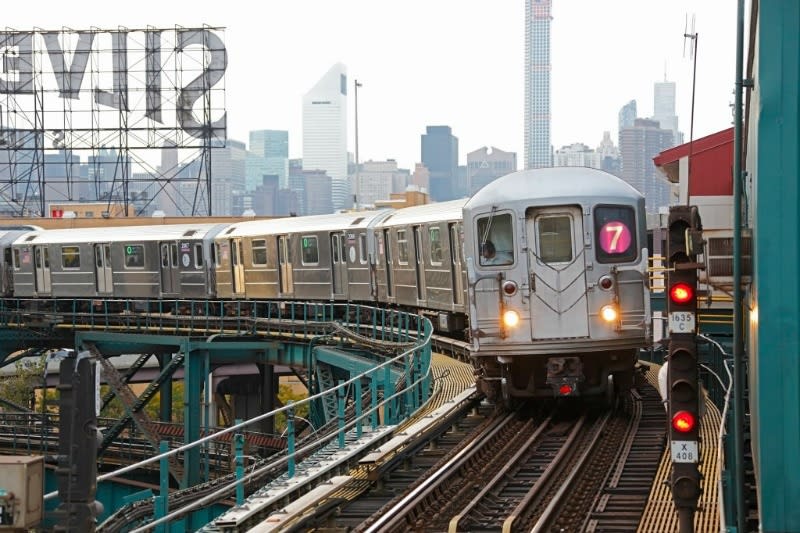
New York’s Transit Score increased 2.9 points to 84.1 from 81.2 in the last published ranking in 2014.
Photo: Redfin
3 min to read
New York is the best U.S. city for public transit, according to Redfin, the real estate brokerage firm. On Dec. 2, Redfin published the 2016 Transit Score ranking by Walk Score, a Redfin company, and announced the expansion of Transit Score ratings to a total of 350 U.S. cities and more than 10,000 neighborhoods.
New York’s Transit Score increased 2.9 points to 84.1 from 81.2 in the last published ranking in 2014. According to Walk Score, a place with a Transit Score in the 70 to 89 range has excellent transit. In September, the Metropolitan Transportation Authority (MTA) celebrated the first addition to its subway system in 26 years, with the extension of the 7 line to the new 34th St.-Hudson Yards Station, connecting riders to the Javits Center, the High Line, the Hudson River Park and surrounding commercial and residential developments.
Below is a ranking of the top 10 U.S. cities (with populations of more than 300,000) for public transit.
“Urban dwellers today want convenience,” said Redfin chief economist Nela Richardson. “Particularly in congested urban areas, a car may be the slowest way to get around the city. Homes near bus and subway lines tend to have higher values that hold up even during housing downturns. The fact that many cities are also investing in alternative forms of transit, like bike share, indicates how highly prized access to transit is by their residents.”
Among the 130 newly added cities are big ones like Phoenix (32.2) and Detroit (37.9), as well as smaller cities with big Transit Scores like Union City, N.J. (80.2) and State College, PA (63.7).
“After schools, access to public transportation is what New Jersey homebuyers ask about most frequently,” said Nick Boniakowski, Redfin market manager. “We spend a lot of time with our clients researching nearby bus and rail routes and stops, so being able to easily see that Union City, for example, has a higher Transit Score than pricier Jersey City (70) gives buyers another easy way to compare and evaluate homes, neighborhoods and cities.”
None of the cities on the list score in the 90 to 100 range, which Walk Score defines as a “riders’ paradise.” However, individual neighborhoods in many cities are riders’ paradises, like Boston’s Bay Village (100), Philadelphia’s Logan Square (100), The Loop (99.1) in Chicago and Belltown (98.1) in Seattle. Some cities that didn’t make the top 10 list are home to riders’ paradises, including downtown Pittsburgh (97.1), Old Town Chinatown (92.2) in Portland, Ore. (50.8) and downtown Houston (92.8).
Survey Methodology
The Transit Score algorithm calculates a score by summing the relative "usefulness" of public transit (bus, subway, light rail, ferry, etc.) routes near a given location. Usefulness is defined as the distance to the nearest stop on the route, the frequency of the route, and type of route (with twice as much weight given to heavy/light rail than to bus service). Transit Score is based on data published in General Transit Feed Specification (GTFS) format by transit agencies across the country.
More Management

LIT Marks 10-Year Milestone at Annual Summit
Hosted by the COTA from September 10 to 13, the Summit carried the theme “Celebrating 10 Years of Excellence, Leadership, and Impact,” with every part of the program honoring the people, agencies, and partners who built LIT over its first decade.
Read More →
People Movement: Dan Dipert Coaches Adds Third-Generation Leader, Keolis Names New Valley Metro VP/GM, and More
In this edition, we also cover recent appointments and announcements at the Wabtec, SilverRide, HNTB, and more, showcasing the individuals helping to shape the future of transportation.
Read More →
METRO Opens Submissions for 2026 Motorcoach Awards
Nominations are now being accepted for METRO Magazine’s Operator of the Year and Innovative Operator of the Year awards.
Read More →

New York MTA Advances Final Contract for Second Avenue Subway Expansion
Contract Four is the largest in the Second Avenue Subway Phase 2 project and includes construction of station infrastructure, tracks, and signals for the subway expansion, MTA officials said. Work on Contract Four will begin in 2027.
Read More →
Transit Agencies Highlight Safety Gains at National Summit
Leaders from 15 major transit systems shared crime-reduction results and safety initiatives while discussing the role of continued federal support.
Read More →
NITA Names New Leadership, Expands Reduced-Fare Program at First Board Meeting
The new regional transit authority appointed its first board chair and interim executive director while extending reduced fares across CTA, Metra, and Pace for eligible riders.
Read More →
Beyond the Checklist: A Structured Approach to Transit Maintenance
Reliability-Centered Maintenance helps transit agencies move beyond routine checklists to focus limited resources on the assets and failures that have the greatest impact on safety, reliability, and service.
Read More →
APTA 2026 Nominating Committee Selects Leadership Slate, Names Chair and Vice Chair Nominees
Leadership changes will help shape the association’s priorities and its representation of the transportation industry during the 2026–2027 term.
Read More →
DART Launches Major Security, Fare Enforcement Initiative
The 90-day demonstration will deploy coordinated security teams at five light rail stations while testing controlled access and gathering data to guide future investments.
Read More →
Sponsored•September 9, 2026
Advancing Fare Collection Through Technology and Innovation
Learn about delivering 1300 gates at 91 stations while managing fare evasion. Explore the large scale deployment, solution customization and real-world results that affect the region. Prepare for deployment in your region now.
Read More →