




Miss This? NJ TRANSIT Announces Continued River LINE Improvements
NJ Transit, Amtrak Prepare to Open First Track on New Portal North Bridge
The new bridge will begin carrying passenger trains on March 16, replacing a 116-year-old swing bridge that has long caused delays.
March 13, 2026
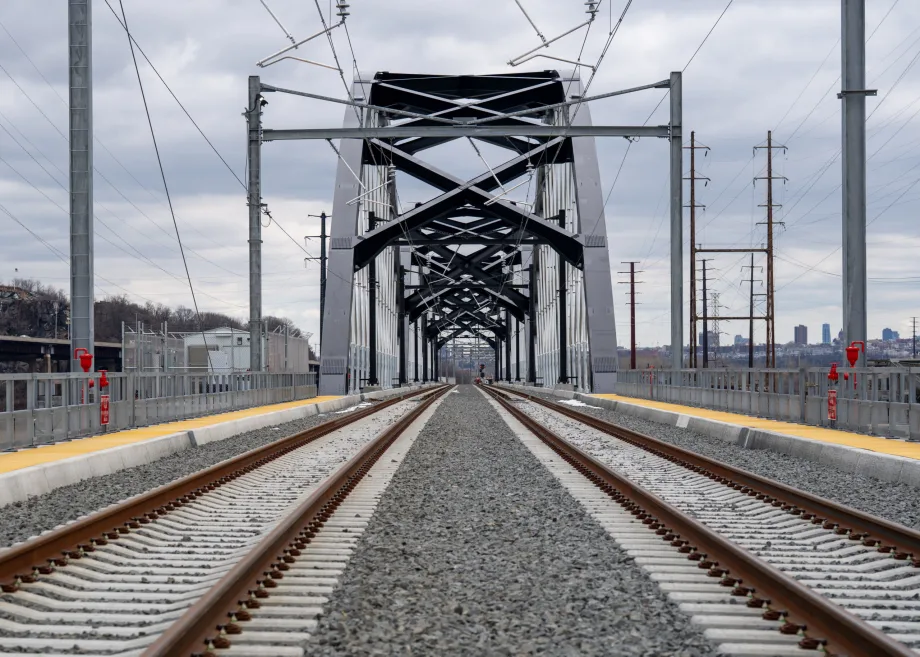
On February 13, NJ TRANSIT and Amtrak began critical work to transfer one track of rail service from the old Portal Bridge to the new Portal North Bridge over the Hackensack River.
Credit:
Amtrak
3 min to read
After years of construction, one of the Northeast Corridor’s most critical rail infrastructure projects is beginning to take shape.
New Jersey Governor Mikie Sherrill, NJ TRANSIT, and Amtrak celebrated a major milestone on March 12 at the Portal North Bridge in Kearny by riding a ceremonial train over the bridge, which will officially have one track enter passenger service on Monday, March 16.
The new bridge marks a historic moment in transferring service from the current 116-year-old swing bridge, which, according to the agency, has long been a source of delays. The second and final track will be moved onto the new bridge in the fall.
“Infrastructure that old creates delays, delays ruin birthday parties, preclude family dinners, and create stress for someone just trying to get home after a long day at work,” said Congresswoman Nellie Pou. “he growth of New Jersey relies on finishing projects like the Portal Bridge and the Gateway Tunnel. Because New Jersey will only keep growing if we keep moving.”
“With the first train now crossing the new Portal North Bridge, we are delivering a modern, reliable piece of infrastructure that will strengthen our economy, improve the daily commute, and support the entire Northeast Corridor,” Sherrill said.
The ceremonial first train was led by NJ TRANSIT’s locomotive wrapped in graphics celebrating America’s 250th birthday.
Portal North Bridge Project Milestones Over the Years
OnFebruary 13, NJ TRANSIT and Amtrak began critical work to transfer one track of rail service from the old Portal Bridge to the new Portal North Bridge over the Hackensack River. The work required temporary service adjustments to NJ TRANSIT and Amtrak schedules.
The project is being funded by the U.S. Department of Transportation, New Jersey, New York, and Amtrak. In January 2021, former Governor Phil Murphy announced the signing of a Full Funding Grant Agreement, which secured $766.5 million in Federal Transit Administration funding to support the project’s construction.
In October 2021, Governor Murphy and NJ TRANSIT announced the approval of a $1,559,993,000 construction contract awarded to Skanska/Traylor Bros PNB Joint Venture (STJV) for the construction of the new Portal North Bridge. The contract represents the single largest construction award in NJ TRANSIT’s history.
The Portal North Bridge project spans 2.44 miles of the Northeast Corridor line and includes construction of retaining walls, deep foundations, concrete piers, structural steel bridge spans, rail systems, demolition of the existing bridge, and related incidental works. The project is a critical component of the larger Gateway Program, which will eventually double rail capacity between Newark and New York.
The new Portal North Bridge rises 50 ft. above the Hackensack River, doubling the clearance and allowing marine traffic to pass beneath without disrupting rail traffic.
The current Portal Bridge is scheduled to be dismantled in 2027.
More Rail

ENC Lands MATA Contract and More in Biz Briefs
In this edition of Biz Briefs, we spotlight the latest developments shaping the future of mobility.
Read More →
Strada360’s Steve Lassey on Turning Transit Data Into Better Decisions
From breaking down data silos to preparing for AI, Strada360 CEO Steve Lassey discusses how transit agencies can use technology to improve operations, customer information, and long-term decision-making.
Read More →
SEPTA Details Accelerate Vision for Transit System
The plan outlines investments in trolley modernization, new Metro and Regional Rail vehicles, accessible stations, and more frequent bus and rail service.
Read More →
FTA Ends Direct Oversight of MBTA Safety Actions
The federal agency closed its remaining special directive to the Massachusetts Department of Public Utilities following a safety review that began in 2022.
Read More →
Amtrak, CN Reach Agreements to Strengthen Passenger Rail Service, Safety
The agreement resolves a more than decade-long proceeding before the Surface Transportation Board concerning the terms and conditions for Amtrak services, such as the City of New Orleans, Illini/Saluki, and Wolverine.
Read More →
New York MTA Advances Final Contract for Second Avenue Subway Expansion
Contract Four is the largest in the Second Avenue Subway Phase 2 project and includes construction of station infrastructure, tracks, and signals for the subway expansion, MTA officials said. Work on Contract Four will begin in 2027.
Read More →
San Diego MTS Breaks Monthly Trolley Ridership Record
Agency officials said July’s ridership indicates MTS’s continued recovery from the pandemic.
Read More →
Report Examines NJ TRANSIT Reliability, Funding Challenges
The Garden State Initiative analysis examines the roles of Amtrak infrastructure, fleet management, and agency operations while recommending a more performance-based approach to improving reliability.
Read More →
Stadler, CapMetro Sign Long-Term Rail Fleet Support Agreement
Beginning in 2027, Stadler will provide on-site technical expertise, spare parts support, training, and obsolescence management to help extend the reliability and longevity of CapMetro’s GTW fleet.
Read More →
Biz Briefs: Alstom Lands Canadian Contract, LYT to Supply California TSP, and More
In METRO's latest installment, we take a look at recent news from Complete Coach Works, Beep, FlixBus, and more partnerships making headlines across the transportation sector.
Read More →