



NJ Transit reinstates MCI Commuter Coach order
In July 2016, New Jersey Gov. Chris Christie had issued Executive Order No. 210 directing the immediate and orderly shutdown of all ongoing work funded under the TTFA.

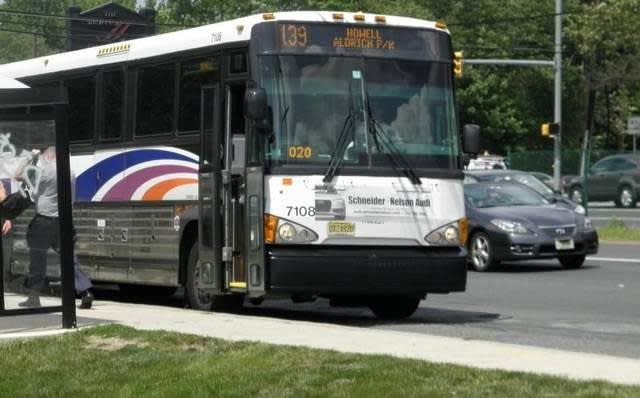
Motor Coach Industries (MCI), a subsidiary of New Flyer Industries Inc., announced that its commuter coach contract with New Jersey Transit (NJ Transit) has been reinstated.
In October 2015, NJ Transit awarded a six-year contract to MCI for 772 commuter coaches and options for an additional 450 coaches. In April 2016, a purchase order was issued for the first fiscal year’s production of 184 coaches, of which 142 were scheduled to be delivered in 2016.
In July 2016, after the first five coaches were accepted, NJ Transit advised MCI that the replenishment of the New Jersey Transportation Trust Fund Account (the TTFA) had been delayed and that New Jersey Gov. Chris Christie had issued Executive Order No. 210 directing the immediate and orderly shutdown of all ongoing work funded under the TTFA.
Following the enactment of legislation on Oct. 14, 2016 to provide funding to the TTFA, the New Jersey Governor issued Executive Order No. 216 lifting the suspension of all work funded under the TTFA.
As a result of the end of the suspension of all work funded under the TTFA, NJ Transit has formally advised MCI to commence delivery of the completed coaches and to start inducting new coaches into production.
MCI has 89 completed coaches, 10 of which were inspected by NJ Transit in the State of New Jersey prior to the suspension of the contract. There are an additional 29 coaches located in Pembina, ND that have already been inspected by New Jersey Transit and which will be transported to the transit agency in the coming weeks. An additional 50 completed coaches are also located in Pembina, N.D., and are waiting inspection by the agency, following which they will also be delivered to NJ Transit.
As schedules for the inspections by NJ Transit at MCI’s facility and by the New Jersey Department of Transportation upon arrival of the coaches in New Jersey are variable, management anticipates that approximately 50 completed coaches will be sold in 2016, with the remaining coaches being sold in the first quarter of 2017. As a result of these 50 coaches being delivered in 2016, management now expects New Flyer to deliver approximately 3,500 equivalent units in fiscal 2016.
NJ Transit has advised that the milestone payments that were suspended in July will recommence immediately. NJ Transit has further advised MCI to proceed with manufacturing the additional 90 commuter coaches included in the purchase order for the first production tranche of 184 units. As a result of the commencement of manufacturing the additional coaches, the advance layoff notifications that MCI had provided to the Governments of Manitoba and North Dakota and to affected employees will be cancelled and management anticipates that no layoffs will occur.
“We are relieved the New Jersey funding crisis has come to an end and that the company can return to building coaches for the State of New Jersey, said Paul Soubry, president/CEO of New Flyer and MCI. “We carefully weighed the risks and made measured decisions when the contract was suspended with the objective of balancing the impact on our key stakeholders: our employees, our customers and suppliers, and our shareholders.”
More Management

LIT Marks 10-Year Milestone at Annual Summit
Hosted by the COTA from September 10 to 13, the Summit carried the theme “Celebrating 10 Years of Excellence, Leadership, and Impact,” with every part of the program honoring the people, agencies, and partners who built LIT over its first decade.
Read More →
People Movement: Dan Dipert Coaches Adds Third-Generation Leader, Keolis Names New Valley Metro VP/GM, and More
In this edition, we also cover recent appointments and announcements at the Wabtec, SilverRide, HNTB, and more, showcasing the individuals helping to shape the future of transportation.
Read More →
METRO Opens Submissions for 2026 Motorcoach Awards
Nominations are now being accepted for METRO Magazine’s Operator of the Year and Innovative Operator of the Year awards.
Read More →

New York MTA Advances Final Contract for Second Avenue Subway Expansion
Contract Four is the largest in the Second Avenue Subway Phase 2 project and includes construction of station infrastructure, tracks, and signals for the subway expansion, MTA officials said. Work on Contract Four will begin in 2027.
Read More →
Transit Agencies Highlight Safety Gains at National Summit
Leaders from 15 major transit systems shared crime-reduction results and safety initiatives while discussing the role of continued federal support.
Read More →
NITA Names New Leadership, Expands Reduced-Fare Program at First Board Meeting
The new regional transit authority appointed its first board chair and interim executive director while extending reduced fares across CTA, Metra, and Pace for eligible riders.
Read More →
Beyond the Checklist: A Structured Approach to Transit Maintenance
Reliability-Centered Maintenance helps transit agencies move beyond routine checklists to focus limited resources on the assets and failures that have the greatest impact on safety, reliability, and service.
Read More →
APTA 2026 Nominating Committee Selects Leadership Slate, Names Chair and Vice Chair Nominees
Leadership changes will help shape the association’s priorities and its representation of the transportation industry during the 2026–2027 term.
Read More →
DART Launches Major Security, Fare Enforcement Initiative
The 90-day demonstration will deploy coordinated security teams at five light rail stations while testing controlled access and gathering data to guide future investments.
Read More →
Advancing Fare Collection Through Technology and Innovation
Learn about delivering 1300 gates at 91 stations while managing fare evasion. Explore the large scale deployment, solution customization and real-world results that affect the region. Prepare for deployment in your region now.
Read More →