




RELATED: Integration, Innovation Keys to Mobility Management
North American Bikeshare Assoc. names president, VP, secretary
For the first time, the organization is led by all women in the roles of executive director, president, VP, and secretary. Out of a 15-person board, six are women.
January 23, 2018
2 min to read

Bikeshare’s first and only membership organization announces three female leaders have joined its executive committee. The news comes on the heels of the North American Bikeshare Association (NABSA) announcing its first-ever executive director, Samantha Herr, in the summer of 2017. For the first time, the organization is led by all women in the roles of executive director, president, VP, and secretary. Out of a 15-person board, six are women.
With a vision to make bikeshare accessible to all people regardless of age, gender, income, or race, Herr says that infusing NABSA’s board of directors with female leadership demonstrates the organization’s commitment to equality from the inside out.
“Each one of our female board members understands the power of bikeshare to change lives. They’ve developed and grown bikeshare in their own backyards and now they’re coming together to transform the industry across North America,” says NABSA Executive Director Samantha Herr. “Their expertise equips NABSA to guide the growing bikeshare industry as a tool to improve mobility, public health and quality of life for everyone.”
NABSA highlights the following visionaries on its board:
President: Dianna Ward, executive director at Charlotte B-Cycle
As the executive director of Charlotte B-cycle, Ward is responsible for managing and growing the bikeshare system in Charlotte’s urban core. Honored as one of the 50 most influential women in Charlotte, she collaborates with sponsors, city leaders and bike advocates with a vision to make her city a “city of bikes.”
VP: Kristen Camareno, executive director at Fort Worth Bike Sharing
Camareno currently serves as executive director of Fort Worth Bike Sharing Inc., a 501(c)(3) nonprofit organization created to operate and maintain a bikesharing system in Fort Worth, Texas. Prior to her role at FWBS, Camareno worked for Fort Worth Transportation Authority and was responsible for property management as well as various special projects -- most notably launching a bikeshare program in Fort Worth’s central city.
Secretary: Kim Lucas, project manager at DC Department of Transportation
Lucas manages Washington, D.C.’s Capital Bikeshare and Bicycle Parking programs. The City’s Capital Bikeshare program has more than 400 stations and approximately 4,000 bikes available system-wide, and users have taken over 19-million trips since its launch in 2010. Recently, Washington D.C. launched a dockless bikeshare demonstration program and is in the process of evaluating its impacts and effectiveness.
More New Mobility

Biz Briefs: Luminator Marks Milestone and More
From manufacturers and suppliers to transit agencies and motorcoach operators, these updates offer a snapshot of the projects, partnerships and business moves driving the industry forward.
Read More →
New Tricks for Old Bureaucracies: Joshua Schank on Making Transit Innovation Stick
Former LA Metro Chief Innovation Officer Joshua Schank discusses why good ideas aren't enough, how transit agencies can overcome resistance to change, and why today's challenges demand more innovation.
Read More →
How DART's GoPass Is Redefining Regional Mobility
Serving 14 transit agencies, GoPass simplifies multimodal travel by allowing riders to plan, pay for, and manage an entire trip through one app.
Read More →
Biz Briefs: OCTA Taps Clean Energy for Hydrogen Station, Stadler to Supply Via Rail Vehicles, and More
From manufacturers and suppliers to transit agencies and motorcoach operators, these updates offer a snapshot of the projects, partnerships and business moves driving the industry forward.
Read More →
CharterUP Expands Into New Mobility and Autonomous Transportation
Vice President of New Mobility Stephen Joos discusses how CharterUP is leveraging its nationwide transportation network, technology platform, and autonomous vehicle partnerships to expand into workforce mobility, campus shuttles, and transit solutions.
Read More →
METRO Magazine Announces 2026 Innovative Solutions Awards Winners
Projects Recognized for Advancing Mobility Through Technology, Accessibility, Workforce Innovation, and Operational Excellence
Read More →
Biz Briefs: STV teams with Amtrak, Motorcoach Operators Boost Fleet and Land Contracts, and More
From manufacturers and suppliers to transit agencies and motorcoach operators, these updates offer a snapshot of the projects, partnerships and business moves driving the industry forward.
Read More →
Biz Briefs: Masabi Teams with St. Louis Metro and More
In METRO's latest installment, we take a look at recent news from Transdev, Hitachi, and more partnerships making headlines across the transportation sector.
Read More →
Microtransit's Next Test: Becoming Part of the Network
Freebee shows how electric microtransit is moving beyond pilots to fill network gaps, connect riders to transit, and prove lasting value.
Read More →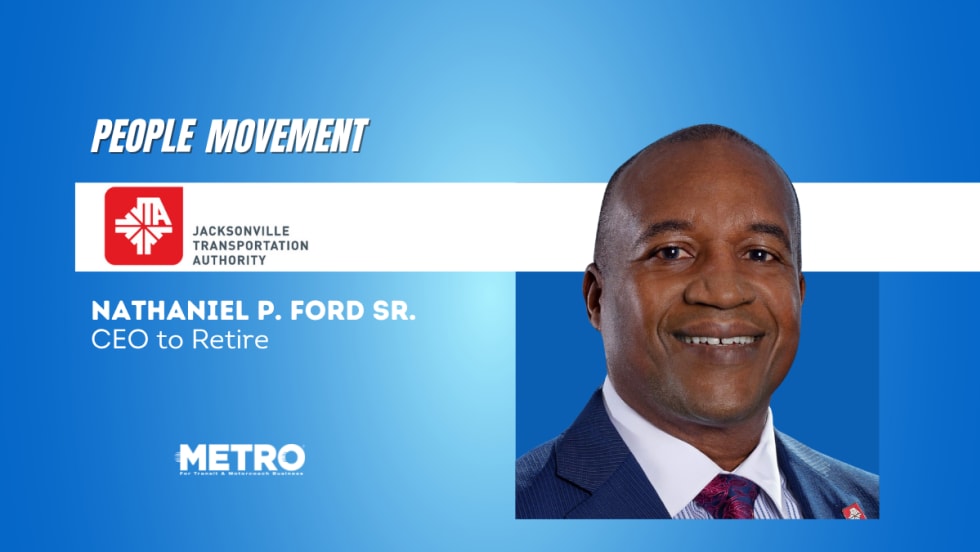
Ford to Leave JTA After More Than 10 Years as CEO
He plans to continue his work advancing innovative mobility solutions to improve the quality of life in communities across the nation. He did not announce specific plans.
Read More →