



NTSB: Fatigue, lack of PTC caused trolley crash
The two-train collision on the MBTA Green Line last year occurred as a result of the trolley operator's failure to obey a signal indication, due to a possible sleep disorder and the lack of a positive train control system.

On Tuesday, the National Transportation Safety Board (NTSB) determined that the two-train collision on the Massachusetts Bay Transportation Authority (MBTA) Green Line last year occurred as a result of the trolley operator's failure to obey a signal indication, likely because she became disengaged from her environment consistent with experiencing an episode of micro-sleep.
The lack of a positive train control system, which would have intervened to stop the train and prevented the collision, was cited as a contributing factor.
At 5:51 p.m. EDT, on May 28, 2008, an MBTA Green Line train, traveling westbound at about 38 mph, struck the rear of another westbound Green Line train, which had stopped for a red signal. The operator of the striking train was killed; three other crewmembers sustained minor injuries. Of the 185 to 200 passengers who were on the two trains at the time of the collision, four sustained minor injuries and one was seriously injured. Total damages were estimated to be about $8.6 million.
Post-accident toxicological testing indicated that the operator of the striking train had recently taken the drug doxylamine, commonly found in sleep aids, suggesting that she had trouble sleeping during at least one of the nights leading up to the accident. In addition, the operator had a high body mass index (BMI), which is closely correlated with a higher risk for sleep apnea, increasing the likelihood of a fatigued condition during waking hours.
"Again, we've seen a situation where a positive train control system could have prevented a tragic accident," said NTSB Acting Chairman Mark V. Rosenker. "We know that because operators or equipment sometimes fail, redundancies like PTC systems can be the difference between a fatal accident and an incident report. And this is why we feel so strongly that transit systems like MBTA's should have that crucial extra layer of safety that a PTC system provides."
Because the NTSB concluded that the accident could have been prevented had the MBTA been equipped with a positive train control system, the NTSB recommended to the Federal Transit Administration (FTA) that the agency facilitate the development and implementation of positive train control systems for rail transit systems nationwide.
In addition, the NTSB recommended to the FTA that they develop and disseminate guidance for operators, transit authorities and physicians regarding the identification and treatment of individuals at high risk for obstructive sleep apnea and other sleep disorders.
The NTSB recommended to MBTA that train operators be required to notify fellow crewmembers when a restrictive signal is encountered and the intended means of complying with the restriction.
A summary of the findings including the Board's report is available on the NTSB's Website at http://www.ntsb.gov/Publictn/2009/RAR0902.html
The entire accident docket is available at http://www.ntsb.gov/Dockets/Railroad/DCA08MR007/default.htm
More Management
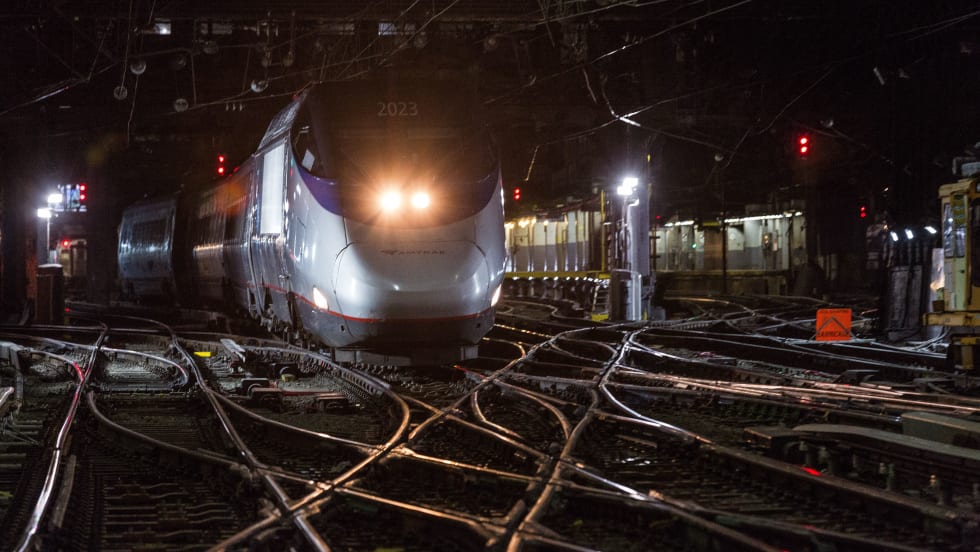
Amtrak Board Advances Plan to Restructure Organization, Seeks Public Input
The proposal, developed by Amtrak management and approved by the board for further consideration, is intended to modernize the organization's structure while improving accountability, operational efficiency, and customer service.
Read More →
Turn Transit Data Into Action
Discover how leading agencies are using connected technology to gain real-time visibility across operations, improve service reliability, and reduce disruptions.
Read More →
What Transit-Oriented Development Means for the Future of Public Transportation
Once viewed primarily as transit operators, agencies are now leveraging land, partnerships, and long-term planning to boost ridership, expand housing, and strengthen communities.
Read More →
USDOT Announces $22 Million for Transit Innovation, Updates High-Speed Rail Rules
New federal transit funding will support safety, accessibility, and technology projects as updated rail regulations establish new noise standards for high-speed trains.
Read More →
Transportation Construction Coalition Unveils Infrastructure Case Studies Ahead of Federal Funding Deadline
The coalition noted the next surface transportation bill should provide sustained investment in highways and public transit to strengthen freight movement, improve safety, and support economic growth.
Read More →
People Movement: American Bus Association Extends Ferguson and More
METRO’s People Movement highlights the latest leadership changes, promotions, and personnel news across the public transit, motorcoach, and people mobility sectors.
Read More →
METRO Magazine Announces 2026 Innovative Solutions Awards Winners
Projects Recognized for Advancing Mobility Through Technology, Accessibility, Workforce Innovation, and Operational Excellence
Read More →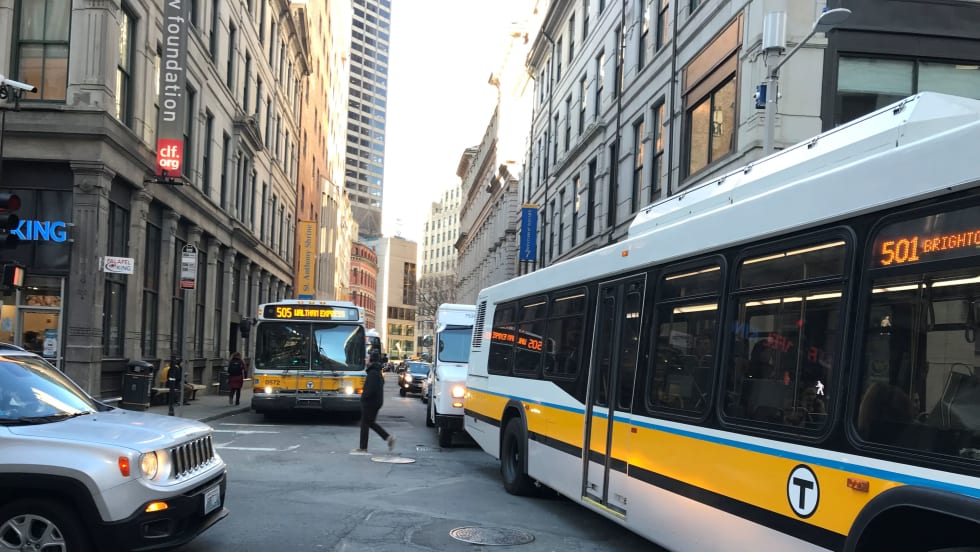
MBTA Rolls Out Pilot Programs to Cut Costs, Simplify Travel
Three new fare pilots — including unlimited two-hour transfers, reduced express bus fares, and free transit for eligible seniors — will launch this fall as Massachusetts extends popular commuter rail discounts through November.
Read More →
FTA Opens $610 Million Funding Opportunity for Bus Infrastructure Projects
The latest Notice of Funding Opportunity provides transit agencies with funding for bus facilities, fleet modernization, and low- and no-emission vehicles, with applications due September 21.
Read More →
Biz Briefs: STV teams with Amtrak, Motorcoach Operators Boost Fleet and Land Contracts, and More
From manufacturers and suppliers to transit agencies and motorcoach operators, these updates offer a snapshot of the projects, partnerships and business moves driving the industry forward.
Read More →